
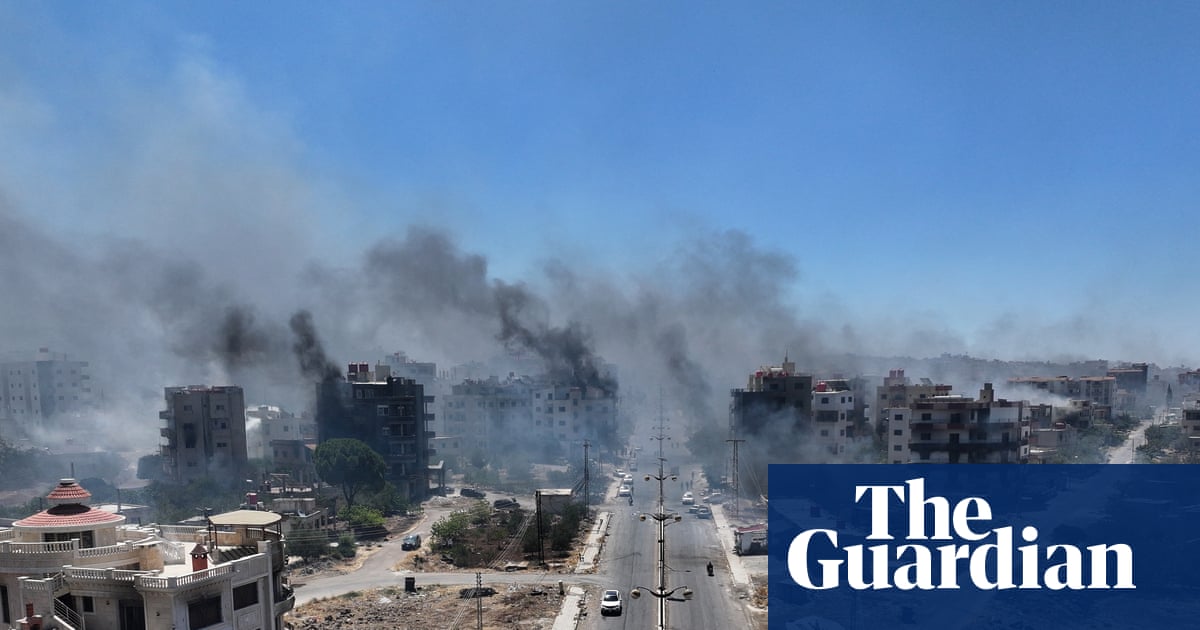
Syria Declares Ceasefire in Sweida Amidst Deadly Druze Clashes
Internal Security Forces Deployed as Death Toll Surpasses 700
Syria’s presidency has announced an immediate and comprehensive ceasefire in the southern province of Sweida, following nearly a week of intense fighting that has claimed over 700 lives. Internal security forces have been deployed to quell the violence in the predominantly Druze region.
Escalating Conflict and Diplomatic Pressure
The ceasefire declaration comes after armed tribal groups clashed with Druze fighters. Earlier, Syrian army units reportedly withdrew from the area under significant Israeli bombardment and diplomatic pressure. The presidency emphasized that any violation of the ceasefire would be a “clear violation to sovereignty,” urging all parties to cease hostilities.
Syrian interior ministry spokesperson Noureddine al-Baba confirmed the deployment of internal security forces to “protect civilians and put an end to the chaos.”
Syrian President Assad vows to protect Druze community amid escalating violence in Sweida. Details emerging on the complex situation.
— World Today News (@WorldTodayNews) July 20, 2025
One of the Syrian Druze community’s religious leaders, Sheikh Hikmat al-Hijri, stated that the ceasefire aims to ensure the safe exit of community members and establish humanitarian corridors for besieged civilians.
International Involvement and Humanitarian Crisis
The ceasefire was announced shortly after the US special envoy, Thomas Barrack, revealed an agreement between Israel and Syria. Israel had sided with Druze factions, engaging in actions including bombing a government building in Damascus.
The United Nations has also called for an end to the fighting and an independent investigation into the violence. The Syrian Observatory for Human Rights reports at least 718 casualties from both sides since Sunday.
The humanitarian situation in Sweida has dramatically deteriorated, with severe shortages of food and medical supplies. All hospitals are reportedly non-operational due to the conflict, and widespread looting has occurred. A surgeon at Sweida National Hospital described the situation as “disastrous,” with decomposing bodies, including those of women and children.
The recent unrest has raised questions regarding the authority of Syrian leader Ahmed al-Sharaa. His interim government faces challenges and mistrust from minority groups, particularly after the killing of approximately 1,500 Alawite civilians in March. According to a 2023 report by the Syrian Network for Human Rights, hundreds of thousands of civilians have been displaced in Syria due to ongoing conflict (Syrian Network for Human Rights, 2023).
Miscalculations and Shifting Alliances
Sharaa had ordered the withdrawal of government forces, citing mediation efforts by the US and others that averted a larger escalation with Israel. Sources suggest Sharaa may have misjudged Israel’s reaction to his deployment of troops southward, influenced by assurances from Barrack regarding unified Syrian governance.
When Israel conducted strikes on Syrian troops and Damascus on Wednesday, targeting the defense ministry headquarters and areas near the presidential palace, it reportedly caught the Syrian government off guard.
Israel launches strikes on Damascus as sectarian violence flares in southern Syria – video
Israeli military sources stated the strikes were a message to the Syrian president regarding the Sweida events, noting the Druze community’s loyalty within Israel. However, Syrian government officials and regional security sources indicated that the government had received what it believed was a U.S. and Israeli endorsement to deploy forces southward, despite previous Israeli warnings.
Roots of the Conflict and Humanitarian Concerns
The clashes began last Sunday following the abduction of a Druze merchant by local Bedouin, escalating into retaliatory kidnappings. When government forces intervened, witnesses and the Syrian Observatory for Human Rights reported they sided with the Bedouin, committing abuses against Druze civilians and fighters, including what was described as an “horrific massacre” in Sahwat al-Balatah.
A truce was brokered on Wednesday after the Israeli bombardment, allowing Druze groups to manage security in Sweida as government forces withdrew. Sharaa stated that empowering Druze groups to govern security affairs was a deliberate choice to prevent a wider war.
“We chose the interests of Syrians over chaos and destruction.”
—Ahmed al-Sharaa, Syrian Leader
However, fighting resumed Thursday with reports of Druze groups launching retaliatory attacks on Bedouin villages. On Friday, tribal fighters engaged Druze men in Sweida with heavy weaponry, while shelling continued in Sweida city neighborhoods.
The International Committee of the Red Cross highlighted the critical humanitarian situation, with overwhelmed health facilities, dwindling medical supplies, and power outages hindering morgue operations. Stephan Sakalian, head of the ICRC’s delegation in Syria, described the situation as “critical” with people running out of essentials.
Political Ramifications and Future Stability
Minority groups in Syria reportedly receive token representation in the interim government, according to Bassam Alahmad of Syrians for Truth and Justice. He suggested the Sweida incursion signaled a military approach to control, a strategy he believes failed under former President Bashar al-Assad.
Conversely, government supporters fear that ceding security control to the Druze could embolden other minorities to seek autonomous regions, potentially fragmenting the country. Fears were expressed by Abdel Hakim al-Masri, a former official in north-west Syria, that such a move would prompt similar demands from other groups.
