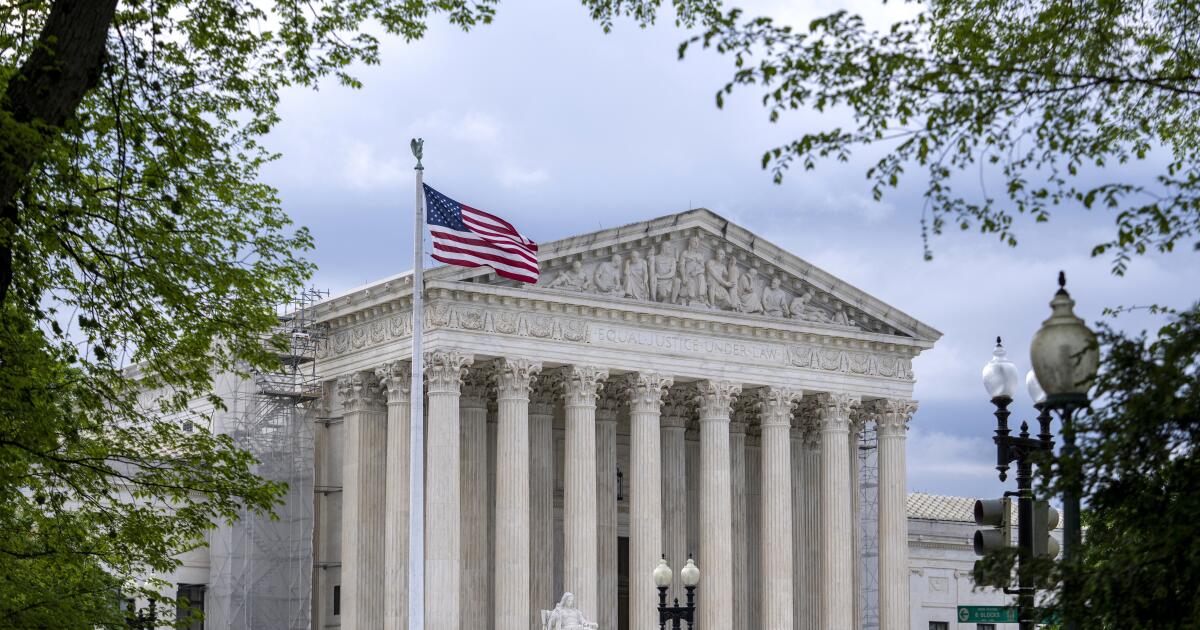
Supreme Court Shields ISPs From Piracy Lawsuits, Backs Cox Communications
The ISP Shield: Why Hollywood Just Lost Its Biggest Piracy Weapon
In a stunning 9-0 decision, the Supreme Court ruled that internet service providers like Cox Communications are not liable for copyright infringement committed by their users. This ruling overturns a $1 billion jury verdict against Cox, effectively dismantling the “contributory infringement” doctrine that studios relied on to police digital piracy. The decision forces the entertainment industry to pivot from litigation against ISPs toward advanced technological safeguards and legislative lobbying.
The gavel drop in Washington sends a seismic shockwave through Los Angeles and New York boardrooms alike. For decades, the strategy was simple: when pirates stole content, sue the pipeline. But on Wednesday, the High Court severed that link, declaring that providing a general service to the public, even with knowledge of some infringement, does not constitute liability. Justice Clarence Thomas, writing for the court, made the boundary stark: “Cox provided Internet service to its subscribers, but it did not intend for that service to be used to commit copyright infringement.” The implication is clear. The legal safety net has been cut.
This isn’t just a legal technicality; it is a financial hemorrhage waiting to happen. The Motion Picture Association and the Recording Industry Association of America (RIAA) are now staring down a barrel where the deepest pockets—ISPs—are off the hook. Mitch Glazier, chairman of the RIAA, didn’t mince words, calling the decision “disappointed” and noting it ignores “overwhelming evidence that the company knowingly facilitated theft.” But disappointment doesn’t recoup lost backend gross or protect SVOD exclusivity windows. The industry is now forced to solve a technological problem with legal tools that no longer fit the job.
When a legacy legal strategy collapses overnight, the immediate corporate reflex is damage control. Studios cannot afford to let shareholders panic over unprotected intellectual property assets. The immediate move for major conglomerates is to deploy elite crisis communication firms and reputation managers to frame this not as a defeat, but as a catalyst for innovation. The narrative must shift from “we lost our protection” to “we are pioneering the next generation of digital rights management.”
The Three Pillars of the New Anti-Piracy Strategy
The ruling fundamentally alters the risk profile for content distributors. No longer can they outsource enforcement to internet providers. The burden of protection falls squarely back on the content creators and distributors. Based on the court’s reasoning, the industry must now execute a three-pronged pivot to secure revenue streams.
- The End of “Contributory” Liability: The court distinguished this case from the Napster and Grokster rulings of two decades ago. Those platforms were built for piracy. Cox was built for internet access. This distinction means studios can no longer target the infrastructure. They must target the specific bad actors or the technology itself, requiring a massive overhaul of legal teams specializing in intellectual property litigation who understand the nuances of direct versus contributory infringement.
- The Rise of In-House Tech Defense: As attorney Michael K. Friedland noted, “The copyright infringement problem is a technological problem.” With the courts stepping back, the arms race moves to engineering. Studios must invest heavily in forensic watermarking, blockchain verification, and AI-driven content tracking. This isn’t just IT operate; it requires partnerships with specialized cybersecurity and data protection vendors capable of tracking leaks at the packet level before they hit torrent sites.
- The Legislative Lobbying Blitz: With the judicial door closed, the industry’s eyes turn to Capitol Hill. Rachel Landy of Cardozo Law School suggests the record industry’s best recourse is to “go to Congress for a fix.” This signals a massive lobbying expenditure ahead. Trade groups will need to mobilize quickly to draft new statutes that redefine ISP liability, a process that requires high-level government relations and lobbying firms with deep ties to the judiciary committees.
The financial stakes are astronomical. The original jury verdict against Cox was $1 billion. That money is gone. But the potential loss in global piracy is far higher. According to the U.S. Chamber of Commerce, online piracy drains the U.S. Economy of at least $29 billion annually in lost revenue. Without the threat of ISP liability, that number could swell, eating directly into the production budgets of mid-tier films and series.
Karyn Temple, senior executive vice president for the Motion Picture Assn., warned that the decision “upends the critical legal doctrine of contributory infringement for copyright.” Her concern is valid. In an era where AI tools are already scraping copyrighted content to train models, this ruling removes a key deterrent for the platforms hosting that data. It creates a vacuum of accountability.
“The decision means that the Supreme Court isn’t coming to the entertainment industry’s rescue. The industry is going to have to solve the problem itself — by developing its own better technology to protect its intellectual property.” — Michael K. Friedland, Entertainment Attorney
Civil liberties groups, naturally, are cheering. The Center for Democracy and Technology hailed the move as a “win for freedom of speech,” arguing that holding ISPs liable would turn them into “censorship machines.” While valid from a free speech perspective, this creates a friction point for brand equity. Studios are now in the awkward position of arguing for stricter controls without appearing anti-consumer or anti-privacy.
The path forward requires precision. It is no longer about blunt-force litigation. It is about surgical enforcement. Studios will need to partner with specialized IP law firms that can navigate this new, narrower landscape of liability. They must identify direct infringers without triggering privacy backlash, a delicate balance that requires legal expertise far beyond standard copyright trolling.
this ruling is a wake-up call. The old ways of policing the internet are dead. The entertainment industry must evolve from a litigious gatekeeper into a technological fortress. For the executives reading this, the message is simple: update your vendor list. The lawyers who got you here can’t gain you where you need to go. You need technologists, lobbyists, and crisis managers who understand that in 2026, protection is a product feature, not a lawsuit.
Disclaimer: The views and cultural analyses presented in this article are for informational and entertainment purposes only. Information regarding legal disputes or financial data is based on available public records.