
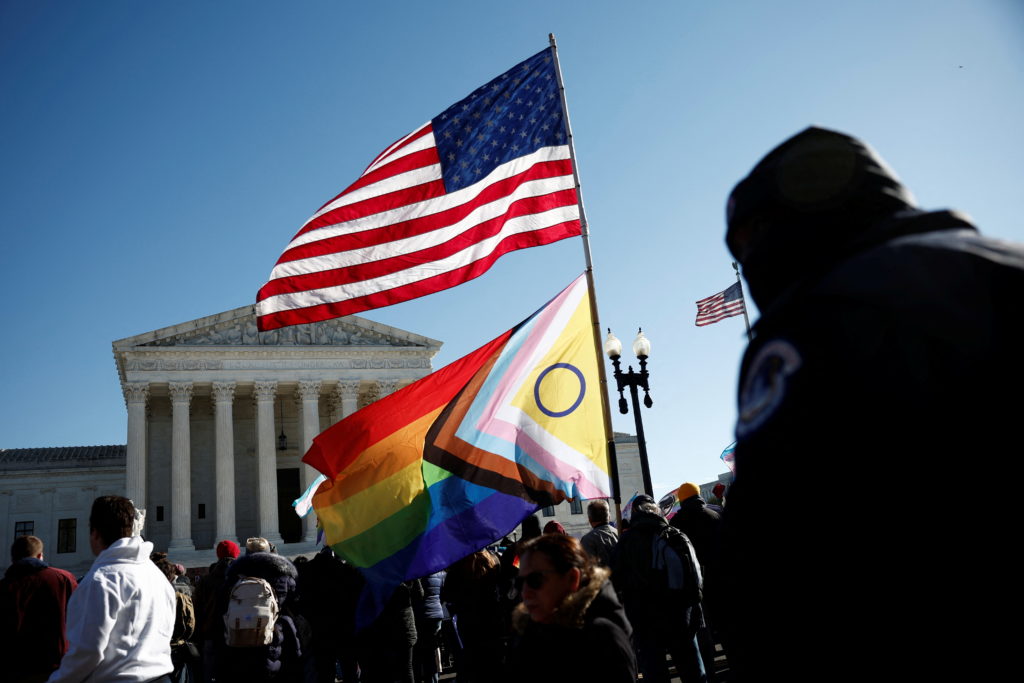
Supreme Court to Hear Landmark Cases on Transgender Athletes’ Participation in Sports
WASHINGTON (AP) — The participation of transgender athletes in school sports is set for a pivotal showdown at the Supreme Court this week, with arguments scheduled for Tuesday, January 13th, at 10 a.m. EST. the cases,stemming from West Virginia and Idaho,coudl have far-reaching consequences for transgender students nationwide and represent a critical juncture in the ongoing culture war surrounding gender identity and athletic competition.
the Cases at Hand: West Virginia and Idaho
The legal battles centre on state laws that restrict transgender girls and women from competing in sports consistent with their gender identity.West Virginia’s law, currently blocked by lower courts, is being challenged, as is a similar law from Idaho. The core question before the justices is whether these bans violate the U.S. Constitution’s Equal Protection Clause or Title IX, the federal law prohibiting sex-based discrimination in education programs and activities receiving federal funding.
The case in West Virginia features becky Pepper-Jackson, a 15-year-old sophomore who excels in discus and shot put.Her ability to compete has been thrown into question by the state’s ban, making her a central figure in the national debate. The Idaho case involves Lindsay Hecox, a college student challenging her state’s restrictions.
A Nation Divided: The Debate Over Fairness and Inclusion
The issue has ignited passionate debate across the contry,with proponents of the bans arguing they are necessary to protect fair competition for cisgender female athletes. West Virginia Attorney General JB McCuskey, in an interview with the Associated Press, asserted that “there are immutable physical and biological characteristic differences between men and women” that could disadvantage female athletes if transgender women are allowed to compete. He noted that, to his knowledge, no other transgender athletes are currently competing in West Virginia schools.
However, opponents of the bans, including civil rights advocates and LGBTQ+ organizations, contend that these laws are discriminatory and harmful, denying transgender youth the benefits of participation in sports – including physical health, social connection, and personal advancement. They argue that blanket bans are not supported by scientific evidence and perpetuate harmful stereotypes.
Watch: What science tells us about transgender athletes. This PBS Newshour report delves into the scientific complexities of the debate, examining the impact of gender-affirming care and athletic performance.
The Science Behind Transgender Athletes
The scientific community remains divided on the extent to which transgender women retain a competitive advantage after undergoing hormone therapy. Some studies suggest that hormone therapy can significantly reduce muscle mass and strength, bringing transgender women closer to the physiological characteristics of cisgender women. However, other research indicates that some advantages may persist. The complexity of this issue underscores the need for nuanced policies that consider individual circumstances and scientific evidence.
A History of Restrictions and Legal Challenges
The current legal challenges are part of a broader pattern of restrictions targeting transgender rights in recent years. During the Trump management,policies were enacted to exclude transgender individuals from military service and to narrow the definition of gender for federal purposes. These actions, along with the recent wave of state-level bans, have fueled a surge in legal battles.
The NCAA and the U.S. Olympic and paralympic Committees have also taken steps to regulate the participation of transgender athletes, with the U.S. Olympic & Paralympic Committee updating its policies in 2024 to align with new international standards. These developments reflect the ongoing effort to balance inclusivity with concerns about fair competition.
Public opinion and the Broader Political Landscape
Public opinion on the issue remains divided. An Associated Press-NORC center for Public Affairs Research poll conducted in October 2025 revealed that approximately 60% of U.S. adults favor requiring transgender children and teenagers to compete on sports teams aligned with their assigned sex at birth, while around 20% oppose such restrictions. This suggests a notable level of support for policies that prioritize traditional gender roles in sports.
Despite representing a small percentage of the population – approximately 0.8% of adults and 3.3% of those aged 13-17 identify as transgender, according to the Williams Institute at the UCLA School of Law – the issue has become a focal point in the broader culture war. Conservative groups,such as the Alliance Defending Freedom,have actively campaigned for restrictions on transgender rights,framing the issue as a defense of women’s sports and safety.
The Human Cost: Becky pepper-Jackson’s Story
beyond the legal and political complexities, the debate has a profound impact on the lives of transgender youth. Becky Pepper-Jackson’s story exemplifies the personal stakes involved. She has found success in track and field thru dedication and hard work, but her future in the sport is now uncertain. She has been forced to seek gender-affirming care out of state due to recent Supreme Court decisions limiting access to such care for minors.
“I think it’s something that needs to be done,” Pepper-Jackson said in an interview. “It’s something I’m here to do because… this is critically important to me. I know it’s critically important to other people. So, like, I’m here for it.” Her mother, Heather Jackson, described the opposition as “hatred,” adding, “This community is the community du jour. We have a long history of isolating marginalized parts of the community.”
Looking Ahead: The Supreme Court’s decision and Its Implications
The Supreme Court’s decision, expected by early summer, will likely set a precedent for how transgender athletes are treated across the country.A ruling upholding the bans could lead to further restrictions on transgender participation in sports, while a decision striking down the laws could pave the way for greater inclusivity. The outcome will not only affect athletes like Becky Pepper-Jackson but also shape the broader legal and social landscape for transgender rights in the United States.
Read More: what to know about the Supreme Court’s ruling on transgender care for youth. This article provides context on the court’s recent decisions related to transgender healthcare, which are relevant to the broader legal challenges facing the transgender community.
