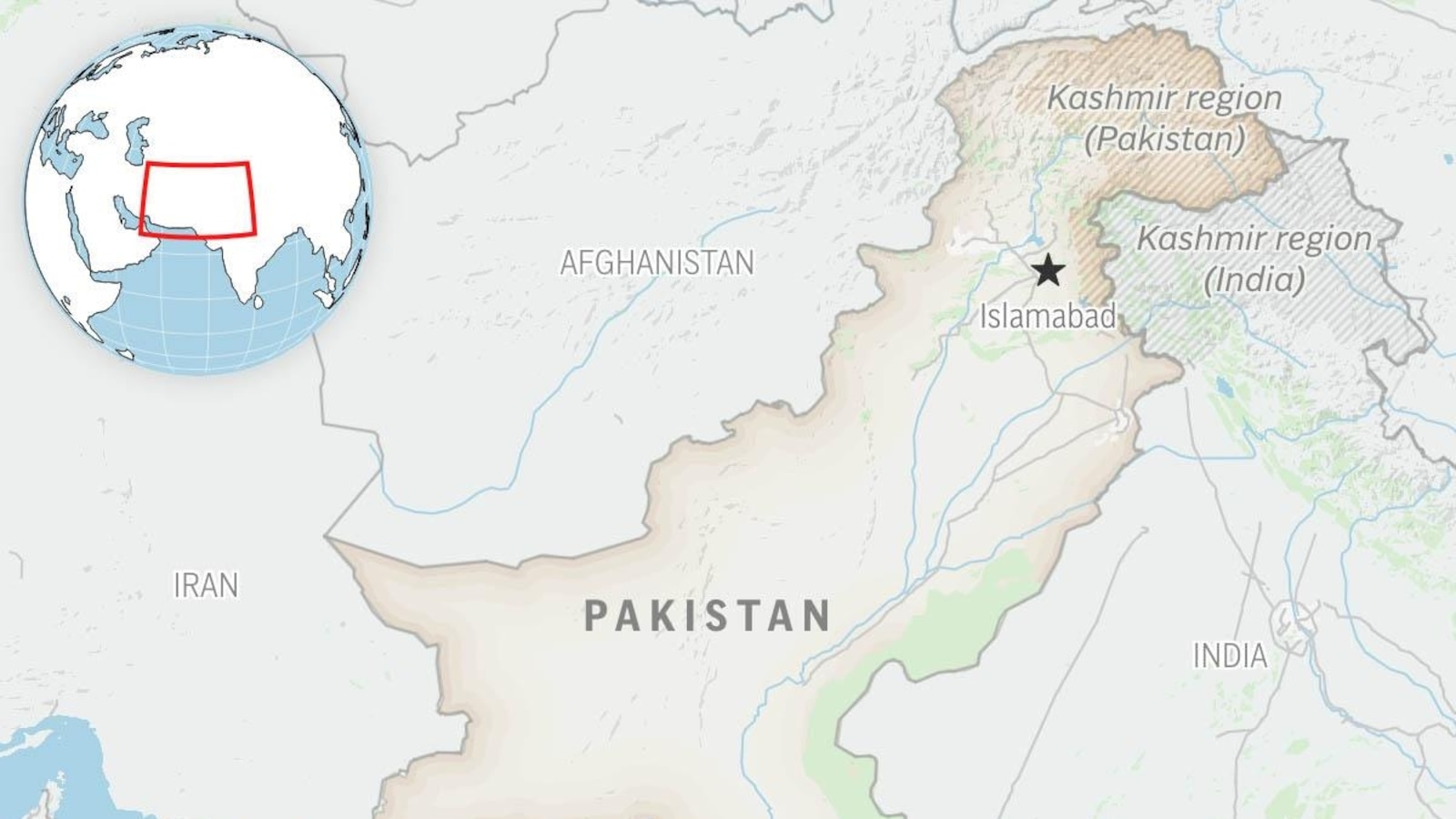
Suicide Bomber and Gunmen Kill 3 Police Officers in Northwest Pakistan
A suicide bomber and several gunmen killed at least three police officers during a coordinated attack on a security post in Bannu, Khyber Pakhtunkhwa, Pakistan. The detonation of an explosives-laden vehicle caused the security post and nearby homes to collapse, with suspicion centering on the Tehrik-e-Taliban Pakistan (TTP) amid rising regional violence.
The violence in northwest Pakistan is not a series of isolated incidents; it is a systemic failure of security in a region where the border with Afghanistan has become a porous conduit for instability. When a vehicle laden with explosives detonates in a residential and administrative hub like Bannu, the damage extends far beyond the immediate casualties. It shatters the perceived safety of the local population and exposes the fragility of the state’s frontline defenses.
Police official Zahid Khan confirmed that the attack, which occurred late Saturday, triggered an intense firefight and multiple explosions. The impact was so severe that the blast radius claimed not only the security post but also leveled several adjacent houses. This intersection of military targets and civilian infrastructure is a hallmark of modern asymmetric warfare, where the goal is to maximize chaos and psychological terror.
The immediate aftermath left officers wounded and trapped beneath rubble, necessitating a desperate rescue operation in the middle of an ongoing exchange of fire. This scenario highlights a critical gap in regional emergency response. When security posts collapse, the need for specialized structural engineers and heavy-rescue equipment becomes immediate to prevent further loss of life during recovery efforts.
The TTP and the Shadow of the Afghan Border
While no group has officially claimed responsibility for the Bannu attack, the operational signature points directly toward the Tehrik-e-Taliban Pakistan (TTP). The TTP, an entity allied with the Afghan Taliban who seized power in Afghanistan in 2021, has leveraged this geopolitical shift to intensify its campaign within Pakistan.
This alliance creates a complex security paradox. The Afghan Taliban’s governance in Kabul provides a strategic depth for TTP militants, allowing them to organize and launch strikes across the border into Khyber Pakhtunkhwa. The surge in militant violence is a direct reflection of this symbiotic relationship, where the border is no longer a barrier but a tactical asset for insurgents.
The use of a suicide bomber accompanied by gunmen—a “complex attack”—is designed to overwhelm first responders. The bomber creates the initial breach and chaos, while the gunmen exploit the disorientation to maximize casualties. This tactical evolution requires a fundamental shift in how security posts are designed and defended.
For municipal governments and security agencies, the lesson is clear: static checkpoints are no longer sufficient. There is an urgent requirement for security consultants who specialize in anti-ram barriers and blast-mitigation architecture to protect both police officers and the civilians living in the shadow of these posts.
Collateral Damage and the Human Cost
The collapse of nearby houses in Bannu brings the human cost of this conflict into sharp focus. When a security post is placed in a densely populated area, the “security” it provides often comes at the expense of the residents’ safety. The blast that killed three officers also destroyed the sanctuaries of innocent families.
This creates a secondary crisis: a legal and humanitarian vacuum. Families who lose their homes or loved ones in these attacks often struggle to navigate the bureaucracy of state compensation and insurance claims. In the wake of such devastation, accessing vetted legal representatives who understand the complexities of casualty compensation and property law is the only way for victims to secure their future.
The trauma of such an event does not end when the rubble is cleared. The psychological impact on a community that witnesses its security forces being overrun and its homes demolished is profound. The long-term stability of the region depends as much on mental health recovery as it does on military strength.
The regional economy also suffers. Frequent attacks in districts like Bannu deter investment and disrupt local trade, pushing the population further into economic precariousness—a cycle that militant groups often exploit for recruitment.
The Path Toward Regional Stabilization
The attack in northwest Pakistan is a stark reminder that the regional security architecture is under extreme pressure. The TTP’s ability to strike security posts with precision and brutality suggests a high level of intelligence and coordination.
To counter this, Pakistan must move beyond reactive policing. Stabilization requires a multi-pronged approach: tightening border controls, disrupting TTP financing and rebuilding the trust of the local populations in Khyber Pakhtunkhwa. If the state cannot protect its own security posts, the civilian population remains in a state of permanent vulnerability.
The international community, through organizations like the United Nations, continues to monitor the spillover effects of Afghan instability. However, the solution remains local. It requires an integration of military intelligence and civic resilience.
As the dust settles in Bannu, the tragedy serves as a warning. The surge in violence is not a peak, but a plateau. Until the relationship between the TTP and its allies in Kabul is addressed and the physical security of the border is reinforced, the police officers stationed in northwest Pakistan will continue to face an asymmetric threat that evolves faster than the defenses meant to stop them.
The true measure of recovery will not be the rebuilding of a single security post, but the restoration of a peace that allows a home to exist next to a police station without the fear of total annihilation. For those currently navigating the ruins of this conflict, finding verified professionals—from structural experts to legal advocates—is the first step in turning a site of tragedy back into a community.