Study: Rural Depopulation Linked to Biodiversity Decline in Japan
Japanese researchers expected rural depopulation to let nature recover.
It did the opposite: a study tracking 464 animal species and more than 2,900 plants found biodiversity declining even where people were leaving, according to findings published in Nature Sustainability on June 12, 2025.
The research, led by teams at Tokyo City University, the University of Sheffield, the Nature Conservation Society of Japan and Kindai University, found the clearest signal in places where populations held steady. There, biodiversity held steady too. In areas where human numbers rose or fell, wildlife declined regardless of the direction of change.
The conclusion cuts against one of conservation’s more hopeful assumptions — that when people leave the land, nature bounces back. The Nature Conservation Society of Japan said the hypothesis that depopulation would automatically lead to recovery "was not supported" in Japan's satoyama, the managed mosaics of rice paddies, woodland and grassland that sit between mountains and cities.
What the study measured
The team drew on the Monitoring Sites 1000 SATOYAMA Survey, a nationwide program in which citizen scientists recorded wildlife across 158 rural and semi-natural sites. The data covered five- to 17-year stretches beginning in 2004, and spanned woods, farms, villages and rural towns across the country.

Species tracked included birds, butterflies, fireflies and the egg masses of Japanese frogs, alongside roughly 3,000 plant species. The researchers compared those records against census data on human population and land-use change in the same areas.
The pattern held across sites. Bird species showed particularly significant declines where human populations increased, according to the conservation society. Fireflies — the Genji-botaru and Heike-botaru species beloved in Japanese summer folklore — and frogs declined in both growing and shrinking areas.
Why Japan’s countryside needs its people
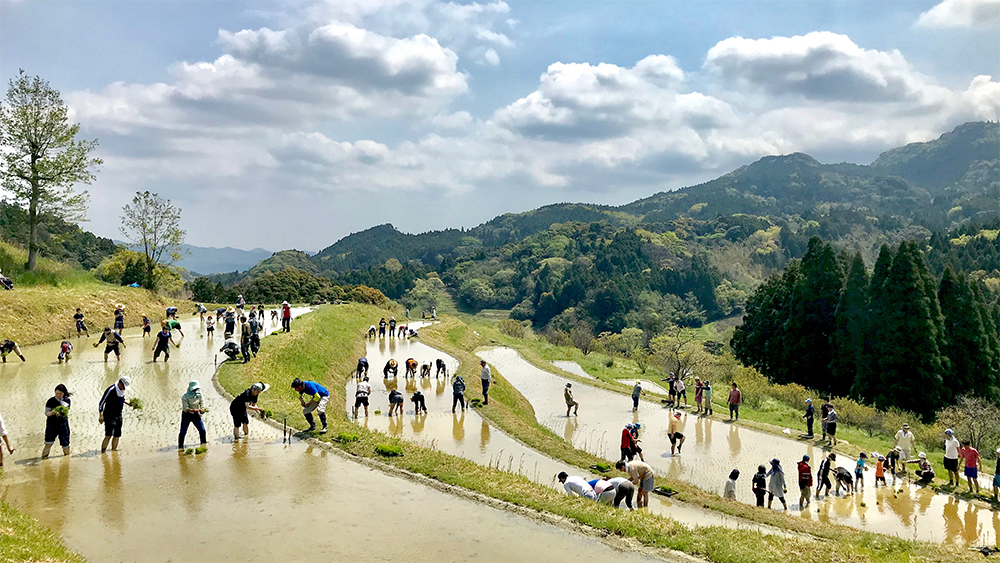
The explanation lies in thousands of years of land management. Small-scale farms carved diverse areas out of the narrow spaces between steep, forested mountains and Japan's dense urban corridors. Paddies, ponds, orchards and grassland became habitat in their own right.
Many plants and animals in these semi-natural ecosystems now depend on people to keep those areas open. Without cultivation, the mosaic collapses — and the species built around it go with it.
Japan offers a stark test case. Twenty-three of the country’s 47 prefectures have been losing population since 1995, while many remote areas have shrunk continuously since the 1950s.
The stakes reach well beyond Japan. The conservation society’s report places the study inside a global reckoning: since 1970, the world has lost 73% of its wildlife populations even as the human population doubled past 8 billion. Depopulation has now begun across developed countries, and some hoped a “depopulation dividend” would follow — ecosystems recovering as human pressure eases.
This study argues the dividend is not automatic. Where wildlife depends on traditional farming, fewer people can mean fewer species.
A warning for shrinking countries
The research group — Associate Professor Kei Uchida of Tokyo City University, Senior Lecturer Peter Matanle and postdoctoral researcher Yang Li of the University of Sheffield, Taku Fujita of the Nature Conservation Society of Japan, and Masayoshi Hiraiwa of Kindai University — published the work as Nature Sustainability carried it online on June 12, 2025.
The authors position Japan as a forerunner for understanding what depopulation does to biodiversity elsewhere, particularly in East Asia and Western countries where population decline is advancing. Their prescription: maintain wildlife-friendly farming in semi-natural areas, and make population trends a core input in conservation planning.
That planning burden falls on municipal governments, agricultural cooperatives and land trusts already stretched thin by rural shrinkage. Where farming hands disappear, keeping the satoyama open may require organized stewardship — the kind of work land management organizations and rural conservation groups are equipped to take on where local farming alone can no longer sustain it.
From satoyama to the world
The study’s reach comes from its method as much as its finding. Citizen-science monitoring gave researchers long, consistent biological records across dozens of areas — data that few countries collect at this scale, and that made the population-biodiversity link visible at all.
The Nature Conservation Society of Japan framed the lesson for a world pursuing a “nature-positive” future: biodiversity does not recover on its own as human numbers fall, and in some places it is lost precisely because they do. Conservation, the group argued, must be planned with that in mind.
What remains unresolved is practical: who will farm and manage Japan's satoyama as its rural population continues to thin, and whether other depopulating countries with similar semi-natural areas will heed the warning before their own species counts fall.
The Nature Conservation Society of Japan, the study’s co-author, traces its origins to the Oze Marsh Conservation Union, formed in 1949 to challenge plans for a hydroelectric power station in the Oze marshes. Two years later, after organizing a petition against sulfur mining at Mount Meakan in Hokkaidō, the group reformed as the country’s first nature conservation organization.
A member of the International Union for Conservation of Nature, for which it acts as the Japanese coordinator, it has more recently developed a citizen-led satoyama monitoring system — experience that fed directly into the nationwide survey behind this study.
The authors' own framing stands as the study's sharpest takeaway — maintaining wildlife-friendly farming in these areas is essential wherever people are leaving, and every country with a shrinking population must weigh what that shrinkage costs its wild species.