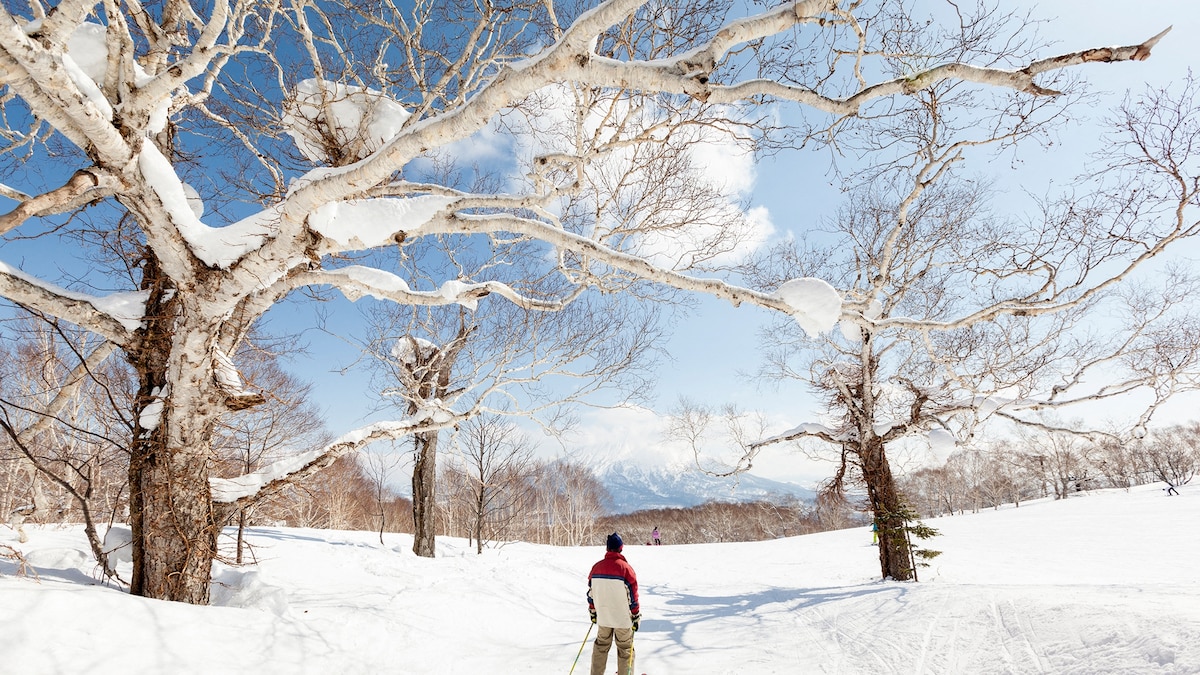
Japan’s ski resorts offer powder snow in Hokkaido and Nagano
Japan enters the 2026/27 winter sports season with its snowpack drawing international travelers chasing lightweight powder snow driven by westerly winds off the Siberian tundra, National Geographic reported. The snow season typically runs from December through April, with the most reliable snowfall usually in January and February across major destinations like Hokkaido and Nagano.
That geographic quirk causes up to 15 meters of snowfall every winter in parts of northern Hokkaido, far outpacing European resorts such as Tignes, France, which see seven meters. Westerly winds scoop moisture over the Sea of Japan before dumping it across the archipelago. Aficionados know this fluffy, near-daily replenished snow as Ja-pow.
Asahidake Backcountry Operations
For expert skiers looking to venture deeper into the Japanese backcountry, Asahidake in central Hokkaido offers a single cable-car set in Daisetsuzan National Park. While there are suggested runs, the only pisted sections are narrow tracks for snow-groomers.

Ten Resorts Offer 137 Kilometers of Pistes
Hakuba is a big ski hub an hour’s drive from Nagano, with 10 resorts around the buzzy main town offering a total of 137 kilometers of pistes. Skiers can ride regular shuttle buses between them, and while the properties lack physical lift connections, they can all be enjoyed using a single lift ticket. Skiers looking for long, winding red, black and blue routes—alongside thrilling off-piste descents, especially via ski touring above the summit lifts—will find plenty of options at Happo One and Hakuba 47. Hakuba hosted the slalom and giant slalom races at the 1998 Winter Olympics, and the town is lively, especially on weekends, and feels pretty international.
Eighteen Base Stations Spread Along the Valley
One resort hosted the slalom and giant slalom races at the 1998 Winter Olympics, and its 80 kilometers of pistes and 1,480 acres of accessible terrain include plenty of challenging runs, particularly off-piste. The layout has no fewer than 18 different base stations spread along the valley, meaning there is no central village hub. Nightlife tends to be pretty low key, but for traditional Japanese mountain culture and cuisine, it is a great option.
Resort Joins the Ikon Pass Scheme
Furano in central Hokkaido spans 32 kilometers of piste and 500 acres of lift-accessible terrain, with less crowded slopes and fewer foreign skiers than near-coastal resorts like Rusutsu. There are Japanese-run bars and restaurants, guesthouses with tatami floor mats, English-speaking instructors and a quieter village vibe that has made it popular with visiting families. By joining the United States-based Ikon Pass network, the destination has become significantly simpler for international visitors to experience.
Three Interconnected Mountains Combine Powder with Sunny Days
Operating across three faces of an inactive volcano, Niseko United on Hokkaido channels its lifts toward four distinct base zones named Hanazono, Grand Hirafu, Annupuri and Niseko Village. Rusutsu offers 37 trails across three interconnected mountains — West Mountain, East Mountain and Mt. Isola — connected by four gondolas and 14 lifts. It combines abundant dry powder with an unusually high number of sunny winter days, plus family activities like dog sledding and snowmobiling.
Rishiri Off-Beaten-Path Touring
Ski touring is the primary focus on Rishiri, where hardcore powder enthusiasts hike through forested terrain with a guide before making tracks through untouched snow all the way back down to the ocean. Strong winds sometimes scour the mountain, rendering large sections unskiable. But with the right weather window, visitors can stay in simple lodges, eat fresh seafood, bathe in unpretentious onsen and carve their own path through virgin snow.