Japan Earthquake Injures At Least 22 in Shizuoka at 1:04 AM Sunday, Nov 8
Shattered store windows and scattered shards of glass litter the streets of central Japan after a magnitude 5.7 earthquake struck at 1:04 a.m. on Sunday, November 8, 2026, leaving at least 22 people injured, thehindu.com reported. The epicenter was located about 40 kilometres below the earth’s surface in Shizuoka Prefecture, according to Japan’s Meteorological Agency, while the U.S. Geological Survey measured the magnitude slightly lower at 5.5.
Shizuoka Magnitude and Epicenter Depth Differ Across Agencies
The tremor shook a wide area surrounding Aichi Prefecture, affecting the city of Hamamatsu, the ancient capitals of Kyoto and Nara, and the neighboring prefectures of Yamanashi—where Mount Fuji is located—and Gifu. Japanese television footage broadcasted images of bookstores with mounds of books that had flown off shelves, alongside broken storefront glass. Among the 22 injured individuals were residents who fell from stairs while trying to flee buildings during the shaking.
Seismic assessments indicate that the most violent shaking occurred in Aichi, which neighbors Shizuoka Prefecture. Because of the distance from Tokyo, the earthquake was not felt in the capital city. Shinkansen bullet trains operated at slower speeds across the affected areas as a precautionary measure against potential railway damage.
Agency Alerts Residents to Quake, Landslide Risks
Japan’s Meteorological Agency warned residents to brace for potential strong quakes over the coming week, particularly during the initial two to three days. Ayataka Ebita, an agency official, told reporters to remain on the lookout for mudslides, falling rocks, and rainfall-related hazards. Ebita added that no apparent changes had been detected so far on the Nankai Trough plate, where scientists monitor the potential for a future megaquake.
While regional transportation networks managed the immediate aftermath with reduced train speeds, property owners and municipal authorities faced sudden structural damage.
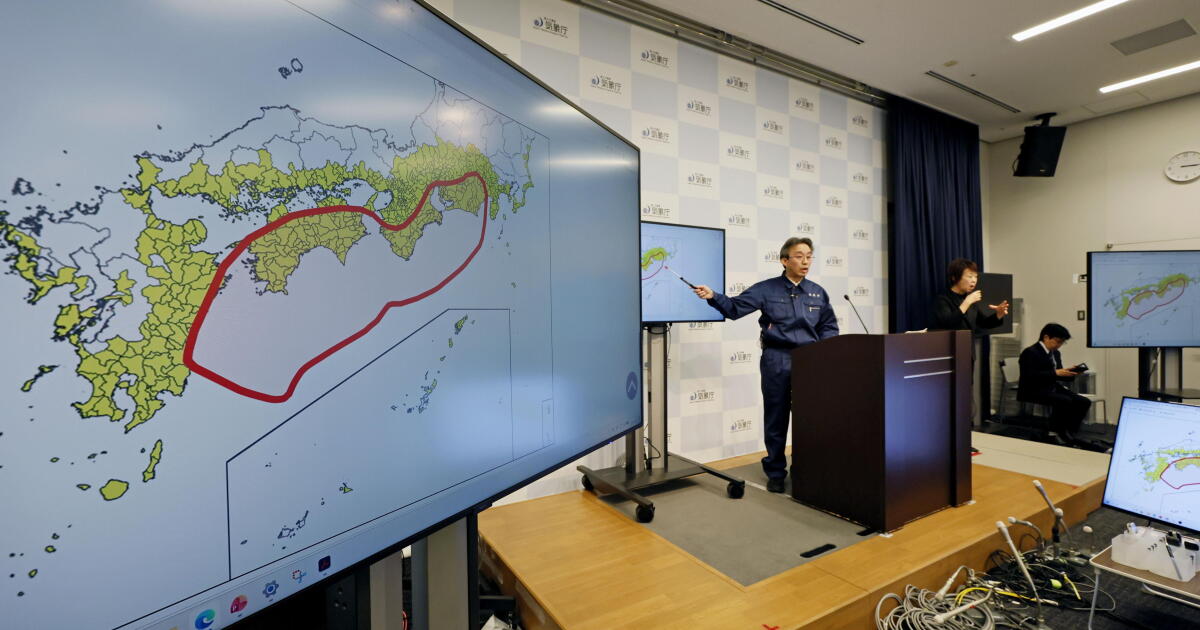
Officials Confirm Nankai Trough Remains Stable
Authorities in earthquake-prone Japan routinely instruct residents to maintain supplies of bottled water, food, and batteries, establish household evacuation plans, and keep comfortable walking shoes accessible. The distinction between the magnitude assessments—5.7 by the Japan Meteorological Agency versus 5.5 by the U.S. Geological Survey—follows the strong earthquake that struck central Japan.
Questions remain regarding whether the Shizuoka tremor signals increased seismic activity, although officials stated no apparent change has been detected so far to the Nankai Trough plate as aftershocks continue.
A strong M5.7 #earthquake struck the Tokai region of central #Japan at 1:04 AM local time (Nov 8). The epicenter was in western Shizuoka Prefecture, about 40 km deep. Maximum intensity: upper 5 in Chita, Aichi. No tsunami threat. pic.twitter.com/SzJY0QNWmy