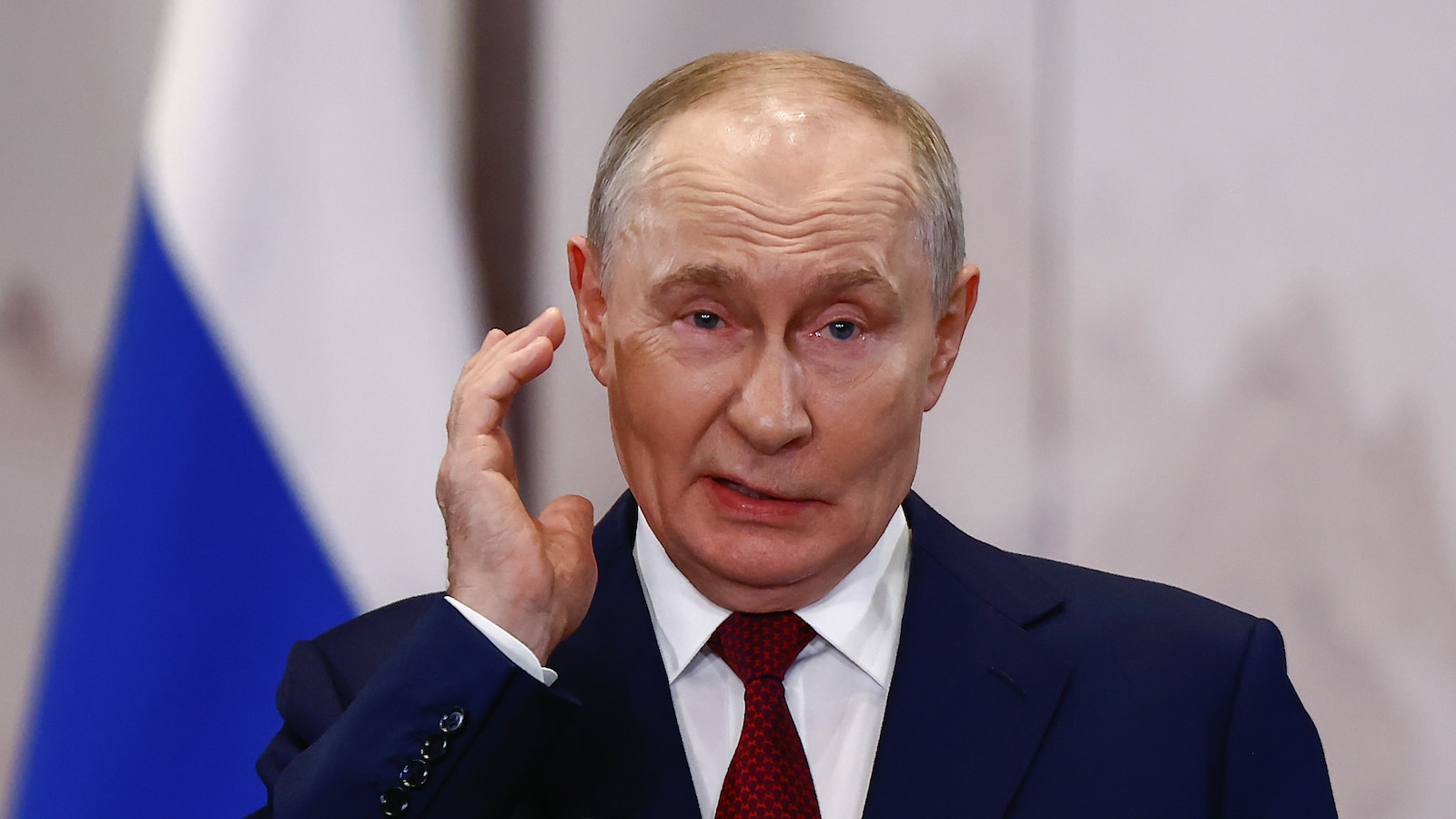
Trump, Xi and Putin Hold First Trilateral Summit, Produce Declaration but No Breakthroughs
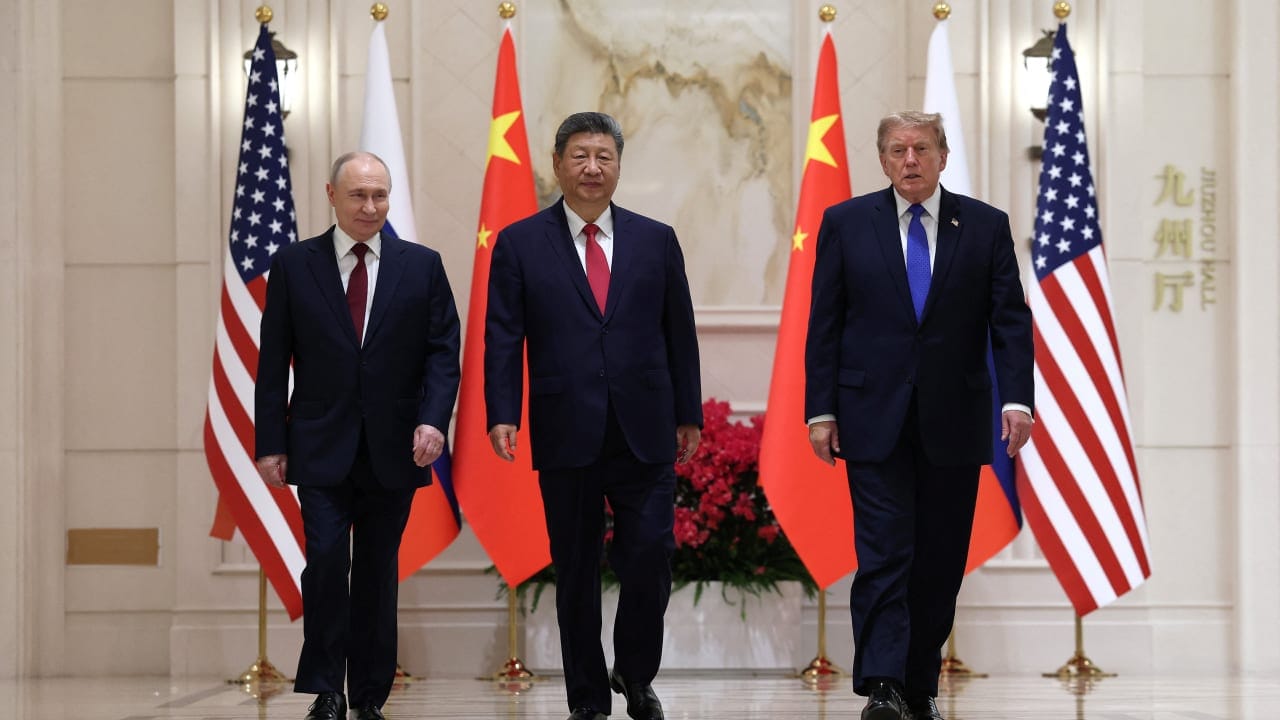
President Donald Trump, Chinese leader Xi Jinping and Russian President Vladimir Putin held the first trilateral summit between their three countries in Shenzhen, China, on Thursday, November 19, producing a four-point declaration but no breakthroughs on nuclear arms, Ukraine or Iran.
The meeting, staged at Kylin Villa on the sidelines of the Asia-Pacific Economic Cooperation summit, lasted roughly 80 minutes, including 10 minutes of opening remarks. The Washington Post reported that the three leaders arrived with three different agendas and three competing visions of the international order — and left with little consensus.
President Trump's trilateral summit with Chinese President Xi Jinping and Russian President Vladimir Putin has the makings of an unpredictable spectacle – and that's exactly what has U. S. allies anxious. My story on @axios https://t.co/sDYY70NwCg
For Trump, the meeting was supposed to be a diplomatic triumph: It would serve as proof that Trump could negotiate with two of America’s toughest rivals, the Associated Press reported. Instead, the leaders agreed after about 70 minutes behind closed doors to a far narrower agenda than the sweeping one Trump had outlined.
What emerged was a document, not a deal. The three nations adopted “The Russia-China-US Heads of State Declaration Toward Peace,” committing to dialogue on reducing nuclear risks, reform of the United Nations, increased production and supply of refined petroleum products, and limits on what they called abuse of jurisdiction by the International Criminal Court.

Trump sought history, Xi chose his words
“We are really making history,” Trump said at the start of the talks, seated with Xi and Putin around a large round table. He called the gathering “the first-ever trilateral meeting between our countries.”
Xi described the summit as being of “groundbreaking significance,” while Putin said the three countries could strengthen global stability if they cooperated constructively. Afterward, Xi called the meeting positive, constructive and fruitful, the Associated Press reported.
By meeting Donald Trump and Xi Jinping, Vladimir Putin is sending a holiday postcard to the rest of the world. But instead of ‘Wish you were here’, he’s signed it ‘Look: I’m here.’ My report from Shenzhen. https://t.co/K3SfGT57fN
The warmth was deliberate. Trump greeted Putin by pointing at him and asking a Russian aide, “Who is he?” before laughing and answering, “He’s my friend.” Xi, who does not usually greet foreign leaders at the airport, met Trump with a hug on Wednesday and said he was returning a gesture Trump made when Xi visited Washington in September.
Nuclear arithmetic that doesn’t add up
Nuclear arms control topped the stated agenda. Trump told Fox News that all three countries “only need about 10” nuclear bombs and that “you don’t need 4,000.”
The gap between the three arsenals explains why agreement was hard. The last U.S.-Russia arms pact, New START, expired in February, and Trump has said he wants “a new, improved and modernized” deal that includes China.
But China’s arsenal of more than 600 warheads is far smaller than the more than 5,000 warheads believed to be in each of the U.S. and Russian stockpiles, giving Beijing little incentive to accept limits, the Associated Press reported.
“We need more than diplomatic theater and photo opportunities between Xi, Putin and Trump,” said Daryl Kimball, executive director of the Arms Control Association. “And one meeting will not likely produce dramatic breakthroughs,” he told the Associated Press.
Why the optics troubled Kyiv and Europe
Ukraine and its European allies viewed the meeting with deep suspicion. German Chancellor Friedrich Merz said Europeans feared another “Anchorage moment,” a reference to the Putin-Trump meeting in Alaska in August 2025 that produced proposals rejected by Ukraine and its partners.
The imagery did Putin no harm at home. Standing with Xi and Trump, the Kremlin leader “will look like one of the three main leaders of the world,” even though “Russia is no superpower” and its economy, overloaded with military spending, is dwindling, Chatham House director Bronwen Maddox wrote in a commentary before the three-way meeting.
Russian television zeroed in on an officer in Putin’s retinue carrying the briefcase with the codes for Moscow’s nuclear forces as he arrived.
On the battlefield itself, the meeting changed nothing. Both sides have escalated long-range aerial attacks as fighting largely stalls along the 1,200-kilometer (750-mile) front line — and Ukrainian drones and missiles seriously damaged the Kerch Bridge, Putin’s pet project and potent symbol of Moscow’s control, shortly before the summit.
Trump told Fox News he would not reach an agreement with Putin on Ukraine without input from the Ukrainian government and President Volodymyr Zelenskyy. “I wouldn’t do that,” he said. “Look, they gotta get along. These two guys hate each other, and they gotta get along. So I get along with both.”
Where the sources disagree
The outlets framed the summit differently. The Washington Post’s framing put a weakened Trump on a shared global stage, citing political challenges, including the fallout from bruising midterm elections, the Nvidia spy scandal and a spate of tech and air travel outages.
CNN argued the meeting felt odd because Trump treats authoritarian leaders as friends, noting he argued that Putin was showing restraint and explained he wasn’t confronting Beijing over an espionage drama involving advanced semiconductor chips because “I don’t think you want to insult China just before you get there.”
The Jerusalem Post and Times of India, by contrast, led with the ceremony and the declaration itself.
The substance behind the pageantry was thin: Trump told reporters when asked what he wanted to get out of the trilateral, “This is a great president, one of the great presidents of China, and he’s never gone to the airport to meet somebody,” adding that the welcome and fanfare were “a big win for us.”
Not everything went to script. Chinese officials barred Bloomberg TV reporter Annmarie Hordern, a member of the traveling White House press pool, from the trilateral after she shouted a question about ousted Nvidia CEO Jensen Huang’s alleged affair with a Chinese spy.
What remains unresolved
Ukraine settlement terms, Iranian war disruption to oil flows through the Strait of Hormuz, and any binding nuclear limits all remain open. Trump said at the start of a lunch meeting with Xi that the two sides found “balance” in what is now a “fair” trade relationship, but no trade agreement from the trilateral itself was announced.
A possible meeting with North Korean leader Kim Jong Un, floated by Trump on Monday, was still not officially scheduled as of the summit’s close.
A historic first on the world stage. President Donald J. Trump, President Xi, and President Putin hold trilateral talks in China. pic.twitter.com/w2qDiJo8W5
Analysts see different clocks running. China may stick to its long game in anticipation of yet another U.S. policy reset with a new president in 2029, while Putin may reason he can score a better deal on Ukraine with Trump in office than with any other U.S. president, CNN reported.
As summit host, Xi will seek to exploit Trump’s political frailties, though he won’t be rude because he wants to maintain a good relationship, whatever his personal feelings about Donald Trump, CNN reported.
“Is this meeting with Putin and Xi Jinping in the national interest of the United States?” former U.S. ambassador to China Nicholas Burns asked on CNN’s “AC360” on Tuesday. “Think of the symbolism.”

For businesses exposed to the fallout — energy traders watching the Strait of Hormuz, exporters tracking U.S.-China tariff policy, firms dealing with sanctions exposure across three jurisdictions — the summit produced headlines rather than rules. Sanctions and trade compliance specialists, international trade counsel and geopolitical risk consultancies are the professionals most likely to be briefed on what the declaration does and does not change.
Kylin Villa, the venue for the talks, is a state-owned lakeside resort in the foothills of Kylin Mountain in northwestern Shenzhen, next to Xili Lake. It opened in June 1997, built by the local government shortly before the Hong Kong handover because the city’s five-star hotels could host only around 500 people, while officials needed a venue for banquets of up to 1,000 guests.
The estate has five main villas, each built in a different style — French, Italian, Spanish, Hawaiian and American — and has hosted visiting dignitaries before, including North Korean leader Kim Jong-il, who stayed there secretly on a visit to study China’s economic reforms nearly 20 years ago. When it is not holding important events, the resort is open to the public.
The next dated marker on the calendar is December, when Trump has invited Putin for the G20 summit at his Miami golf resort, CNN reported. Whether the Shenzhen declaration’s promise of nuclear-risk dialogue survives that long is, for now, an open question — one the declaration itself answers only with a pledge to keep talking.
Plans for bilateral talks between Russian President Vladimir Putin and US President Donald Trump at a summit in China are underway, the Kremlin said. https://t.co/AHYrcDPadS
- Husband and Four Men Admit Drugging and Raping Wife Over 13 Years; Nine on Trial
- Russian Tu-95 Bombers Enter Taiwan ADIZ During APEC Trilateral Meeting
- Takaichi Leaves APEC Summit Without Xi Bilateral, Urges Constructive China Ties (time.news)
- Trump's Beef Quota Filled About 37% in Month One; Ground Beef Fell 13 Cents (daybreakwire.com)