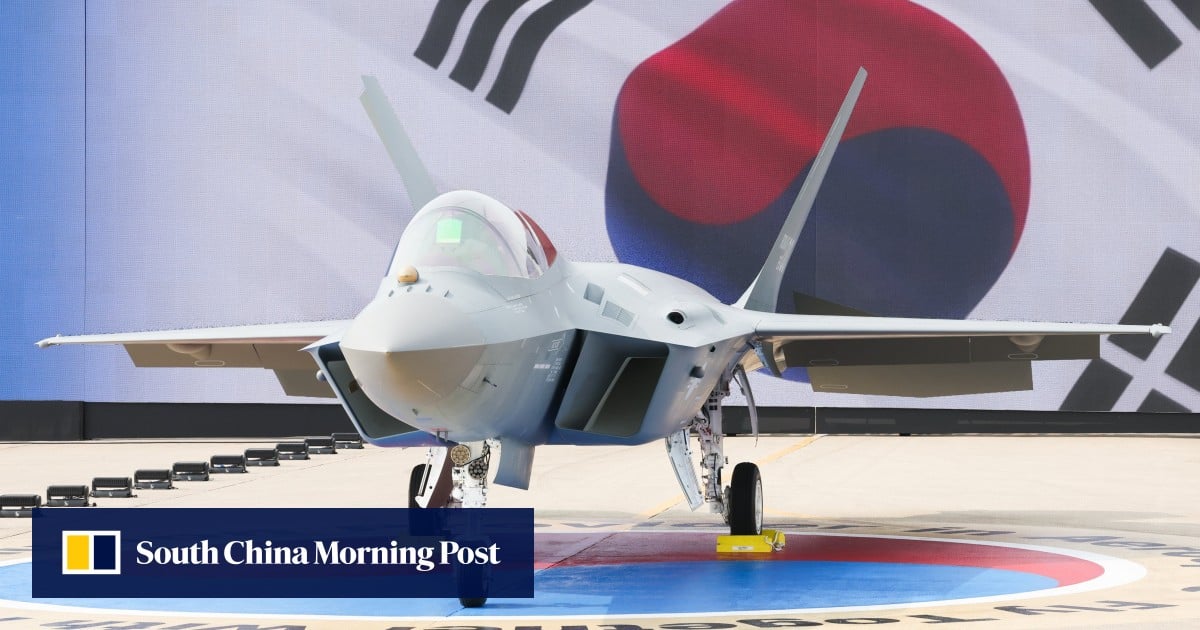
South Korea’s KF-21 Fighter Jet: Production and Market Outlook
South Korea and Indonesia have finalized the KF-21 fighter jet production line as of April 2026, yet global sales remain uncertain due to funding gaps and geopolitical competition. This stagnation impacts defense supply chains and requires strategic legal and logistical intervention for stakeholders navigating the complex international arms market.
The Production Reality Versus Market Hesitation
The assembly lines in Sacheon are humming. South Korea’s Korea Aerospace Industries (KAI) has rolled out the first production-standard KF-21. We see a tangible symbol of technological sovereignty. Yet, the cockpit remains empty of foreign buyers. Indonesia, the primary partner, faces a critical juncture. During President Prabowo’s recent diplomatic visits, expectations were high for a finalized contract. Those signatures did not appear. The commitment remains, but the cash flow does not match the ambition.
This disconnect creates a ripple effect. It is not merely about aircraft; it is about trust in long-term procurement. When a partner nation hesitates, it signals risk to the entire supply chain. Vendors who manufactured avionics, radar systems, and composite materials now face inventory uncertainty. They need answers. They need stability.
Modern defense marketing no longer relies on brute force specifications alone. As recent industry shifts indicate, successful procurement now depends on AI-driven audience personas to understand buyer hesitation. Nations are customers. Their budgets, political pressures, and strategic goals form a complex persona that suppliers must decode. South Korea understands the engineering. The question is whether they understand the buyer’s financial persona well enough to close the deal.
Geopolitical Friction and Supply Chain Risks
The KF-21 enters a crowded sky. It competes directly with the American F-35 and the Swedish Gripen. Each offers distinct advantages. The F-35 brings unparalleled network integration. The Gripen offers lower operational costs. The KF-21 promises a middle ground: advanced capability without the political strings often attached to American hardware. Still, “without strings” often means “without support.”
International arms deals are logistical minefields. They involve export controls, technology transfer agreements, and offset obligations. A delay in one jurisdiction can freeze assets in another. For private contractors supporting these programs, the risk is acute. A cancelled order does not just lose revenue; it leaves specialized infrastructure idle. Securing vetted defense procurement specialists is now the critical first step for companies exposed to this volatility.
Consider the legal framework. The International Traffic in Arms Regulations (ITAR) governs much of the technology embedded in these jets. Even a Korean-made jet uses American engines. A breach in compliance can lead to severe penalties. Developers and suppliers are consulting top-tier commercial real estate attorneys and trade compliance experts to shield their assets from cross-border litigation.
“The technology is ready, but the financial architecture is lagging. We are seeing nations want the capability without the long-term sustainment budget. That is a recipe for operational failure down the line.” — Senior Defense Analyst, Asian Security Review
This sentiment echoes across the region. The hesitation from Indonesia is not unique. It reflects a broader trend where emerging economies seek modernization but lack the fiscal depth to sustain it. This creates a gap. Who fills it? Private equity firms specializing in defense logistics. Government relations consultants who can navigate the bureaucracy of Jakarta and Seoul simultaneously.
Comparative Market Position
To understand the stakes, one must look at the alternatives available to potential buyers in 2026. The KF-21 is not the only option. The following data highlights where the Korean jet stands against its primary competitors in terms of entry cost and technological maturity.

| Aircraft Model | Origin | Estimated Unit Cost (2026) | Technology Status | Export Restrictions |
|---|---|---|---|---|
| KF-21 Boramae | South Korea | $65 Million | Production Ready | Moderate (US Engine Dependent) |
| F-35 Lightning II | United States | $85 Million | Full Operational | High (Strict ITAR) |
| JAS 39 Gripen E | Sweden | $60 Million | Full Operational | Low (Flexible) |
The table reveals the KF-21’s niche. It is cheaper than the F-35 but more capable than legacy jets. However, the “Moderate” export restriction is a hidden cost. Dependence on American General Electric engines means Washington holds a veto power. This geopolitical lever complicates sales to nations not fully aligned with U.S. Foreign policy. It forces buyers to engage government relations consultants to ensure their procurement plans survive political shifts in Washington.
The Path Forward for Industry Stakeholders
For the businesses supporting this ecosystem, the strategy must shift from production to sustainability. The jet is built. Now the focus turns to maintenance, training, and parts supply. This represents where the real long-term revenue lies. It is similarly where the legal complexity deepens. Service contracts across borders require robust dispute resolution mechanisms.
News aggregators and algorithmic systems have turn into primary infrastructure for how audiences encounter journalism about these deals. As noted by the National News Authority, how this story is framed influences investor confidence. Negative narratives about funding gaps can spook supply chain partners. Positive narratives about technological breakthroughs can attract equity. Managing this information flow is a business imperative.
Companies must also look inward. Are their teams prepared for the complexity of 2026 defense trade? The Associated Press and similar organizations are hiring specialized editors to manage complex campaign narratives. Defense firms need similar expertise. They need communicators who can explain technical delays without losing stakeholder trust.
the KF-21 story is a case study in modern industrial diplomacy. It proves that engineering excellence is not enough. You need financial engineering. You need legal armor. You need a network of professionals who understand that a fighter jet is not just a weapon; it is a contract that lasts decades.
The engines are warm. The wings are swept. But until the contracts are signed and the legal frameworks are secured, the KF-21 remains grounded by bureaucracy rather than physics. For those navigating this sector, the opportunity lies not in building the jet, but in building the infrastructure that allows it to fly commercially. Consult the World Today News Directory to find verified professionals equipped to handle this developing story.