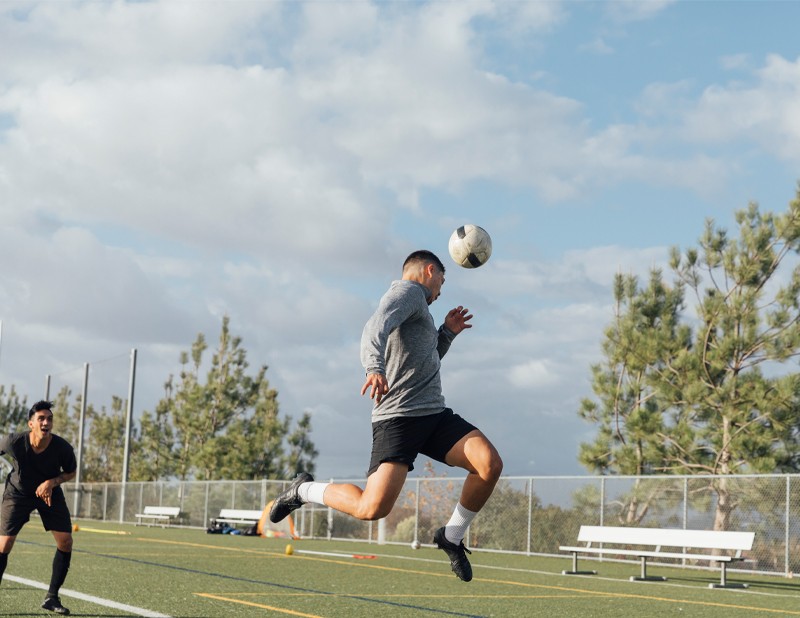
Soccer Heading Increases Blood Biomarkers of Brain Injury in Amateur Players
Amateur-level soccer players who headed the ball during a single match exhibit immediate, dose-dependent spikes in blood biomarkers associated with neural damage, according to a study published on July 31, 2026, in Nature Medicine. The findings offer physiological insight into the acute impacts of head impacts in recreational athletics, highlighting the vulnerability of neural tissue during standard gameplay.
- Amateur soccer players who headed the ball during a standard match showed acute elevations in blood-based neural injury biomarkers p-Tau217 and S100B.
- The biomarker concentration scaled directly with the frequency and intensity of headers executed, establishing a clear dose-response relationship.
Biochemical Indicators of Acute Neural Stress
Blood plasma analyses performed immediately after the final whistle revealed statistically significant surges in p-Tau217 and S100B.
Dose-Response Dynamics in Recreational Play
A defining metric of the Nature Medicine study is the clear dose-response correlation observed across participants. Players who engaged in a higher frequency of headers registered proportionally steeper elevations in both serum biomarkers.
Future Trajectories in Neurotrauma Research
Disclaimer: The information provided in this article is for educational and scientific communication purposes only and does not constitute medical advice. Always consult with a qualified healthcare provider regarding any medical condition, diagnosis, or treatment plan.