
Jakarta, Indonesia – Astronomers are closely monitoring Saturn’s rings, recently observing a temporary phenomenon where they appear diminished, a result of the planet’s orbital alignment. While this “lost ring” effect is cyclical, the next optimal viewing possibility isn’t until 2038, and recent research indicates the rings themselves are surprisingly young.
The study of Saturn’s rings began in 1610 with Galileo Galilei, who, using an early telescope, observed what he described as Saturn’s ”ears.” though, he couldn’t fully interpret the structure. In 1655, Christiaan Huygens correctly identified these projections as a ring system.
Further investigation by giovanni Cassini in the 17th century revealed the complexity of the rings, identifying multiple ring structures and a prominent gap now known as the Cassini Division.
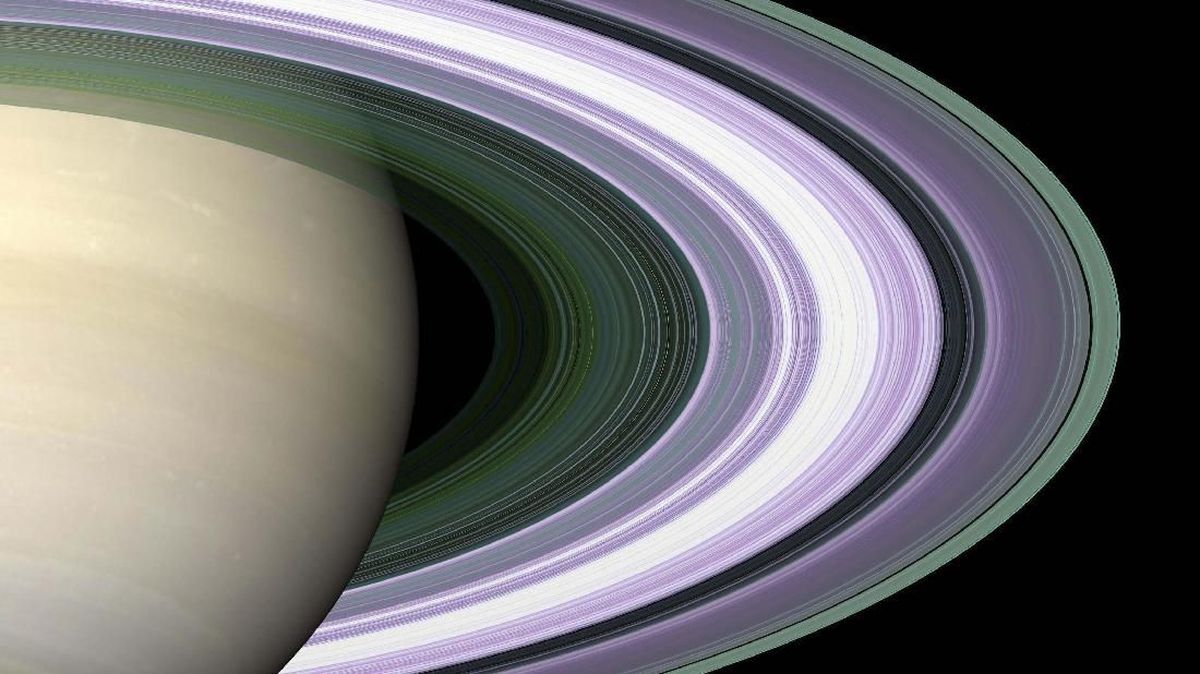
Currently, Saturn is known to possess seven main rings, designated A through G. These rings are not solid structures but are composed of countless ice particles, ranging in size from fine granules to chunks several meters across. The ring system extends approximately 282,000 kilometers in width, yet maintains an incredibly thin profile of only about 1 kilometer.
Challenging previous assumptions, recent research suggests Saturn’s rings are not billions of years old, as once believed. Instead, they may have formed relatively recently, around 400 million years ago. The origin of the rings remains an area of active research, with theories ranging from the breakup of a moon to material left over from the planet’s formation.
The temporary “loss” of the rings is a consequence of Saturn’s orbital position relative to Earth and the Sun. Due to Saturn’s tilt, the rings appear to narrow substantially when viewed from Earth during certain times of the year. This effect is not a permanent disappearance, but a cyclical change linked to Saturn’s 29.5-year orbital period.
Observing this phenomenon will be challenging in 2025, as Saturn will be positioned too close to the Sun in Earth’s sky, making observation difficult even with powerful space telescopes. Saturn reappeared from the Sun’s glare at the end of April 2025,offering a brief viewing window before dawn.
Astronomers estimate that the rings will not fully vanish for approximately 300 million years. The ongoing process of ring particle erosion and gravitational interactions with Saturn’s moons contribute to the gradual loss of material, but the rings are not expected to disappear entirely within a human timescale.
