
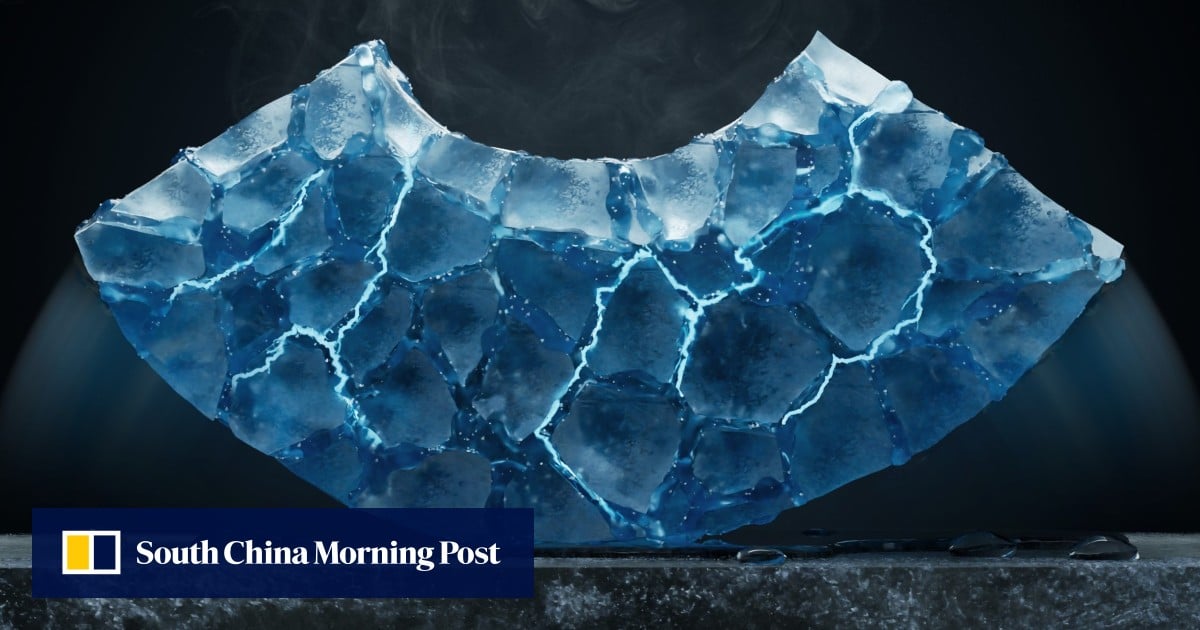
Scientists Discover Electricity Generation potential in Salt-Doped Ice
A collaborative team of researchers from China and Spain has unlocked a novel method for generating electricity using ordinary ice – by adding salt. The breakthrough, detailed in a paper published last month in Nature Materials, demonstrates that saline ice can produce an electrical response comparable too high-performing ceramic materials when bent, opening the door to a perhaps low-cost and sustainable energy source for cold regions.
Despite covering 10 percent of the Earth’s surface, the energy potential of ice has remained largely unexplored. This new research reveals that incorporating salt into ice fundamentally changes its electrical properties, enabling it to harness energy through a phenomenon called flexoelectricity. Flexoelectricity occurs when an electrical charge is generated in a material subjected to non-uniform strain – in this case, bending the salt-doped ice.
the team successfully fabricated devices using saline ice, showcasing its potential as an energy source in frigid environments. this finding builds on earlier work, published in Nature Physics in August, conducted by the same researchers alongside colleagues from Stony Brook University in New York, which first identified ice’s capacity to generate power through bending.
