
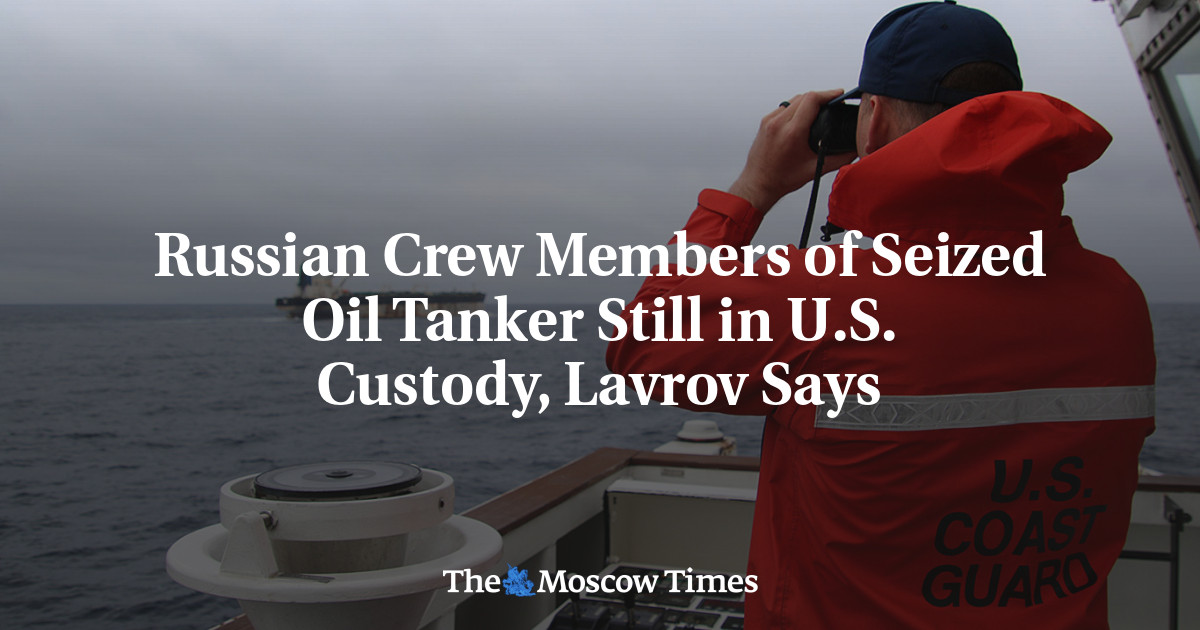
Russia Accuses U.S. of Failing to Uphold Agreement Regarding Seized Venezuelan Oil Tanker
tensions between Russia and the United States have escalated following Russia’s accusations that the U.S. is not adhering to an agreement concerning the Marinera tanker, formerly known as the Bella 1, and its crew. The vessel, sanctioned by Washington for its alleged involvement in transporting Iranian and Russian oil, was seized earlier this year while sailing from Venezuela. Moscow contends that promises made by U.S. officials regarding the potential prosecution of the crew are not being fulfilled, raising concerns about international shipping and escalating geopolitical friction.
Background: The Seizure of the Marinera and U.S. Sanctions
The Marinera, originally registered as the Bella 1, became a focal point of contention after being sanctioned by the U.S. Treasury Department in February 2024 https://home.treasury.gov/news/press-releases/jy2443.The sanctions targeted the vessel for operating within a “shadow fleet” – a network of tankers used to circumvent international sanctions imposed on Iran and Russia. These tankers are accused of facilitating the continued export of oil from these countries, thereby undermining international efforts to restrict their revenue streams.
The U.S. alleges that the Marinera engaged in deceptive shipping practices,including ship-to-ship transfers,to obscure the origin of the oil and evade detection.Such practices are designed to conceal the ultimate destination of the cargo and circumvent sanctions regimes. The sanctions effectively freeze any U.S. assets owned by the ship and prohibit U.S. persons from engaging in transactions with it.
The seizure of the tanker, which occurred while it was navigating from Venezuela, further inflamed tensions. U.S.officials indicated that the crew coudl face prosecution, a statement that Russia immediately denounced as “categorically unacceptable.” The exact nature of the potential charges against the crew remains unclear, but likely relate to violations of U.S. sanctions laws.
Russia’s Accusations and Diplomatic Fallout
Russian foreign Minister Sergey Lavrov recently voiced strong criticism of the U.S.,stating that the agreement reached regarding the Marinera and its crew is not being implemented https://www.reuters.com/world/europe/russia-says-us-not-fulfilling-promises-over-seized-venezuelan-oil-tanker-2024-05-17/. While the specifics of this agreement have not been publicly disclosed, Lavrov emphasized the expectation that U.S. colleagues would “fulfill their promises.” This lack of transparency surrounding the agreement adds to the complexity of the situation.
Moscow views the seizure of the Marinera and the potential prosecution of its crew as a intentional attempt to disrupt international shipping and escalate tensions. Russia has consistently criticized the U.S. for what it perceives as an overreach of sanctions and a willingness to interfere in the sovereign affairs of other nations. The Kremlin argues that the U.S. actions are destabilizing and undermine the principles of free trade and navigation.
Furthermore, Russia has accused the U.S. of a pattern of seizing ships leaving Venezuela, alleging that these actions are intended to exert pressure on the Venezuelan government and disrupt its oil exports. Venezuela, a key ally of Russia in Latin America, has been subject to U.S. sanctions for years, and the U.S. has actively sought to reduce its oil exports.
The “Shadow Fleet” and Circumvention of Sanctions
The Marinera’s involvement in the “shadow fleet” highlights a growing trend of countries and companies attempting to circumvent international sanctions.The shadow fleet consists of a large number of aging tankers, frequently enough with opaque ownership structures, that are used to transport sanctioned commodities, such as Iranian and Russian oil.
These tankers frequently employ tactics such as:
* ship-to-Ship Transfers: transferring cargo between vessels at sea to disguise the origin and destination of the oil.
* Dark Shipping: Turning off Automatic Identification System (AIS) transponders to avoid detection.
* Flag of Convenience: Registering vessels under flags of countries with lax regulations and enforcement.
* Complex Ownership Structures: Utilizing shell companies and offshore accounts to obscure the true owners of the vessels.
The use of the shadow fleet poses significant challenges to international efforts to enforce sanctions. It allows sanctioned countries to continue exporting their oil, generating revenue that can be used to fund their activities.It also creates risks for the environment and maritime security, as these tankers often lack proper maintenance and safety standards.
Implications for International Shipping and Geopolitics
The dispute over the Marinera has broader implications for international shipping and geopolitics. The incident underscores the increasing risks faced by vessels operating in regions subject to sanctions and geopolitical tensions.Shipowners and operators must exercise extreme caution and conduct
