Retired Admiral Warns Russia, China, Iran, North Korea Form ‘Axis of Aggressors’ Challenging West’
Retired Rear Admiral Mark Montgomery warns that Russia, China, Iran, and North Korea are increasingly coordinating their military, technological, and economic resources to challenge the West on multiple fronts. In an interview with Radio Free Europe/Radio Liberty, Montgomery said that the U.S. has ignored critical lessons from the Ukrainian battlefield, leaving allies vulnerable to new hybrid warfare tactics.
Adversaries Coordinate Global Military Strategy
Montgomery, who served 32 years in the U.S. Navy before retiring in 2017, now leads cyber and technology innovation efforts at the Foundation for Defense of Democracies. He contends that Ukraine is currently fighting an “Axis of Aggressors,” a network of four nations that have engaged in at least 700 instances of military, economic, or technological cooperation.
“The world’s second-largest owner of artillery and mortar rounds has given the world’s largest owner of artillery and mortar rounds decades’ worth of supply,” Montgomery told Radio Free Europe/Radio Liberty, referring to North Korea’s provision of 6 million rounds of ammunition to Russia. He added that China continues to backstop the Russian economy while providing microelectronics essential for cruise and ballistic missile production.
Technology Gaps in Middle East Defense
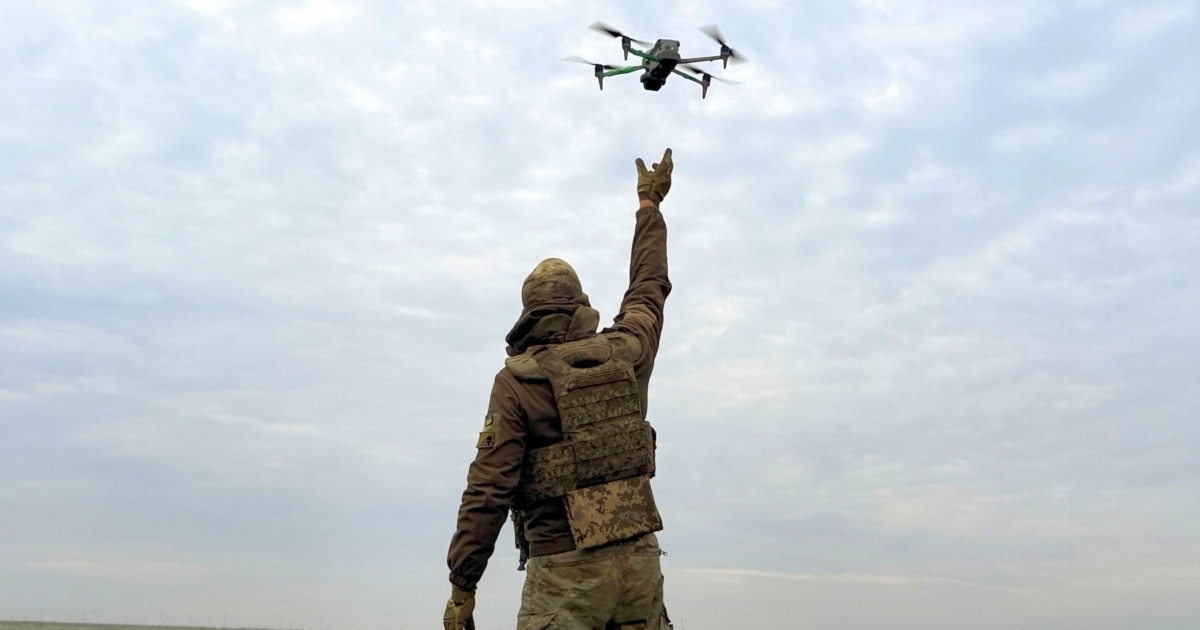
The former commander of Carrier Strike Group 5 argues that the failure to adopt Ukrainian defensive tactics has directly impacted operations in the Middle East. According to Montgomery, the U.S. ignored opportunities to integrate Ukrainian ground-based drone interceptors, which were offered to Washington in the summer of 2025.
“We were not ready for these kinds of short-range attacks,” Montgomery said.
He said that while U.S. forces can effectively intercept drones headed for Israel or western Saudi Arabia using aircraft, they remain vulnerable to short-range strikes against Bahrain, Kuwait, Qatar, and eastern Saudi Arabia. He attributed the premature conclusion of a 40-day air campaign against Iran to an inability to sufficiently counter these drone threats.
Hybrid Warfare and Economic Pressure
Moscow is reportedly using hybrid warfare—a mix of cyberattacks, arson, and disinformation—to show Eastern Europe that NATO is not a credible deterrent. Montgomery suggested that recent throttling of Starshield services in Ukraine is an intentional effort by the U.S. government to pressure President Volodymyr Zelenskyy into territorial concessions.
Regarding the Middle East, Montgomery credited the current U.S. administration with maintaining a disciplined maritime blockade that has successfully halted Iranian oil sales.
He warned that Tehran is likely to lash out against Arab partners soon to force a change in the U.S. economic strategy.
“This war between Russia and Ukraine has drawn the Axis of Aggressors closer together in a way we couldn’t have imagined five years ago,” Montgomery told Radio Free Europe/Radio Liberty.
Beyond its focus on the “Axis of Aggressors,” the Foundation for Defense of Democracies maintains a broad research portfolio centered on national security and foreign policy. The organization’s Center on Military and Political Power, established in May 2019, conducts analysis on defense strategies, military capabilities, and deterrence.
Additionally, its China Program, chaired by former Deputy National Security Advisor Matt Pottinger, examines the economic and security activities of the Chinese Communist Party. In 2024, members of this program held a tabletop exercise in Taipei to specifically address the risks of Chinese economic and cyber-coercion against Taiwan.