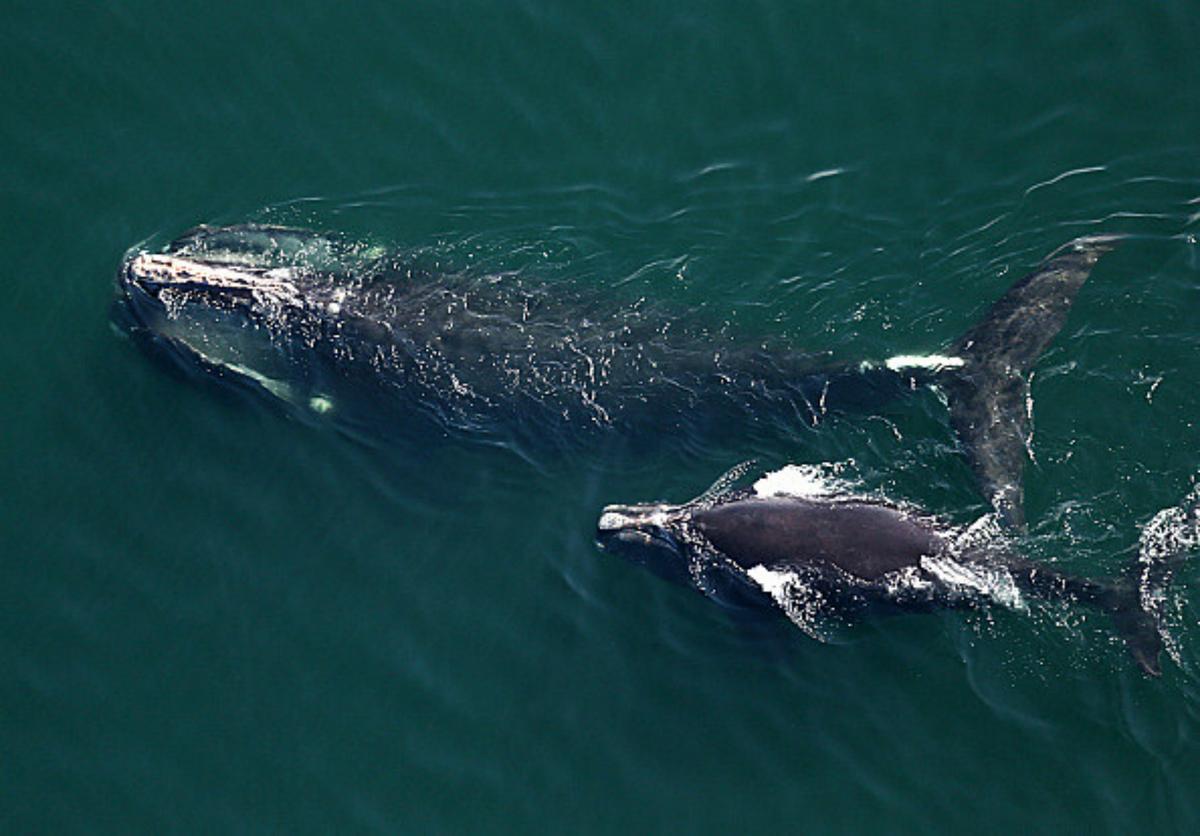
Researchers Assigned Names to 20 North Atlantic Right Whales Reports Georgia Public Broadcasting
Researchers have assigned names to 20 critically endangered North Atlantic right whales, including an homage to country music icon Dolly Parton.
While each whale is identified by a unique catalog number in the North Atlantic Right Whale Catalog managed by the New England Aquarium, these monikers are intended to help researchers track individuals and encourage public connection, Georgia Public Broadcasting reported.
The whale known as Dolly (Catalog #4191) received her name because the callosity pattern on her head resembles the singer’s signature hairstyle, according to the New England Aquarium. Amy Warren, an aquarium scientific program officer, said that while naming the animals is a creative endeavor, it serves a functional purpose for the research community.
“Naming right whales is a fun and creative activity for our research community, but it also allows an opportunity to connect with the whales on an individual level,” Warren said in Anderson Cabot Center’s announcement.
Identifying Whales Through Physical Features
The naming tradition often highlights physical markings or family legacies. Sisters Grand Slam (Catalog #3991) and Slide (Catalog #4991), for instance, are calves of a whale named Fenway (Catalog #2791), continuing a baseball theme, Georgia Public Broadcasting noted.
Other whales were named for their scars or distinctive callosities, such as Hippo (Catalog #1719), whose head marking resembles a hippopotamus, and Seal (Catalog #5253), who bears a scar from a boat strike that mimics a seal’s resting position, the New England Aquarium reported.

Some names reflect the harsh realities of the species’ survival. Donegal (Catalog #5499), a whale first sighted in Ireland in 2024 before traveling to Massachusetts, is recognized by extensive scarring from fishing gear entanglements and propellers, WBSM reported.
Caroline Mowdy, a specialist at Whale and Dolphin Conservation, explained that these names allow the public to follow individual life stories, which can heighten the emotional stakes of conservation efforts. “We see these whales and their families grow each year, and knowing them makes the tragedies even more tragic, but it also makes our determination to protect them even stronger,” Mowdy told The Inquirer and Mirror.
Population Strains and Conservation Outlook
The North Atlantic right whale population is estimated at 382 individuals, representing a 1.8 percent decline from 2024 figures, MassLive reported. “Human-caused factors such as gear entanglements and vessel strikes are preventing the population from rebounding,” WBSM reported. Despite this ongoing population pressure, the 2025–2026 calving season saw 24 births, the highest number recorded since 2009, Popular Science noted.

Researchers announce new whale names
“Knowing them makes the tragedies even more tragic, but it also makes our determination to protect them even stronger,” said Caroline Mowdy, a marketing and communications specialist at Whale and Dolphin Conservation, emphasizing the emotional connection fostered by the naming practice. The names serve as a mnemonic device for researchers and a bridge to public engagement in conservation efforts.
Whale Population Threats
“Human-caused factors such as gear entanglements and vessel strikes are preventing the population from rebounding,” the North Atlantic Right Whale Consortium reported, underscoring the persistent threats that have kept the North Atlantic right whale critically endangered. “Actions to further delay entanglement protections and deregulate vessel strike reduction measures will stall meaningful progress that is already underway to protect the species,” said Pettis.
The North Atlantic Right Whale Catalog, managed by the New England Aquarium’s Anderson Cabot Center for Ocean Life, serves as a comprehensive database for tracking individual whales, assigning each a unique catalog number like #4191 for Dolly, as reported by the aquarium.
“We ultimately will protect the things that we care about,” said Gib Brogan, senior campaign director at Oceana. “Having that connection will lead to people caring about the whales.” Georgia Public Broadcasting reported.