
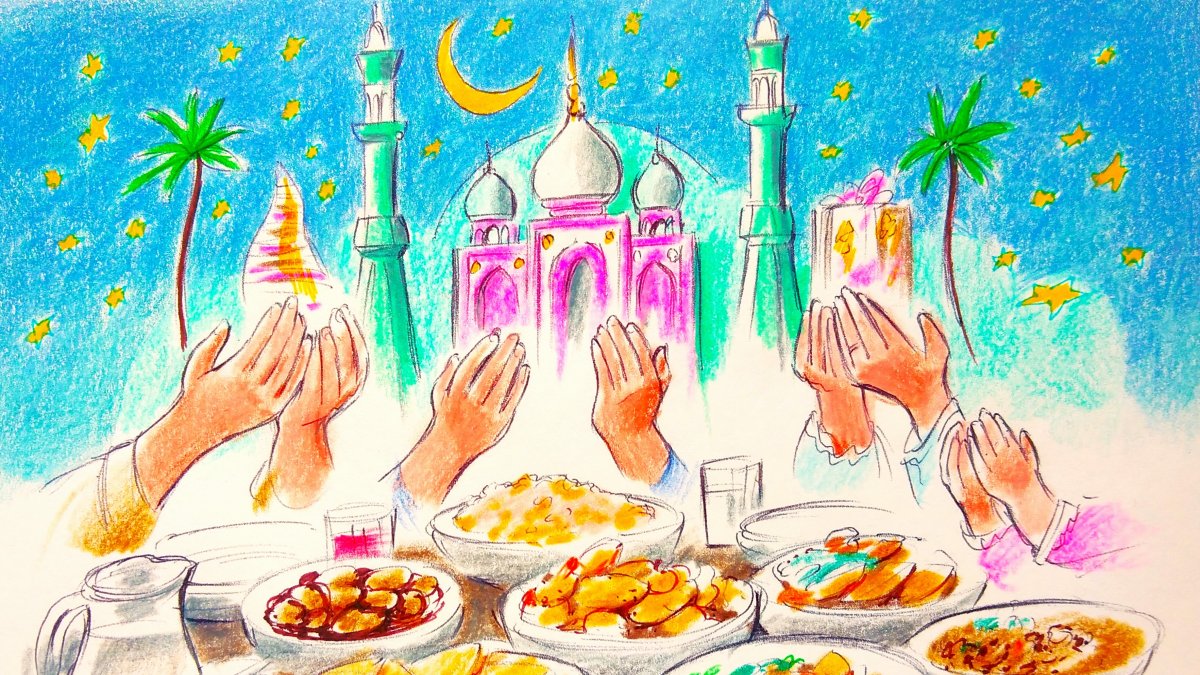
Indonesia’s Ramadan began on February 19th, with millions of Muslims across the archipelago observing the holy month of fasting, prayer, and community. While a shared faith unites the country’s diverse population, the experience of Ramadan varies significantly from island to island, city to city, and even neighborhood to neighborhood.
In Jakarta, the capital, mosques are centers of activity, drawing large congregations for Maghrib, Isha, and Tarawih prayers, often extending beyond the prayer halls themselves. Istiqlal Grand Mosque, the largest in Southeast Asia, provides approximately 4,500 free meals daily throughout Ramadan for those in need, including passersby, travelers, and those unable to afford food. Many mosques also distribute takjil – light snacks to break the swift – to worshippers arriving before sunset, alongside providing clean facilities and organized prayer spaces. Restaurants in malls are crowded, with iftar reservations often booked days in advance. Before sunset, residents participate in a popular tradition of “hunting for takjil,” seeking out fried snacks and sweet desserts from street vendors. Common iftar dishes include fried foods, biji salak, bubur sumsum, and kolak.
However, the communal spirit of Ramadan in Jakarta is often more focused on family than on neighborhood gatherings, according to Ibu Mala, a Jakarta resident. “In my area, we don’t usually gather with neighbors,” she said. “We gather with family in one house, break the fast together and perform Maghrib, Isha and Tarawih prayers in congregation.” While family is central, she looks forward to breaking the fast with friends from her community. For Ibu Mala, Ramadan is about “fully devoting myself to worship together with my family.”
In Solo, also known as “The Spirit of Java,” Ramadan takes on additional cultural layers. The city’s history reflects a blend of Javanese Islamic palace (Keraton) culture alongside Chinese Buddhist and Christian communities. The Keraton symbolizes the historical integration of Islam into the city’s identity. A striking tradition is the Kirab Malam Selikuran, a royal procession held on the 21st night of Ramadan to welcome Laylat al-Qadr. Palace courtiers carry tumpeng and lanterns from the Keraton to Taman Sriwedari, accompanied by sholawat and hadrah music.
Rachel, a Solo resident, explained that Ramadan in Solo is “not just religious,” but “historical, political and cultural.” She noted the inclusivity of Ramadan in Solo, with non-Muslim neighbors often participating in iftar gatherings. “It becomes less about religion and more about shared humanity,” she reflected. “Ramadan feels like a social contract of kindness.” Solo’s iftar tables feature serabi Solo, klepon, and kolak. Rachel also observed that mosques serve as spaces for diverse forms of devotion, recalling an elderly masseuse who faithfully attended daily prayers despite struggling with recitations. “Some people love God without structured knowledge,” she said.
Further west, in Aceh, Indonesia’s only province implementing Islamic law at the regional level, Ramadan is a visibly public affair. Ibu Khairani described the province as reorganizing daily life around the month, with restaurants closing after sahur and remaining shut until sunset, and prayer times shaping daily rhythms. Mosques and meunasah (village prayer halls) develop into centers of worship and coordination, with families organizing shared iftar schedules and collectively bringing dishes to break the fast. Large pots of bubur kanji rumbi are prepared and distributed to ensure everyone can eat with dignity. Before Ramadan begins, families observe Meugang, buying, cooking, and sharing meat such as kuah beulangong and rendang. Some devote the month to suluk, a spiritual retreat held in a dayah. Ibu Khairani reflected that, “In Aceh, Ramadan is not only practiced privately. It is lived together.”
In Makassar, the coastal capital of South Sulawesi, Ramadan is shaped by Bugis-Makassar culture, strengthening relationships through iftar invitations, shared Tarawih prayers, and exchanging dishes before sunset. During sahur, dried salted fish is fried and served with rice, sambal, and light vegetable soup. Dates mark the transition from restraint to relief at sunset. Tables fill with Es Pisang Ijo, Barongko, Jalangkote, and heartier meals like Coto Makassar or Sop Konro. Professor Dwia Aries Tina Pulubuhu noted that mosques facilitate zakat distribution, strengthening communal ties. “What I miss most,” Dwia says, “is gathering with relatives, friends and neighbors.”
Across Indonesia, Ramadan is observed with unique traditions. In West Sumatra, women gather for Malamang, cooking glutinous rice in bamboo. In Semarang, drums echo during Dugderan, announcing the month’s arrival. In Palembang, men walk together for Ziarah Kubro along the Musi River. In Papua, families adapt Bakar Batu with halal meat. In Riau, boats race during Pacu Jalur, carrying both competition and celebration.
The diverse expressions of Ramadan across Indonesia underscore a shared intention: renewal, forgiveness, gathering, and a gentler heart.
