
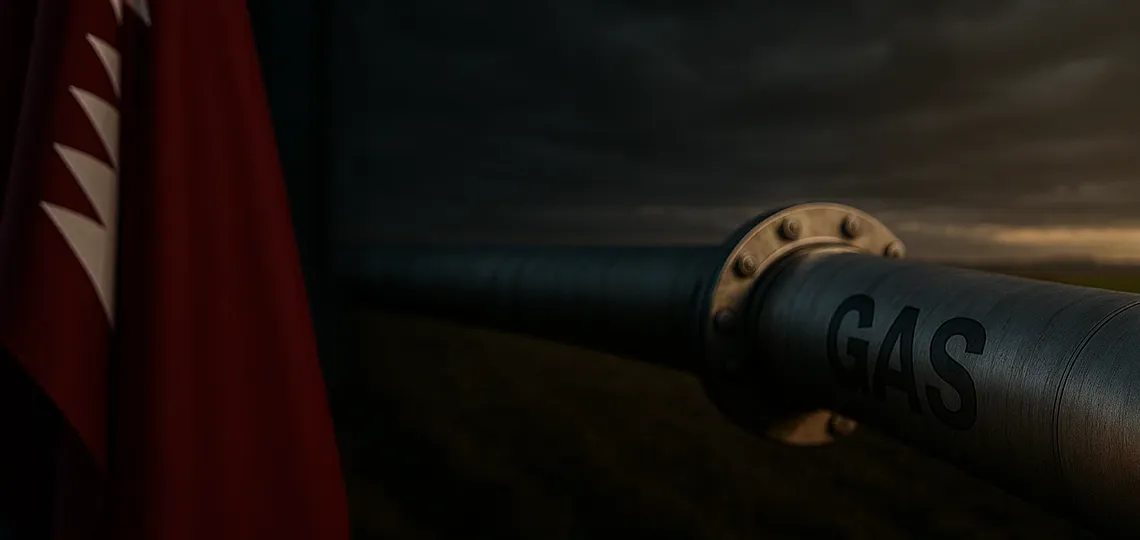
Qatar Threatens LNG Cuts Over EU Climate Rules
Doha Warns Asia Re-Route as Brussels Faces Energy Dilemma
Qatar has formally notified the European Commission and Belgium of its intent to halt liquefied natural gas (LNG) shipments to Europe unless the EU revises its stringent sustainability directive.
EU’s Directive Sparks Diplomatic Firestorm
The proposed Corporate Sustainability Due Diligence Directive (CSDDD), adopted in 2024, mandates companies operating within the EU to meet rigorous sustainability standards. Non-compliance carries penalties of up to 5% of a company’s global turnover. Crucially, the directive requires companies to adopt climate transition plans aligned with the Paris Agreement’s 1.5°C warming limit.
Qatar’s Unwavering Stance on Carbon Goals
Saad al-Kaabi, Qatar’s Energy Minister and CEO of QatarEnergy, has stated unequivocally, Neither the State of Qatar nor QatarEnergy have plans to reach net zero in the near future.
This declaration highlights a significant divergence between European decarbonization targets and the interests of major hydrocarbon exporting nations.
Doha contends that the CSDDD infringes upon national sovereignty in setting climate objectives. In its official correspondence, Qatar proposed the removal of climate transition plan requirements, deeming them incompatible with its national energy strategy. As of 2023, Qatar recorded the world’s highest per capita CO2 emissions at 42.6 metric tonnes.
European Energy Security at Risk
This dispute arrives at a critical juncture for Europe’s energy security. In 2024, Qatar supplied approximately 10% of the EU’s monthly LNG imports, making it the third-largest supplier after the United States and Russia. With the planned closure of the Ukraine transit corridor and the EU’s aim to cease Russian gas imports by 2027, losing Qatari supplies could create a substantial energy deficit.
Alternative suppliers present challenges. While Algeria could potentially increase exports, it faces production limitations. The ambitious Trans-Saharan Gas Pipeline project, intended to connect Nigeria to Algeria, has seen its estimated cost skyrocket from $10 billion to between $20-$30 billion, hampered by significant security and financial hurdles.
Strategic Pivot to Asian Markets
Qatar has actively redirected its LNG exports to Asia, with China receiving 25%, followed by India (17%) and Pakistan (11%). This shift is driven by reduced logistical costs and a less restrictive regulatory environment. Asian buyers, often bound by long-term contracts, are increasingly seeking more flexible terms and competitive pricing, benefiting producers like Qatar.
Qatar’s Own Energy Transition Investments
Paradoxically, Qatar is investing in its own energy transition initiatives. The country inaugurated the 800 MWp Al Kharsaah solar power plant in 2022 and aims for solar energy to constitute 30% of its national energy mix by 2030. QatarEnergy is also constructing the world’s largest “blue” ammonia facility, a $1 billion project with an annual capacity of 1.2 million tonnes by 2026, positioning the nation in the emerging low-carbon fuel market.
Tight Timeline for EU Compliance
The CSDDD implementation is phased, beginning in 2027 for the largest EU companies. Businesses exceeding specific employee and revenue thresholds will face compliance requirements in 2027, 2028, and 2029. Non-EU companies operating within the bloc will also be subject to these obligations.
In response to pressure from Qatar and other business partners, the European Commission proposed amendments in February 2025 to streamline certain directive requirements, including a potential delay in implementation and reduced supply chain scrutiny. However, these adjustments have not appeased Qatar, which deems the core climate transition stipulations unacceptable.
US-EU Energy Deal Faces Hurdles
A recent trade agreement between the United States and the EU, involving $750 billion in American energy purchases over three years, aims to reduce European reliance on other suppliers. Analysts, however, deem this target ambitious, noting that the EU imported less than $80 billion in American energy in 2024. Achieving the $250 billion annual goal would necessitate a threefold increase in current imports, a considerable logistical and financial challenge given projections of global LNG oversupply by 2030.
