Overcoming Resistance to the RAS(ON) Inhibitor Daraxonrasib in Pancreatic Cancer
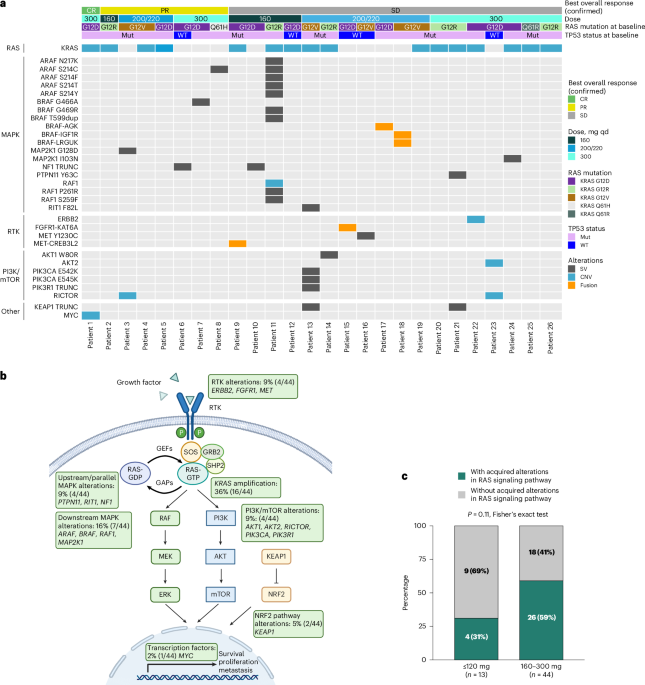
According to research published in Nature Medicine on August 11, 2026, a team of investigators analyzed circulating tumor DNA from 44 patients with pancreatic cancer alongside preclinical translational models to map how tumors develop acquired resistance against the RAS(ON) multi-selective inhibitor daraxonrasib. The findings outline specific molecular escape routes that malignant cells utilize to bypass monotherapy, offering a data-backed blueprint for rational combination therapy strategies in oncology.
- Researchers tracked acquired resistance mechanisms in 44 pancreatic cancer patients receiving daraxonrasib during a phase 1/2 clinical trial.
- Structural profiling identified secondary mutations within the core drug binding pocket, leading to a 12-fold reduction in drug affinity at the tyrosine-64 position.
- Preclinical modeling suggests that rational combination therapy strategies can overcome these mutational escapes and improve pathway suppression in aggressive malignancies.
Circulating Tumor DNA and Phase 1/2 Trial Insights
Historically, researchers viewed RAS proteins as an undruggable target due to their smooth, featureless surface. New therapeutic milestones in pancreatic cancer investigations have finally delivered multi-selective RAS(ON) inhibitors, which are compounds capable of attaching to these previously elusive targets. Revolution Medicines created the experimental compound RMC-7977, designed to engage directly with the active state of such proteins. As reported by the Los Angeles Times, this multi-selective inhibitor tackles a broad spectrum of oncogenic RAS mutations, establishing a novel pathway for managing aggressive human malignancies.
Laboratory tests show that this treatment successfully halts cell proliferation, the uncontrolled division of abnormal cells. It actively targets pancreatic ductal adenocarcinoma, a particularly lethal form of pancreatic cancer. The drug effectively neutralizes mutant RAS signaling without causing severe damage to healthy cell types. This precision represents a significant step forward for therapeutic intervention in oncology.
Mechanisms of Active-State RAS Inhibition and Resistance
To tackle oncogenic resistance patterns that weaken early targeted therapies, modern oncology pipelines prioritize multi-selective RAS(ON) inhibitors, which are small-molecule therapeutics directed at active-state proteins. Covalent agents attach to the inactive conformation of specific single mutants, leaving alternative isoforms functional. The inhibitor daraxonrasib operates as a powerful mechanism to block RAS activation across multiple isoforms, locking the GTP-bound KRAS complex into an inactive state while simultaneously inhibiting HRAS and NRAS variants.
During in vivo studies cited in preclinical evaluations, researchers observed substantial tumor shrinkage at various tested doses, triggering apoptosis within malignant tissues while maintaining effectiveness against both mutated forms and wild-type KRAS. However, malignant cells adapt under selective drug pressure. Research tracking individuals treated with daraxonrasib identified specific secondary mutations within the core binding pocket. When substitutions take place at the tyrosine-64 position, structural profiling of the binding pocket reveals a 12-fold drop in drug affinity, permitting the mutant protein to restart signaling cascades.
Clinical Triage and Next Steps in Patient Care
As tumors adapt, resistance mechanisms inevitably emerge to bypass targeted therapies through secondary mutations that physically alter the drug binding site.

Disclaimer: The information provided in this article is for educational and scientific communication purposes only and does not constitute medical advice. Always consult with a qualified healthcare provider regarding any medical condition, diagnosis, or treatment plan.