
AI in Healthcare: Navigating Regulatory Evolution for Autonomous Agents
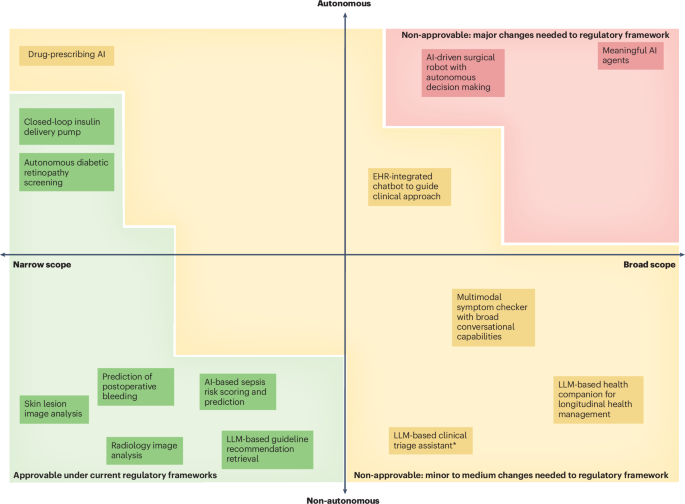
The safe and effective implementation of autonomous artificial intelligence agents in healthcare hinges on a critical need for regulatory frameworks to evolve. Current regulations often treat AI as static devices, a paradigm that struggles to encompass the adaptive and learning nature of these advanced systems. This necessitates a shift towards adaptive oversight and flexible pathways to ensure patient safety and efficacy.
The Imperative for regulatory Adaptation
As artificial intelligence continues its rapid advancement, its integration into healthcare presents unprecedented opportunities for diagnosis, treatment, and patient care. Though, the unique characteristics of AI, particularly its capacity for continuous learning and adaptation, pose significant challenges for existing regulatory structures. These structures, largely designed for traditional medical devices with predictable performance, require a basic re-evaluation.
Did You Know? …
The U.S. Food and Drug Administration (FDA) has been actively exploring new approaches to regulating AI/ML-based medical devices,recognizing the limitations of traditional frameworks.Their proposed framework for AI/ML-based medical devices aims to address the iterative nature of these technologies.
A report from the McKinsey Health Institute in January 2024 highlighted that health tech, including AI, is poised to transform healthcare delivery, emphasizing the need for supportive regulatory environments.
