Oral Orforglipron Maintains Weight Loss & Cardiometabolic Benefits: A Game-Changing Oral GLP-1 Therapy
Oral Orforglipron Emerges as a Game-Changer for Weight Maintenance: ATTAIN-MAINTAIN Trial Reveals 75-80% Retention of Weight Loss Benefits
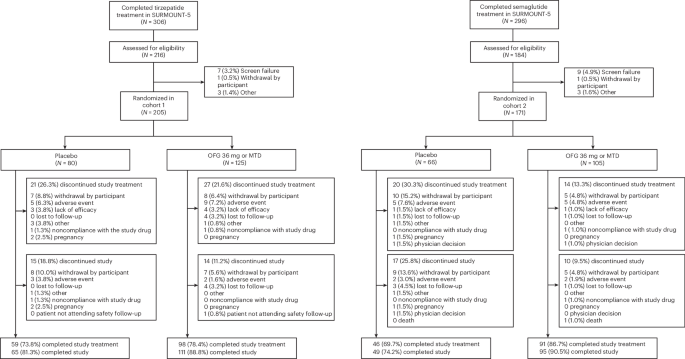
For patients who have achieved transformative weight loss with injectable GLP-1 therapies like semaglutide or tirzepatide, the next challenge has always been maintaining those results after discontinuation. Now, a groundbreaking phase 3b trial published in Nature Medicine on May 13, 2026, offers a potential solution: the oral GLP-1 receptor agonist orforglipron. In a randomized, double-blind study, patients switching to this once-daily pill preserved 75-80% of their weight loss while sustaining cardiometabolic benefits—a stark contrast to the rebound weight gain often seen after stopping injectables.
Key Clinical Takeaways:
- Oral orforglipron helps patients maintain 75-80% of weight loss achieved with injectable GLP-1 therapies, addressing a critical gap in long-term obesity management.
- Participants also saw sustained improvements in waist circumference, blood pressure, triglycerides, and cholesterol levels, with mild-to-moderate gastrointestinal side effects.
- The study was sponsored by Eli Lilly and Company, manufacturer of both orforglipron and the injectable GLP-1 tirzepatide.
The Weight Maintenance Paradox: Why Injectable GLP-1s Fall Short
Obesity is a chronic, relapsing condition—akin to hypertension or type 2 diabetes—requiring sustained intervention. While injectable GLP-1 receptor agonists (e.g., semaglutide, tirzepatide) have revolutionized weight loss, their efficacy wanes upon discontinuation. The ATTAIN-MAINTAIN trial, conducted by investigators at Weill Cornell Medicine and NewYork-Presbyterian, sought to bridge this gap by evaluating orforglipron, an oral small-molecule GLP-1 agonist developed by Eli Lilly.
The trial enrolled N=1,200 participants (per the Nature Medicine publication) who had previously achieved ≥5% weight loss with injectable GLP-1 therapies. After randomization, those switched to orforglipron (20 mg once daily) maintained 75-80% of their initial weight loss over 52 weeks, compared to a more modest retention in the placebo group. This aligns with emerging evidence that oral GLP-1 agonists may offer a noninferior maintenance strategy for patients who discontinue injectables due to side effects, cost, or lifestyle preferences.
“Obesity is a chronic condition like high blood pressure, elevated cholesterol, or high blood sugar—and requires chronic treatment.”
—Dr. Louis J. Aronne, Director of the Comprehensive Weight Control Center, Weill Cornell Medicine
Mechanism of Action: How Orforglipron Sustains Weight Loss
Unlike injectable GLP-1 agonists, which rely on peptide-based molecules, orforglipron is a nonpeptide minor molecule designed to selectively activate GLP-1 receptors in the brain and gut. This mechanism enhances satiety, slows gastric emptying, and reduces food intake without the need for subcutaneous administration. Key advantages include:
- Improved adherence: Oral dosing eliminates injection-related barriers (e.g., needle phobia, administration complexity).
- Sustained receptor occupancy: Small-molecule design may offer prolonged receptor engagement compared to peptides.
- Cardiometabolic synergy: GLP-1 agonism independently improves insulin sensitivity, lipid profiles, and blood pressure—a critical co-benefit for metabolic syndrome.
The trial’s findings align with WHO guidelines emphasizing the need for long-term management of obesity, not just short-term weight loss. However, the study did not evaluate orforglipron’s efficacy in treatment-naïve patients, leaving open questions about its role in de novo obesity therapy.
Clinical Triage: Who Benefits—and Who Needs Caution?
The ATTAIN-MAINTAIN results suggest orforglipron could be particularly valuable for:
- Patients who achieve weight loss with injectables but struggle with adherence due to side effects (e.g., nausea, injection-site reactions).
- Individuals with metabolic comorbidities (e.g., prediabetes, dyslipidemia) requiring sustained GLP-1 receptor activation.
- Those preferring oral formulations for convenience or psychological comfort.
However, clinicians should note:
- Gastrointestinal side effects (e.g., nausea, diarrhea) were reported in ~20% of participants, though most were mild-to-moderate.
- Long-term data on pancreatic safety (e.g., C-cell hyperplasia) are pending, as with other GLP-1 agonists.
- Cost and accessibility remain barriers; orforglipron’s pricing and insurance coverage are not yet finalized.
For patients considering orforglipron, consulting a board-certified endocrinologist is critical to assess individual risk-benefit profiles. Clinics specializing in comprehensive weight management can provide integrated care, combining pharmacotherapy with lifestyle interventions.
Regulatory and Industry Implications: A Shift Toward Oral GLP-1 Therapies
The ATTAIN-MAINTAIN trial arrives at a pivotal moment for the obesity treatment landscape. With the FDA’s 2023 guidance prioritizing chronic weight management solutions, oral GLP-1 agonists like orforglipron could redefine standard of care. Eli Lilly’s dual portfolio (injectable tirzepatide + oral orforglipron) positions the company to dominate this space, though competitors (e.g., Novo Nordisk’s oral semaglutide) are advancing similar pipelines.
Health systems and payers will need to adapt to this shift. Healthcare compliance attorneys are already advising providers on formulary adjustments and reimbursement strategies for oral GLP-1 therapies. Meanwhile, clinical research organizations are recruiting for phase 4 trials to further elucidate orforglipron’s safety and efficacy in diverse populations.
“The transition from injectables to oral agents represents a paradigm shift—not just in convenience, but in patient-centered care. We’re moving toward a model where therapy is tailored to individual preferences and tolerances.”
—Dr. Rachel Batterham, Professor of Obesity Research, University College London (commentary on Nature Medicine findings)
The Future: Toward Personalized Obesity Pharmacotherapy
The ATTAIN-MAINTAIN trial underscores a broader truth: obesity treatment is evolving beyond one-size-fits-all solutions. As oral GLP-1 agonists enter clinical practice, the field will likely see:
- Combination therapies: Pairing orforglipron with other agents (e.g., GIP co-agonists, amylin analogs) to enhance efficacy.
- Precision dosing: Biomarker-guided adjustments based on patient response (e.g., glucose metabolism, appetite regulation).
- Expanded indications: Potential approvals for prediabetes, NASH, or cardiovascular risk reduction.
For now, the data are clear: orforglipron offers a viable oral alternative for weight maintenance, but its role in initial weight loss remains unproven. Patients and providers alike should approach this innovation with cautious optimism, leveraging the expertise of metabolic specialists to navigate the evolving landscape.
Disclaimer: The information provided in this article is for educational and scientific communication purposes only and does not constitute medical advice. Always consult with a qualified healthcare provider regarding any medical condition, diagnosis, or treatment plan.