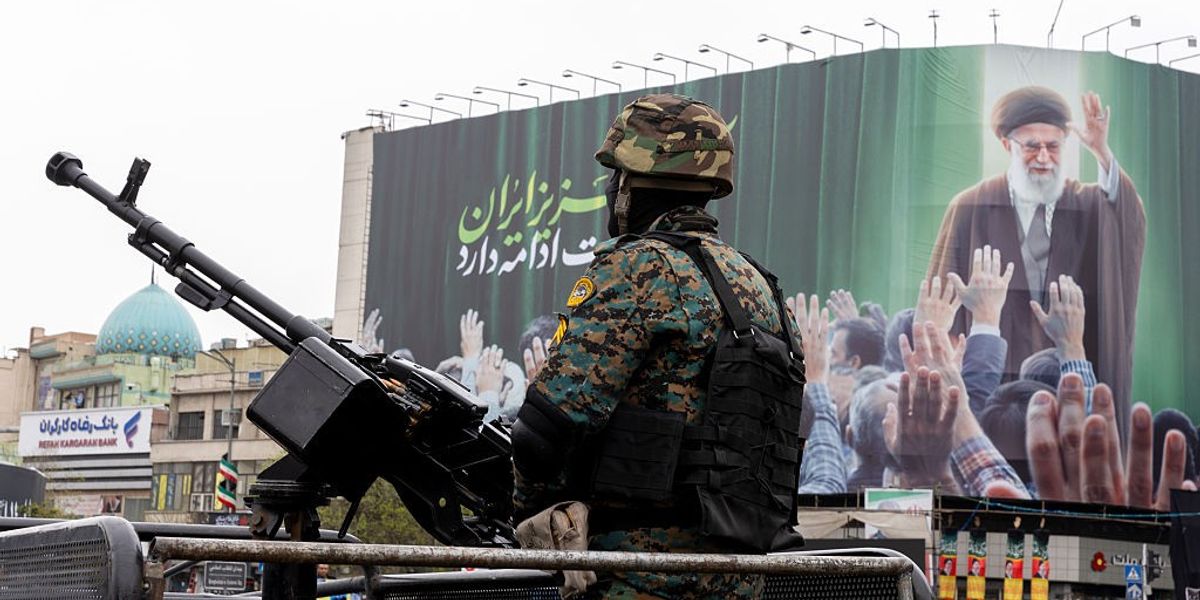
Operation Epic Fury: Why U.S. Airstrikes Failed to Topple Iran’s Regime
Operation Epic Fury, launched February 28, 2026, by U.S. And Israeli forces under President Donald Trump, has decapitated Iran’s top leadership, including Supreme Leader Ali Khamenei. However, U.S. Intelligence warns the regime remains resilient, consolidating power under the hardline IRGC while triggering the largest global oil supply disruption in history.
Washington is staring at a paradox. For four weeks, the most concentrated application of U.S. Firepower in the Middle East in a generation has systematically erased the Iranian security apparatus. Airstrikes have claimed the lives of the Supreme Leader and scores of military commanders. Yet, the National Intelligence Council’s February assessment—delivered to President Trump before the first bomb fell—is proving hauntingly accurate: the Islamic Republic is not going anywhere.
The problem is structural. You cannot bomb a regime into a democratic transition when there is no viable alternative waiting in the wings. This strategic vacuum has created a volatile environment for global markets and diplomatic relations. For corporations and governments facing this instability, securing the expertise of geopolitical risk analysts has shifted from a luxury to a survival necessity.
The Cost of Decapitation: A Strategic Audit
The tactical wins are undeniable, but the strategic ledger is bleeding. The U.S. Has spent over $16 billion in just one month. Thirteen American troops are dead. While the Iranian missile arsenal and naval capacity are degraded, the fallout has shifted from the battlefield to the global economy.
| Metric | Impact Post-Operation Epic Fury | |
|---|---|---|
| U.S. Financial Expenditure | $16 Billion+ | |
| U.S. Personnel Loss | 13 Troops Killed | |
| Middle East Oil Exports | Decreased by at least 60% | |
| Key Leadership Loss | Ali Khamenei, Ali Larijani |
The most critical failure point is the Strait of Hormuz. By blocking this waterway, Iran has effectively weaponized the global energy supply. This isn’t just a diplomatic spat; This proves a historic disruption that has sent energy markets into a tailspin. Companies struggling to maintain operations amidst these shocks are increasingly relying on specialized logistics firms to find alternative routes and secure raw materials.
The Rise of “IRGCistan”
If Washington hoped that killing the Supreme Leader would trigger a collapse, they instead accelerated the rise of the most dangerous element of the Iranian state. The Islamic Revolutionary Guard Corps (IRGC) is no longer just a branch of the military; it is the government.
Nine days into the conflict, the Assembly of Experts appointed Mojtaba Khamenei, the 56-year-vintage son of the slain leader. Mojtaba is not a clerical scholar; he is a product of the IRGC. He is widely viewed as more hardline than his father, and his power is derived entirely from the Guards.
“The lever of blocking the Strait of Hormuz must definitely continue to be used.” — Mojtaba Khamenei, March 12, 2026
The civilian government has been hollowed out. President Masoud Pezeshkian, once a figure of potential moderation, was forced into a humiliating climbdown after attempting to apologize to Gulf states for Iran’s attacks. The IRGC dismissed his statement as “weak” and “unprofessional.” With the assassination of Ali Larijani—the last prominent non-clerical power broker—and his replacement by IRGC veteran Mohammad Bagher Zolghadr, the transition to a military-dominated theocracy is nearly complete.
This consolidation makes the regime harder to manage. The IRGC is an institution designed to reconstitute. They have buried commanders before and built their missile production on domestic supply chains that are immune to traditional blockades.
The External Lifeline: Moscow and Beijing
The U.S. Is not fighting Iran in a vacuum. While airstrikes can destroy a building, they cannot erase the industrial capacity provided by external allies. China continues to funnel dual-use technology—electronics, drone engines, and missile fuel components—into the country.
Russia’s role has evolved into a symbiotic loop. After years of importing Iranian hardware, Russia is now capable of manufacturing Iranian-design drones on Russian soil and sending them back to Tehran. This creates a cycle of replenishment that offsets U.S. Tactical gains.
the nuclear threat persists. IAEA Director General Rafael Grossi has been clear: military action damages facilities, but it cannot “unlearn” the knowledge. Iran retains the industrial base to rebuild its nuclear capabilities regardless of how many bunkers are hit.
A Harder Adversary Emerges
The administration’s goals—degrading the navy and the missile program—may be achieved. But the intelligence community is asking a more unsettling question: what comes after? The answer is a version of Iran that is more ideological, more military-centric, and less prone to negotiation.
The Iranian opposition remains fractured along ethnic and ideological lines, leaving no one capable of commanding national support. As long as the IRGC holds the guns, they hold the state. For businesses and legal entities navigating the resulting sanctions and the shifting legal landscape of a military-led Iran, consulting with international trade attorneys is the only way to mitigate the risk of severe regulatory penalties.
We are witnessing a dangerous lesson in the limits of airpower. Tactical victories—even the assassination of a head of state—do not equal strategic resolution. By removing the moderates and the clerical buffers, Washington may have inadvertently created a streamlined, fanatical adversary that views the destruction of its enemies not as a negotiating chip, but as a mandate.
The war is no longer about opening salvos; it is about who can absorb the cost of a prolonged conflict. As the region enters this more dangerous phase, the need for verified, expert guidance has never been higher. Whether you are seeking geopolitical intelligence or legal protection, the World Today News Directory remains the definitive resource for connecting with the professionals equipped to handle this unfolding crisis.