
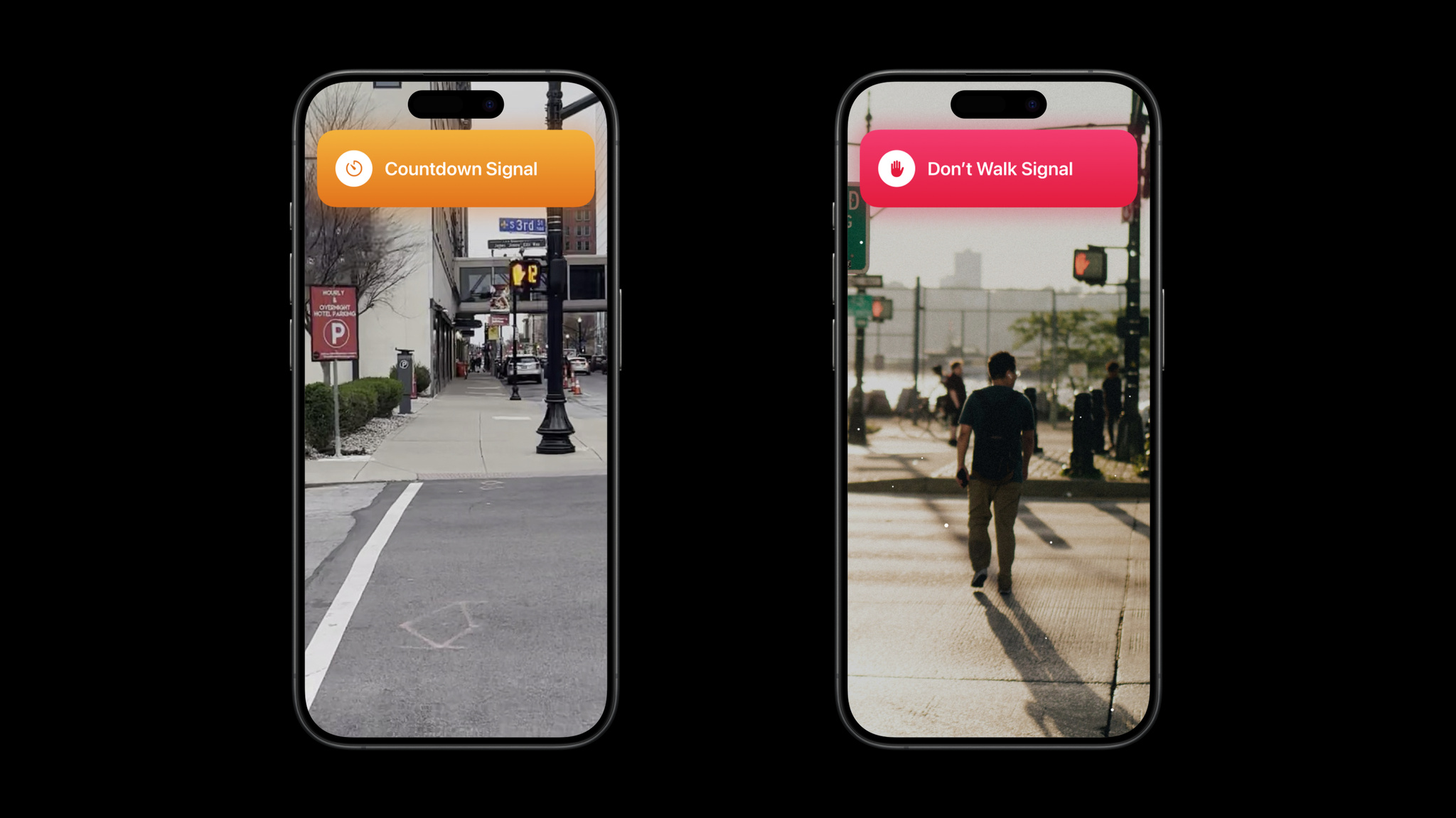
A Belgian team has developed an application leveraging artificial intelligence to improve pedestrian safety for the visually impaired, earning both a 2024 Apple Design Award for Inclusivity and an App Store Award for Cultural Impact. Oko, which translates to “eye,” alerts users to the state of pedestrian signals – “Walk” or “Don’t Walk” – through haptic, audio, and visual feedback.
The app was created by Vincent Janssen, Michiel Janssen, and Willem Van de Mierop, who founded AYES BV. The trio, all computer science graduates with a concentration in AI, began work on the project during the COVID-19 pandemic after noticing a friend with low vision experiencing increased isolation due to restrictions on assistance from volunteers or guides. “We really started to notice that he was feeling isolated more than others,” said Vincent Janssen. “Here in Belgium, we were allowed to go for walks, but you had to be alone or with your household.”
Initially, the team prototyped a hardware solution consisting of a microcomputer, 3D-printed materials, and a portable speaker. This “hacky hardware,” as Janssen described it, was used to test the feasibility of using AI to recognize pedestrian signals and assess detection range under various weather conditions. However, they quickly realized that a software-based approach would be more practical. Despite having limited experience with iOS development – Janssen admitted to having opened Xcode only a few times previously – the team committed to learning Swift and building an application.
Oko launched on the App Store in December 2021 after a rapid development cycle. The core functionality relies on the iPhone’s camera, Maps SDK, and a Core ML model to process images and provide real-time feedback to the user. The team actively sought feedback from accessibility organizations and a group of 100 testers in Belgium, incorporating suggestions such as switching from landscape to portrait mode and refining the audio cues to better mimic real-world sounds. “We found ourselves learning about VoiceOver and haptic feedback incredibly quickly,” Janssen noted.
The team expanded its testing to the United States, meeting with accessibility organizations and observing pedestrian traffic patterns. Whereas exploring potential features, the founders ultimately decided to prioritize simplicity, jettisoning ideas that could have added complexity to the app. Today, Oko has a team of six, including developers specializing in Swift.
“It’s still a work in progress, and we’re learning every day,” Janssen said. The app’s AI models run locally on the device, preserving user privacy and reducing reliance on network connectivity.
