Obinutuzumab β Reduces NMOSD Relapse Risk by 93% in Phase 3 Trial
Obinutuzumab β significantly reduced relapse risk by 93.1% compared to a placebo in patients with aquaporin-4-immunoglobulin G-seropositive neuromyelitis optica spectrum disorder, according to findings published on August 10, 2026, in Nature Medicine. The multicenter, randomized, double-blind phase 3 trial evaluated the glycoengineered type II anti-CD20 monoclonal antibody as a targeted therapy to prevent severe autoimmune attacks on the central nervous system.
- The trial met its primary endpoint, showing a hazard ratio of 0.069 for adjudicated relapses over 52 weeks in patients receiving intravenous obinutuzumab β versus placebo.
- Adverse events of grade 3 or higher were comparable between study arms, with 6.7% in the active treatment group and 6.5% in the placebo group.
- Secondary measures indicated modest improvements in Expanded Disability Status Scale scores and a reduction in new magnetic resonance imaging lesions.
Although B-cell depletion has been utilized in clinical management, high-quality randomized controlled trials confirming long-term efficacy remain limited.
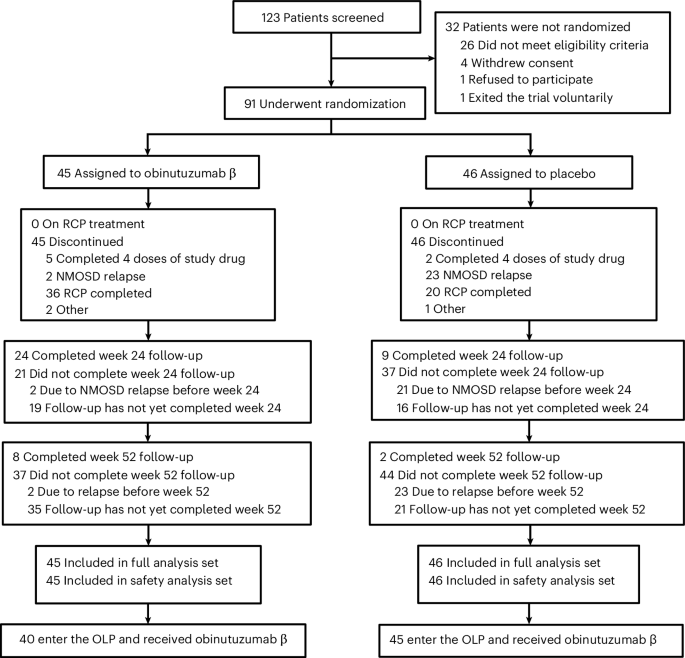
The phase 3 study enrolled 91 eligible participants aged 18 to 70 years with AQP4-IgG-seropositive NMOSD and an Expanded Disability Status Scale score of 7.0 or lower. Researchers randomly assigned participants in a 1:1 ratio to receive either 1,000 mg of intravenous obinutuzumab β or a placebo. The primary outcome measured the time to the first adjudicated relapse on or before week 52. Relapses occurred in two of 45 participants in the obinutuzumab β group, representing 4.4% of the cohort, compared to 21 of 46 participants in the placebo group, or 45.7%. Statistical analysis yielded a hazard ratio of 0.069 with a 95% confidence interval ranging from 0.016 to 0.296 and a p-value below 0.0001, according to data detailed on PubMed.

Beyond primary relapse endpoints, secondary evaluations demonstrated measurable benefits across imaging and clinical disability metrics. Treated participants exhibited fewer new or enhancing magnetic resonance imaging lesions alongside stabilization in visual function tests, such as best-corrected visual acuity. Pharmacodynamic assessments confirmed rapid peripheral depletion of CD19+ B cells. This activity aligns with the molecule’s structural design, which incorporates glycoengineering to augment antibody-dependent cellular cytotoxicity compared to earlier-generation agents.
The safety profile observed during the 52-week trial period was manageable, though investigators noted specific adverse events requiring clinical vigilance. The overall incidence of treatment-related adverse events was higher in the active arm, driven largely by infusion-related reactions and transient hematologic abnormalities. One fatality occurred during the study period, though independent adjudicators judged it unrelated to the study drug. Researchers emphasize that while infection rates appeared to decline over time following initial dosing, longer-term follow-up is necessary to fully characterize safety parameters in this chronic patient population.

As clinical development progresses toward broader regulatory submissions, the reduction in relapse risk positions obinutuzumab β as a promising candidate to alter the standard of care for AQP4-IgG-positive NMOSD.
*Disclaimer: The information provided in this article is for educational and scientific communication purposes only and does not constitute medical advice. Always consult with a qualified healthcare provider regarding any medical condition, diagnosis, or treatment plan.*