
Researchers Discover Novel Surface Superconductor Exhibiting Unconventional Properties
Dresden, Germany – November 20, 2025 – A team of international scientists has announced the revelation of a unique superconductor on the surface of a material, platinum bismuth (PtBi), exhibiting a previously unseen form of superconductivity. Published today in Nature,the breakthrough promises to reshape understanding of quantum materials and potentially unlock advancements in energy transmission and quantum computing.
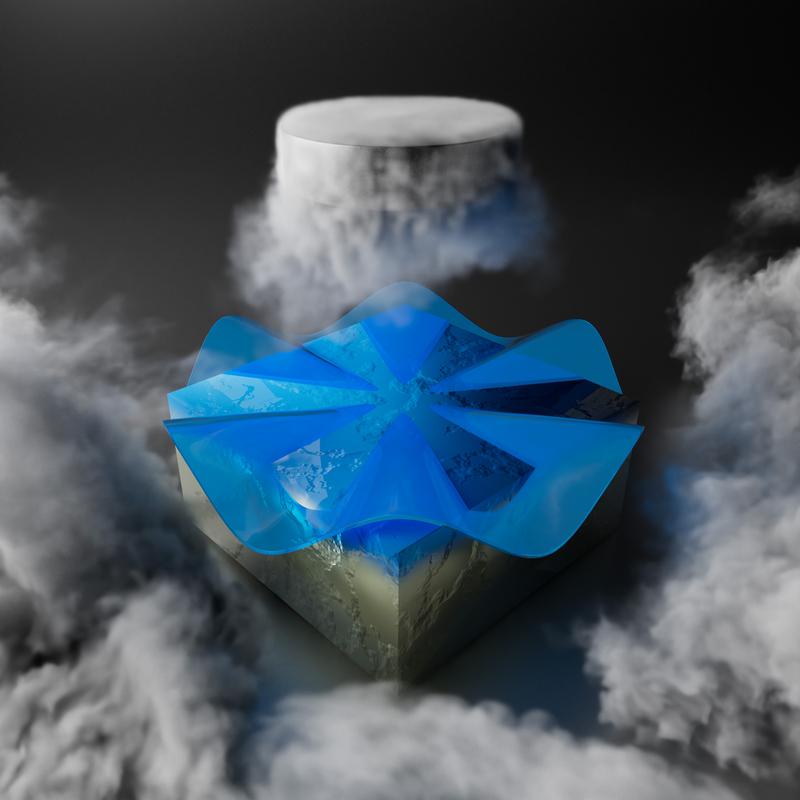
This discovery, spearheaded by researchers within the Cluster of Excellence ct.qmat – a joint initiative of Julius Maximilian University of Würzburg and TU Dresden – centers on a topological nodal i-wave superconducting state. Unlike conventional superconductors which conduct electricity with zero resistance throughout their volume, this new form exists exclusively at the material’s surface and displays an unusual “i-wave” pattern in its electronic structure. This unconventional behavior arises under extreme conditions – ultra-low temperatures, high pressure, or strong magnetic fields – and could lead to more efficient and robust superconducting devices. The research is especially significant as ct.qmat is the only cross-state cluster in Germany funded under the federal and state governments’ excellence strategy.
the collaborative effort involved nearly 400 scientists from over 30 countries and four continents. The team, led by S. Changdar, O. Suvorov, A. Kuibarov, and others, meticulously investigated PtBi, revealing its surprising properties. Their findings detail a superconducting state fundamentally different from those previously observed, opening new avenues for exploring topological quantum materials.
“This is a truly remarkable finding,” stated Katja Lesser, Press Spokesperson & head of Communications for ct.qmat. “The discovery of this novel surface superconductor expands our knowledge of quantum phenomena and could have far-reaching implications for future technologies.”
The research, detailed in the article “Topological nodal i-wave superconductivity in PtBi,” (DOI: 10.1038/s41586-025-09712-6) is also available on arXiv (https://arxiv.org/abs/2507.01774). Further investigation will focus on understanding the underlying mechanisms driving this unique superconductivity and exploring its potential applications.
