
Carbon-Enhanced Boron Nitride Coating Poised to Revolutionize Window Energy Efficiency
Table of Contents
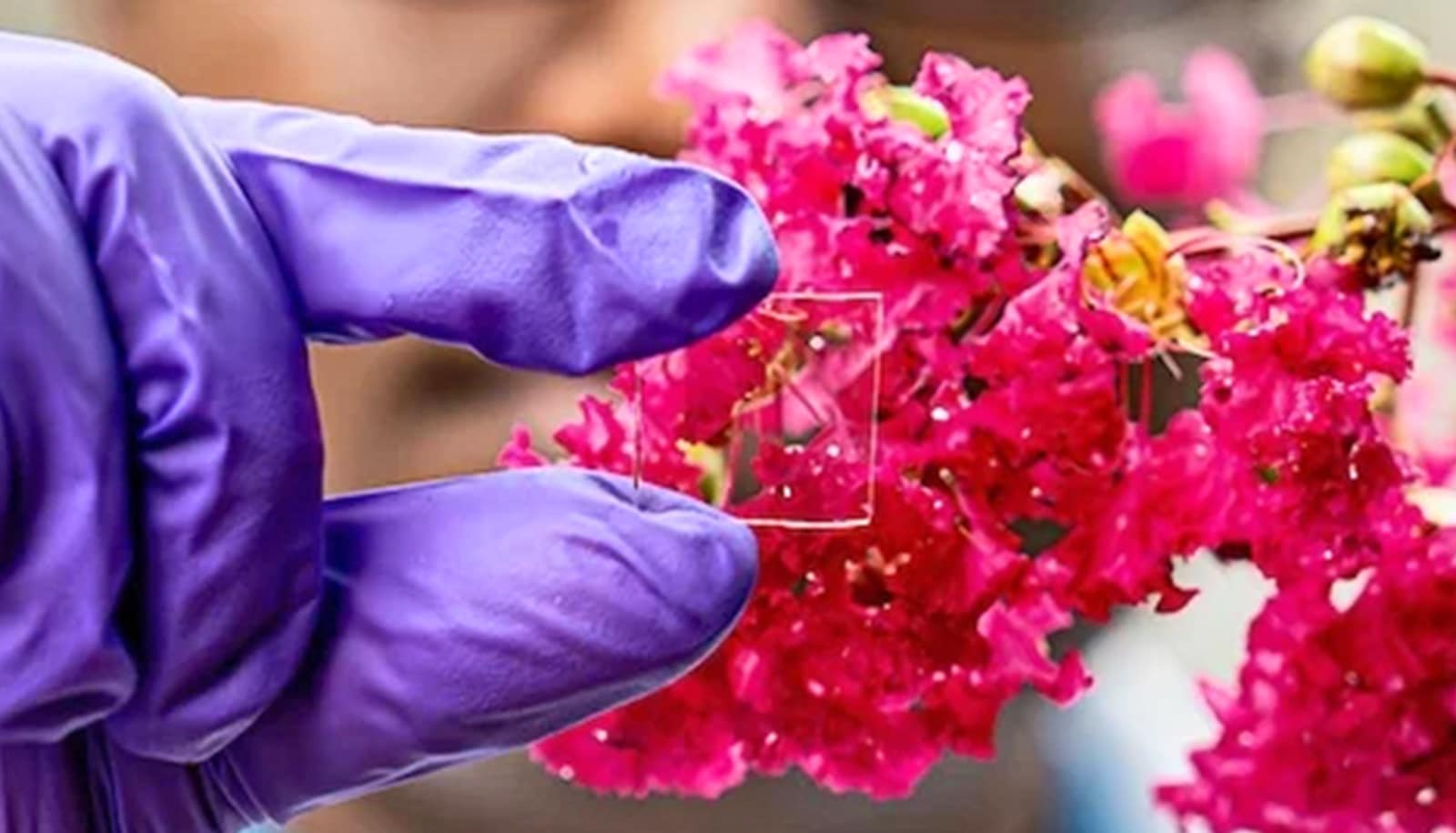
HOUSTON, TX – A newly developed coating for glass, incorporating a precise amount of carbon into boron nitride, promises a significant leap forward in energy-saving window technology. Researchers at Rice University,in collaboration with institutions including the Chinese University of Hong Kong and Arizona State University,have demonstrated that this innovative material dramatically reduces heat transfer through glass,possibly lowering energy consumption in buildings worldwide. The breakthrough addresses a key limitation of existing low-emissivity (low-E) coatings, notably their performance in outdoor environments.
The Science Behind the Innovation
Boron nitride, in its pure form, exhibits emissivity similar to standard glass. Though, the addition of even a small quantity of carbon fundamentally alters its thermal properties, substantially decreasing emissivity – its ability to radiate heat.Pulickel Ajayan, a professor of engineering and materials science at Rice University, explained, “Even though pure boron nitride shows almost similar emissivity to glass, when you add a little amount of carbon into it, the emissivity lowers substantially-and this changes the game altogether.” This reduction in emissivity translates directly into improved insulation and reduced energy loss.
The coating is applied using pulsed laser deposition (PLD), a process where high-energy laser pulses target a solid boron nitride material, creating a plasma that deposits a thin film onto the glass substrate. Abhijit Biswas, lead author of the study and a thin film synthesis expert, highlighted the simplicity of the process: “From the synthesis point of view, coating boron nitride on glass is truly amazing and very exciting.” Crucially, PLD occurs at room temperature, eliminating the need for the high-heat processes typically required for creating adhesive coatings.
Beyond Glass: Expanding Applications
The potential of this low-temperature deposition technique extends far beyond glass. Ajayan suggests it might very well be adapted for use on polymers, textiles, and even biological surfaces. Furthermore,scalable manufacturing methods like roll-to-roll chemical vapor deposition or sputtering could make commercial production a reality with further optimization. “This broadens the request space for boron nitride coatings significantly,” Ajayan stated.
From a cost perspective, boron nitride is more affordable than silver or indium tin oxide, the materials currently used in most commercial low-E glass. Though, researchers caution against direct price comparisons, citing differences in durability, processing requirements, and technological maturity. The team anticipates long-term performance advantages, particularly in challenging environments where current materials degrade.
Durability and Real-World Performance
Collaboration with Yi Long, from the Chinese University of Hong Kong, focused on evaluating the coating’s optical clarity and energy-saving potential. Long emphasized the coating’s superior durability in outdoor conditions. “The high weatherability makes it the first outdoor-facing low-E window coating, with an energy-saving capacity that clearly outperforms the indoor-facing counterpart,” Long noted. “It could be an excellent solution in densely built environments.”
Shancheng Wang contributed to the research, specifically analyzing the energy-saving implications. “The transparency level and promising low emissivity makes carbon-doped coated glass a competitive energy-saving option for cities like Beijing and New York,” Wang said.
| Material | Emissivity | Deposition Temperature | Cost (Relative) | Durability |
|---|---|---|---|---|
| Pure Boron Nitride | similar to Glass | Room Temperature | Low | Moderate |
| Carbon-Doped Boron Nitride | Significantly Lower | Room Temperature | Low | High |
| Silver-Based Low-E | low | High | Medium-High | moderate |
| Indium Tin Oxide | Low | High | High | Moderate |
Did You Know?
The global low-E glass market was valued at $22.8 billion in 2023 and is projected to reach $33.7 billion by 2032, growing at a CAGR of 4.5% from 2024 to 2032, according to a report by Allied Market Research. [https://www.alliedmarketresearch.com/low-e-glass-market]
Pro Tip:
Lower emissivity coatings are most effective in climates with significant temperature differences between indoors and outdoors.
The research was supported by a wide range of funding sources, including the Air Force office of Scientific Research, the Department of the Navy, the US National Science Foundation, and several international organizations.
Boron Nitride: A Versatile Material
Boron nitride (BN) exists in several crystalline forms, each with unique properties.Hexagonal boron nitride (h-BN) is structurally similar to graphite and is an excellent electrical insulator and thermal conductor. Cubic boron nitride (c-BN) is second only to diamond in hardness and is used as an abrasive. The versatility of BN stems from its strong chemical bonds and its ability to withstand high temperatures and harsh environments. Its use in thermal management, lubrication, and as a component in composite materials is continually expanding.The global boron nitride market is expected to reach $3.4 billion by 2031, driven by demand from the electronics, automotive, and aerospace industries. [https://www.marketresearchfuture.com/reports/boron-nitride-market-7877]
Frequently Asked Questions
- What is low-E glass? Low-E (low-emissivity) glass is coated with a microscopically thin, clear layer of metallic oxide that reduces heat transfer through the glass.
- How does carbon doping affect boron nitride’s emissivity? adding carbon to boron nitride significantly lowers its emissivity, meaning it radiates less heat, improving insulation.
- Is this coating suitable for existing windows? The research focuses on new glass coatings,but adapting the process for existing windows is a potential future direction.
- What are the environmental benefits of using this coating? Reduced energy consumption translates to lower carbon emissions from power plants.
- How does this coating compare to customary low-E coatings in terms of cost? Boron nitride is less expensive than silver or indium tin oxide, but overall cost comparisons are complex due to processing differences.
- What is pulsed laser deposition (PLD)? PLD is a physical vapor deposition technique used to create thin films by ablating a target material with a high-power laser.
Could this new coating be a game-changer for building energy efficiency? What other applications do you envision for this technology?
