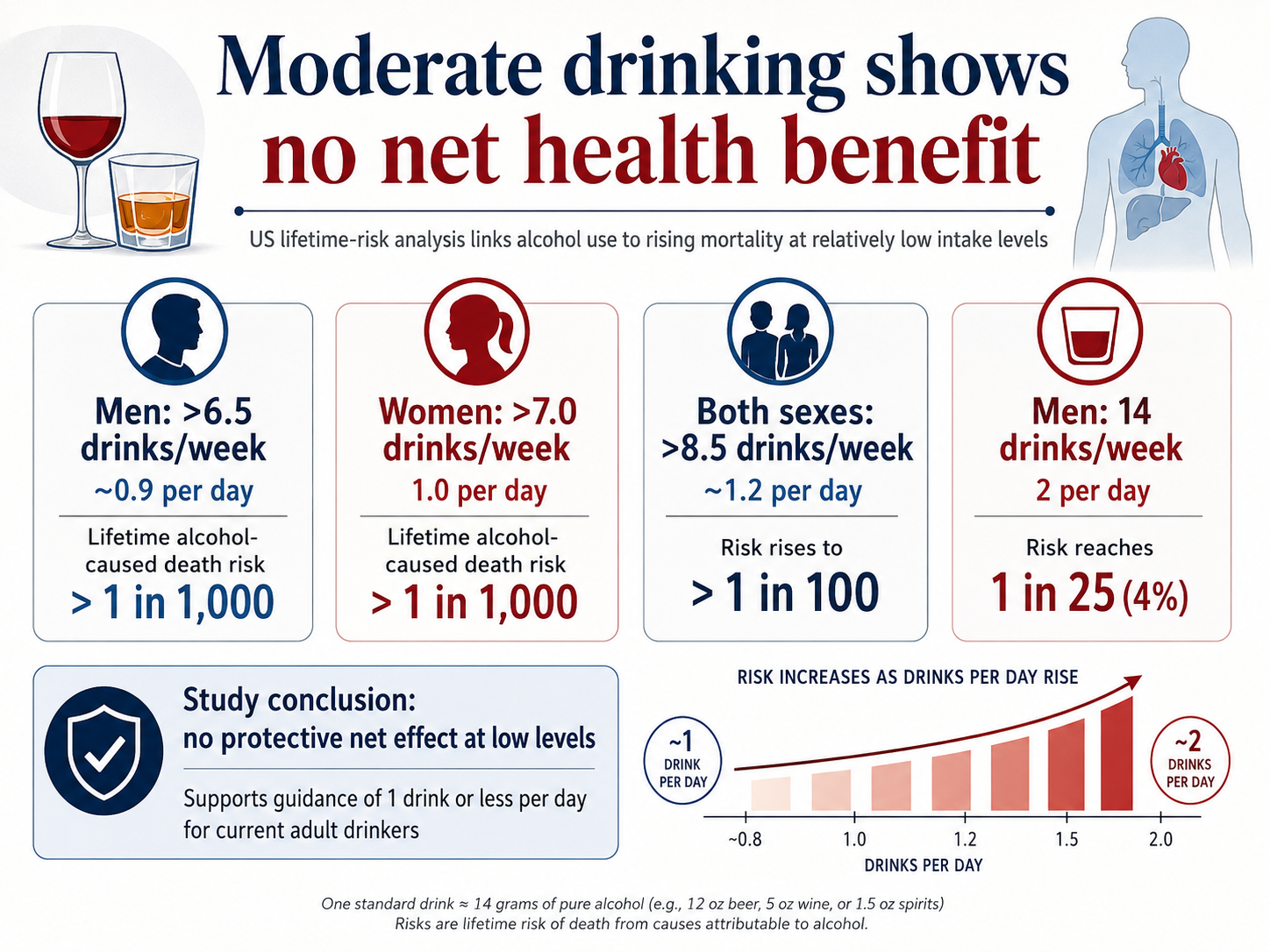
New Alcohol Guidelines: Is 1 Drink a Day Still Safe? Expert Studies Weigh In
Recent epidemiological analysis suggests that the threshold for low-risk alcohol consumption should be lowered to one drink per day, as even minimal intake correlates with measurable increases in long-term mortality risk. This findings, published in JAMA Network Open, challenge previous dietary guidelines that allowed for higher daily consumption, highlighting a need for updated clinical standards in preventative medicine.
Key Clinical Takeaways:
- Large-scale meta-analysis indicates that the risk of all-cause mortality begins to climb significantly after consuming more than one alcoholic beverage per day.
- Previous health guidance often overestimated the cardiovascular benefits of moderate drinking, which the current data suggests may be an artifact of “sick quitter” bias in earlier studies.
- Clinical consensus is shifting toward a “less is safer” model, urging healthcare providers to screen for alcohol intake using more stringent thresholds during routine physical examinations.
The Shift in Epidemiological Understanding
The updated guidance stems from a comprehensive meta-analysis of over 100 cohort studies involving nearly five million participants. According to the research published in JAMA Network Open, the data indicates a J-shaped curve regarding alcohol consumption and mortality, but with a critical caveat: when researchers adjusted for factors such as age, sex, and pre-existing health conditions, the perceived protective effects of low-volume alcohol consumption largely vanished. The study was funded by the Canadian Institute for Substance Use Research, ensuring independence from industry-linked alcohol research groups.
Dr. Tim Stockwell, a lead researcher on the project, noted that the historical “benefit” attributed to light drinking often stemmed from comparing current drinkers to individuals who had stopped drinking due to pre-existing illness. “When you remove those who quit for health reasons from the ‘abstainer’ group, the supposed heart-health benefits of a daily glass of wine do not stand up to rigorous statistical scrutiny,” Stockwell stated. This adjustment shifts the clinical understanding of alcohol from a potentially cardioprotective agent to a consistent, albeit low-level, risk factor for chronic morbidity.
Biological Mechanisms and Pathogenesis
From a physiological perspective, alcohol acts as a systemic toxin, with ethanol metabolites such as acetaldehyde causing direct DNA damage and oxidative stress. Even at low volumes, consistent intake can exacerbate systemic inflammation and contribute to the pathogenesis of several malignancies, including esophageal, breast, and colorectal cancers. The cumulative burden of this exposure is non-linear; the risk profile accelerates as daily consumption exceeds the one-drink threshold.
Patients who maintain a moderate intake may believe they are within safe limits, yet clinicians must address the cumulative physiological toll. For individuals concerned about their metabolic health or those with a family history of malignancy, it is advisable to consult with a board-certified internist or metabolic health specialist to review liver enzyme panels and lipid profiles. Early detection of subclinical inflammation can be critical in mitigating long-term risks associated with lifestyle-based exposures.
Regulatory Hurdles and Public Health Messaging
The discrepancy between current scientific findings and historical U.S. health guidance—often influenced by older, less robust observational data—has created a disconnect in clinical practice. While some government agencies have historically suggested up to two drinks per day for men, the Centers for Disease Control and Prevention (CDC) and international bodies like the World Health Organization are increasingly aligning with the “no safe limit” or “one drink max” stance. This creates a challenging environment for healthcare systems tasked with providing consistent, evidence-based patient counseling.

Healthcare providers and medical groups are currently navigating these updated thresholds to ensure they are compliant with the latest standard of care. For medical practices and diagnostic laboratories, this shift necessitates a review of patient intake forms and counseling protocols. Organizations should engage with healthcare compliance consultants to ensure that patient-facing materials reflect the most current, peer-reviewed mortality statistics rather than outdated nutritional recommendations.
Future Trajectories in Preventative Care
As the scientific community moves toward a more granular understanding of alcohol-related morbidity, the focus is shifting from simple consumption counts to individual genetic and metabolic susceptibility. Future research is expected to utilize longitudinal data to better predict which patients are at the highest risk for alcohol-induced cellular damage. Until such predictive testing becomes standard, the most prudent clinical approach remains the minimization of intake.
Patients seeking to optimize their long-term health outcomes should discuss these findings with their primary care providers during their next wellness examination. For those who find it difficult to adjust their habits, referral to a specialized addiction medicine or behavioral health clinic can provide the necessary support to align lifestyle choices with long-term clinical safety. Bridging the gap between emerging research and daily practice remains the primary mandate for modern, evidence-based healthcare delivery.
Disclaimer: The information provided in this article is for educational and scientific communication purposes only and does not constitute medical advice. Always consult with a qualified healthcare provider regarding any medical condition, diagnosis, or treatment plan.