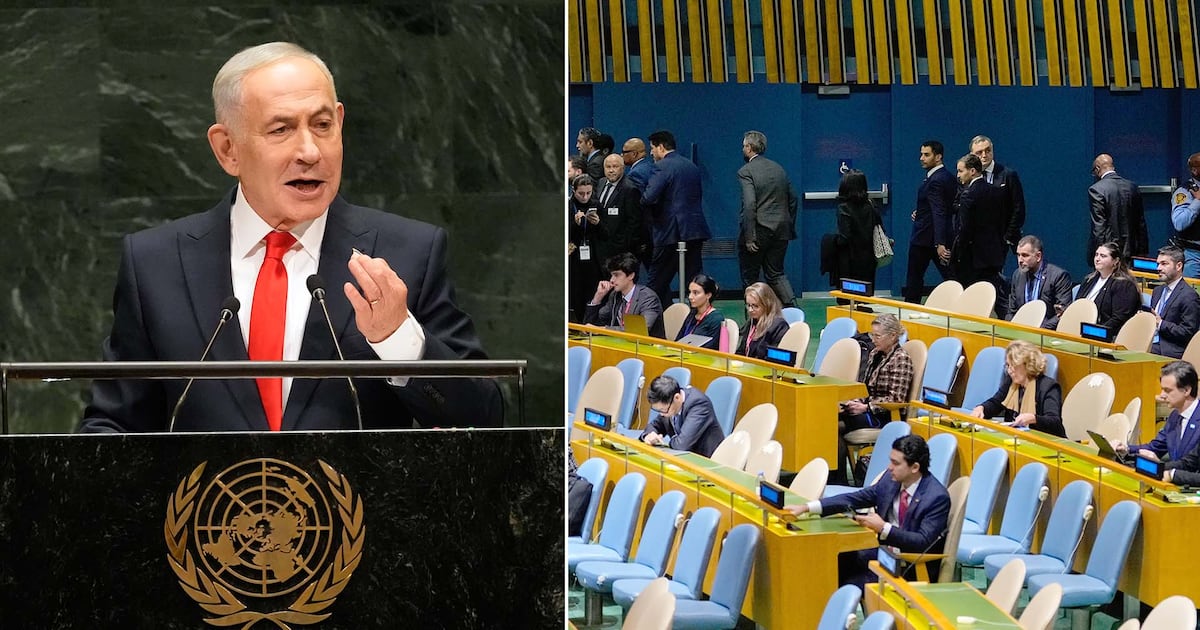
Netanyahu defends military actions as diplomats walk out of UN address
On September 24, 2026, Israeli Prime Minister Benjamin Netanyahu faced a sharply divided United Nations General Assembly in New York City, where scores of diplomats walked out of the hall during his address. Netanyahu used his speech to defend military actions against Iran and reject international allegations of genocide in Gaza as the “lie of the century,” while separate diplomatic developments unfolded regarding Palestinian leadership and post-conflict reconstruction.
A Defiant UN General Assembly Address Amid Mass Walkouts
As Prime Minister Benjamin Netanyahu took the podium at the United Nations headquarters, his appearance drew an immediate mix of cheers, boos, and a mass departure of diplomats. A majority of seats in the hall sat empty as the Israeli leader delivered a combative speech. He directly addressed the fleeing diplomats, stating, “If there are any other moral cowards who have not yet left the hall, please do so now.”
Netanyahu defended his government’s military strategy, asserting that attacking Iran was “one of the easiest decisions I’ve ever have to make.” He also used the global stage to push back fiercely against mounting legal and political pressure, dismissing ongoing accusations of genocide in the Gaza Strip as “the biggest lie of the century.” The speech occurred while Netanyahu remains subject to an International Criminal Court arrest warrant for alleged war crimes.
The diplomatic friction extended beyond the UN floor. Netanyahu launched verbal attacks on several international critics, labeling Turkish President Recep Tayyip Erdogan a tyrant and accusing him of supporting Hamas. He also criticized New York City Mayor Zohran Mamdani, claiming that Jewish residents no longer feel safe under his administration. In response, Mayor Mamdani’s office released a statement accusing Netanyahu of using the address to repeat baseless claims intended to sanitize the destruction in Gaza.
Palestinian Leadership Excluded in Person, Rejects Displacement
While the General Assembly debated the future of the region, Palestinian President Mahmoud Abbas was absent from the physical proceedings. For the second year, the United States denied a visa to the 90-year-old Palestinian leader, forcing him to address the assembly via a prerecorded video statement.
Speaking remotely, Abbas made clear that his administration would resist international marginalization. “We will not leave our homeland. We will not accept displacement. And we will not allow anyone to decide our future on our behalf,” Abbas stated. Although world leaders frequently referenced the plight of Palestinians throughout the week-long assembly, Abbas pressed the international community to move beyond rhetoric and enact tangible measures against Israel.
Reconstruction Bids and Stalled Peace Frameworks
Away from the podium, financial and logistical hurdles continue to complicate post-war planning for the Gaza Strip. A Hamas spokesman stated that the group is fully prepared to advance the next steps of a peace agreement following the introduction of a six-month, $2.45-billion reconstruction roadmap unveiled by the Board of Peace. However, Hamas’s statement omitted any mention of disarmament plans.

The Israeli government has repeatedly maintained that physical reconstruction will not be permitted to begin until Hamas fully disarms. Meanwhile, funding remains a massive obstacle to any future rebuilding efforts. According to a top European Union official, only one billion euros (US$1.1 billion) has been raised so far out of the estimated 71 billion euros (US$80.8 billion) that the United Nations, World Bank, and the European Union calculate will be necessary to rebuild Gaza’s devastated infrastructure.
Managing the complex realities of international sanctions, rebuilding contracts, and compliance frameworks requires specialized oversight.
Regional Escalation Claims in Saudi Arabia
Tensions continued to ripple outward across the Middle East as Iran-backed Houthi rebels in Yemen claimed responsibility for fresh attacks targeting Saudi Arabia. Gen. Yahya Saree announced that the group had launched cruise and ballistic missiles alongside drones at a sensitive location in the Saudi capital of Riyadh, as well as Aramco oil company facilities in the port city of Yanbu. The claims, which lacked immediate supporting evidence, mark the second reported strike attempt against Riyadh in a matter of days, underscoring the persistent security risks facing regional energy infrastructure and commercial trade routes.