
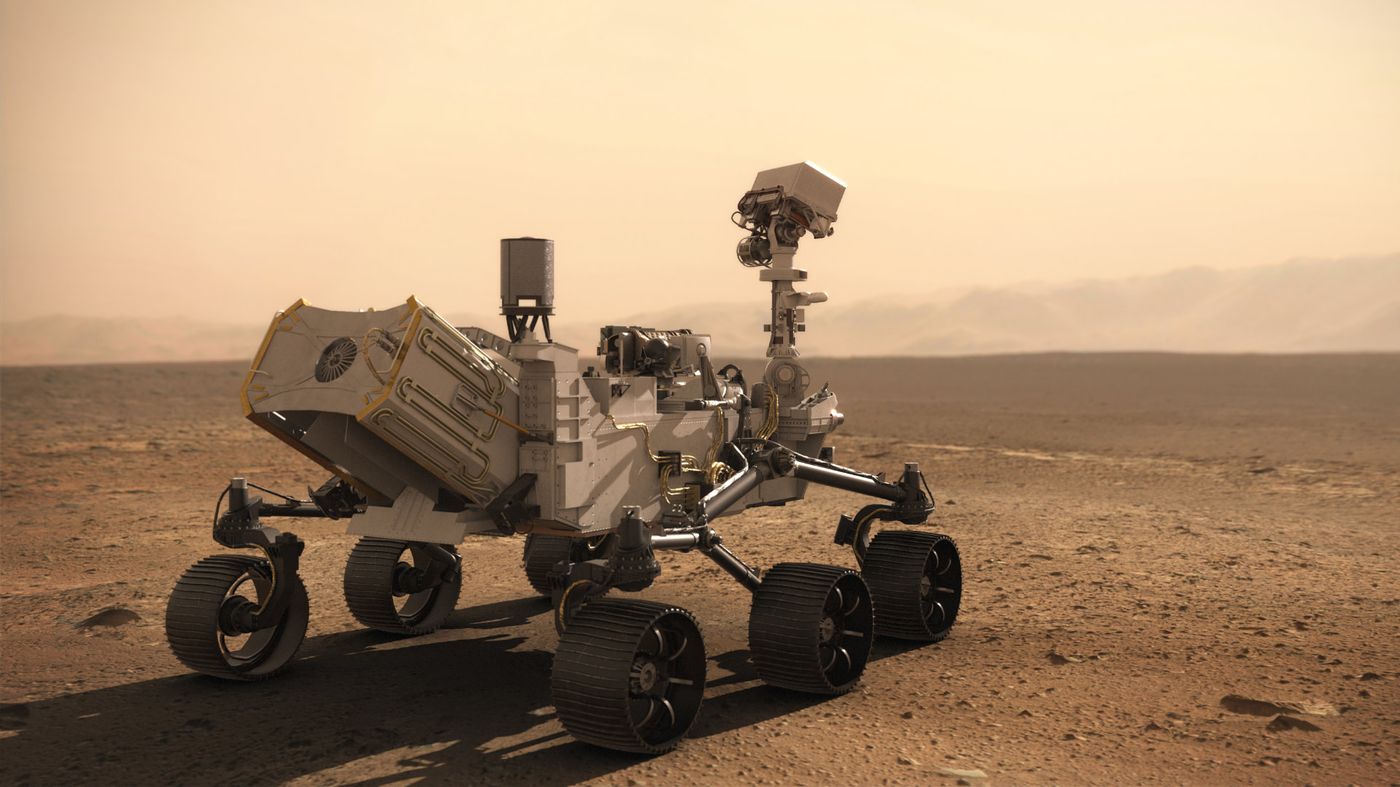
On Mars, NASA’s Perseverance rover has achieved a significant milestone in autonomous navigation, completing its first AI-planned drive on April 3, 2023. This advancement marks a substantial shift in robotic exploration, allowing the rover to traverse the Martian surface with minimal human intervention.
Since landing on February 18, 2021, Perseverance has been steadily increasing its reliance on autonomous systems. By its 1,312th Martian day, in the autumn of 2024, approximately 90% of its movements were conducted autonomously, a dramatic increase from the 6% autonomy demonstrated by the earlier Curiosity rover. This capability is powered by a system called ENav (Enhanced Autonomous Navigation).
ENav allows Perseverance to analyze roughly 1,700 potential trajectories over a distance of about six meters, focusing advanced collision detection calculations only on the most viable routes. The system operates using a processor comparable to an iMac G3 from the late 1990s, demonstrating that substantial autonomy doesn’t necessarily require cutting-edge computing power.
“The enormous uncertainty of the terrain is the main challenge,” explained Masahiro Ono, head of robotic mobility at NASA’s Jet Propulsion Laboratory. The Martian environment, while relatively stable, remains largely unexplored, making each image captured by the rover crucial for safe and efficient path planning.
On April 3, 2023, Perseverance set a fresh record by traveling 331.74 meters in a single Martian day while operating in autonomous mode. As of late 2024, the rover has covered more than 30 kilometers within Jezero Crater, an ancient river delta considered a prime location for searching for evidence of past life, and has collected numerous samples for potential return to Earth.
The increased autonomy of Perseverance represents a critical step forward for space exploration. As future missions venture further from Earth, the ability of robots to make independent decisions will become essential. But, NASA’s plans for a Mars Sample Return mission, intended to bring Perseverance’s collected samples back to Earth for detailed analysis, have been cancelled, leaving the possibility of independent sample retrieval to other nations, including China.
