
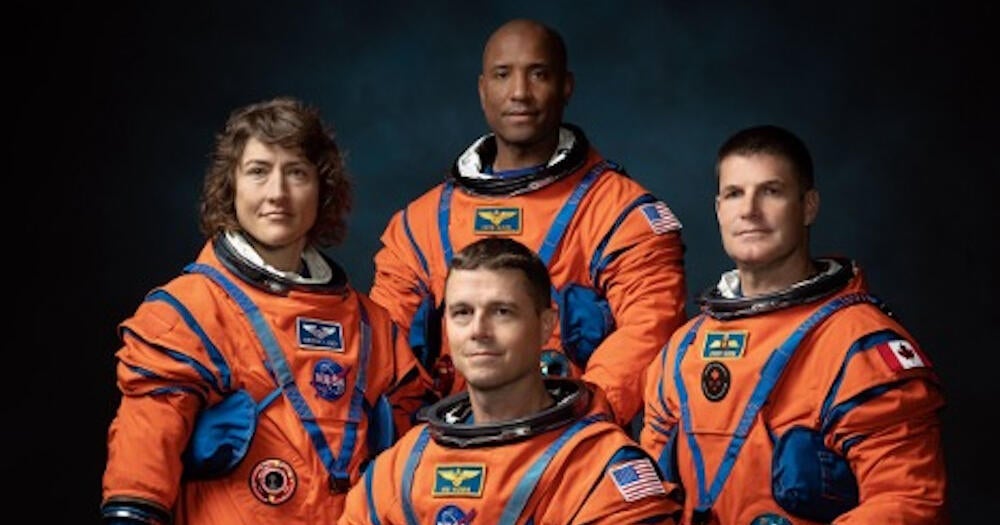
NASA’s Artemis II astronauts bring wealth of experience to moon mission. Meet the crew about to make history.
Four astronauts—Wiseman, Glover, Koch, and Hansen—prepare for the Artemis II launch this week from Kennedy Space Center. This nine-day lunar orbit mission marks the first crewed voyage beyond low-Earth orbit in decades. It validates life support systems for future landings while establishing critical legal and logistical precedents for commercial space expansion.
The countdown clock is ticking. On Wednesday evening, the Space Launch System will ignite, pushing four humans toward the lunar far side. This isn’t just a test of hardware. It is a stress test for the global infrastructure supporting deep space exploration. As the Artemis II crew stands on the precipice of history, the ripple effects extend far beyond the launchpad in Merritt Island, Florida.
We are witnessing a shift from government-exclusive exploration to a hybrid economic model. The success of this mission unlocks contracts for private lunar landers, mining rights, and orbital tourism. But with high reward comes high liability. The legal frameworks governing this mission are still catching up to the technology. Families of the crew face unique psychological pressures that require specialized support structures rarely found in standard healthcare networks.
The Human Element of High-Risk Exploration
Commander Reid Wiseman leads the crew with a background rooted in naval aviation and systems engineering. His personal narrative underscores the sacrifice required. Following the loss of his wife to cancer, Wiseman chose to remain in Houston, prioritizing his mission and his daughters. He represents the intersection of personal grief and professional duty.
Pilot Victor Glover brings extensive combat experience and a history of breaking barriers as the first Black astronaut on a long-duration ISS mission. His presence signals a diversification of the explorer profile. Mission Specialist Christina Koch, holding the record for the longest single spaceflight by a woman, bridges the gap between biological research and deep space travel. Her work informs how human physiology withstands radiation beyond Earth’s magnetosphere.
Then there is Jeremy Hansen. The first Canadian to venture beyond low-Earth orbit. His selection highlights the international dependencies of the Artemis program. Canada provided the Canadarm3 for the Lunar Gateway, securing their crew spot. This interdependence creates complex jurisdictional questions.
“We are moving into an era where space activity is not just scientific, but commercial. The liability frameworks need to be as robust as the rockets themselves.” — Dr. Michael Dodge, University of Nebraska College of Law, Space Law Expert.
This quote from Dr. Dodge highlights the emerging problem. As private entities like SpaceX integrate with NASA missions, insurance and liability grow critical bottlenecks. Companies need space law attorneys who understand the Outer Space Treaty implications alongside modern commercial contracts. The Artemis II mission serves as a case study for future indemnity clauses.
Economic Shockwaves on the Space Coast
The launch impacts more than just the astronauts. Merritt Island and surrounding Brevard County economies rely heavily on these cycles. A successful launch triggers bonus structures, contract renewals, and influxes of visiting press, and families. Local infrastructure faces strain. Traffic management, hospitality, and security services must scale instantly.
Municipal planners in Florida are already adjusting zoning laws to accommodate increased commercial launch cadence. The noise profiles and safety corridors affect nearby real estate values. Homeowners and developers in the region are consulting aerospace engineering consultants to assess vibration impacts and structural integrity of properties near the launch corridor. This represents a tangible local problem created by a global event.
The economic benefit is clear, but the logistical cost is high. Supply chains for hypergolic fuels and solid rocket boosters move through specific ports. Any disruption here ripples through the defense industrial base. The mission validates the supply chain resilience required for sustained lunar presence.
Supporting the Families Left Behind
While the world watches the launch, the families remain on Earth. Wiseman’s daughters, Glover’s four children, and Hansen’s family face a nine-day period of acute stress. The risk profile of Artemis II is higher than ISS missions. Re-entry from lunar velocity generates more heat and stress on the capsule.
NASA provides psychological support, but the perimeter of care extends further. Extended family members and close friends often struggle with the silence of the mission phase. There is a growing demand for specialized family crisis counselors trained in high-risk profession trauma. This is an underserved niche in the mental health directory.
Jeremy Hansen noted the difficulty of asking his family to accept the risk. “It’s a lot to request of a family,” he admitted. This sentiment resonates across military and exploration communities. The support network must be proactive, not reactive. Communities in London, Ontario, and Houston are mobilizing local groups to provide continuity for the children during the mission window.
The Long-Term Legacy
Artemis II is a nine-day loop. It does not land. But it proves the Orion capsule can sustain life in deep space. This data is the currency for the 2028 landing plans. Every telemetry packet sent back validates the business case for lunar real estate.
The mission also tests the communication relay systems. When the crew goes behind the moon, they lose direct contact with Earth. This blackout period requires autonomous decision-making protocols. These protocols will eventually govern automated mining rigs and orbital factories. The human decisions made this week set the algorithmic standards for the next decade.
We are standing at a threshold. The technology exists to go. The legal and social frameworks are the variables still being solved. As the rocket climbs, it carries the weight of these unresolved questions. The success of Artemis II depends as much on the engineers on the ground as it does on the astronauts in the sky.
For those tracking the implications of this novel space age, understanding the supporting infrastructure is key. Whether it is securing assets through specialized legal counsel or ensuring the well-being of high-risk families, the directory of professionals ready to support this industry is growing. The moon is no longer just a destination. It is a jurisdiction, a market, and a home away from home. We must build the support systems to match that ambition.