
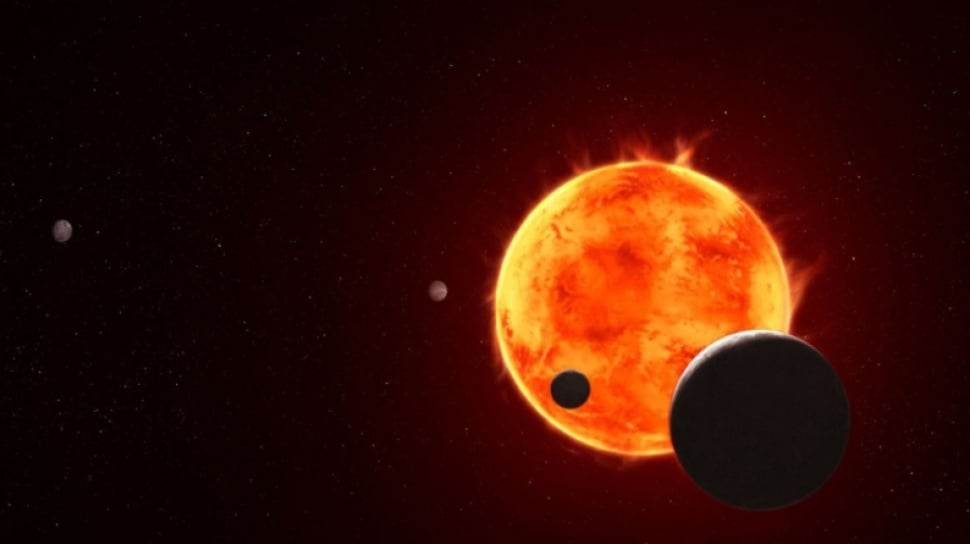
NASA’s Webb Telescope Detects Potential Signs of water on Earth-Sized Exoplanet Trappist-1e
WASHINGTON – New data from the James Webb Space Telescope indicates the possible presence of water vapor in the atmosphere of Trappist-1e, an Earth-sized exoplanet orbiting a star 40 light-years away. The findings, revealed today, September 15, 2025, represent a meaningful step in the ongoing search for habitable worlds beyond our solar system and offer the most detailed analysis yet of a potentially habitable planet.
The discovery centers on observations of light filtering through Trappist-1e’s atmosphere as the planet transits its star.Scientists are analyzing this light for chemical signatures, and initial results suggest the presence of water, a crucial ingredient for life as we know it. While not definitive proof of an ocean or life, the data provides compelling evidence that Trappist-1e may possess conditions suitable for habitability. The Trappist-1 system, discovered in 2017, has long been a focus for exoplanet researchers due to its seven Earth-sized planets, several of which reside within the habitable zone of their ultra-cool dwarf star.
Further research utilizing the Webb Telescope’s advanced capabilities is planned to refine these initial findings and determine the composition of Trappist-1e’s atmosphere with greater certainty. Scientists hope to ascertain whether the planet is barren, or if it harbors liquid water and potentially, the building blocks for life. The ongoing investigation promises to deliver a clearer understanding of this distant world in the coming months and years.
