
Nobel Prize Winners Increasingly Rely on immigration to achieve Breakthroughs
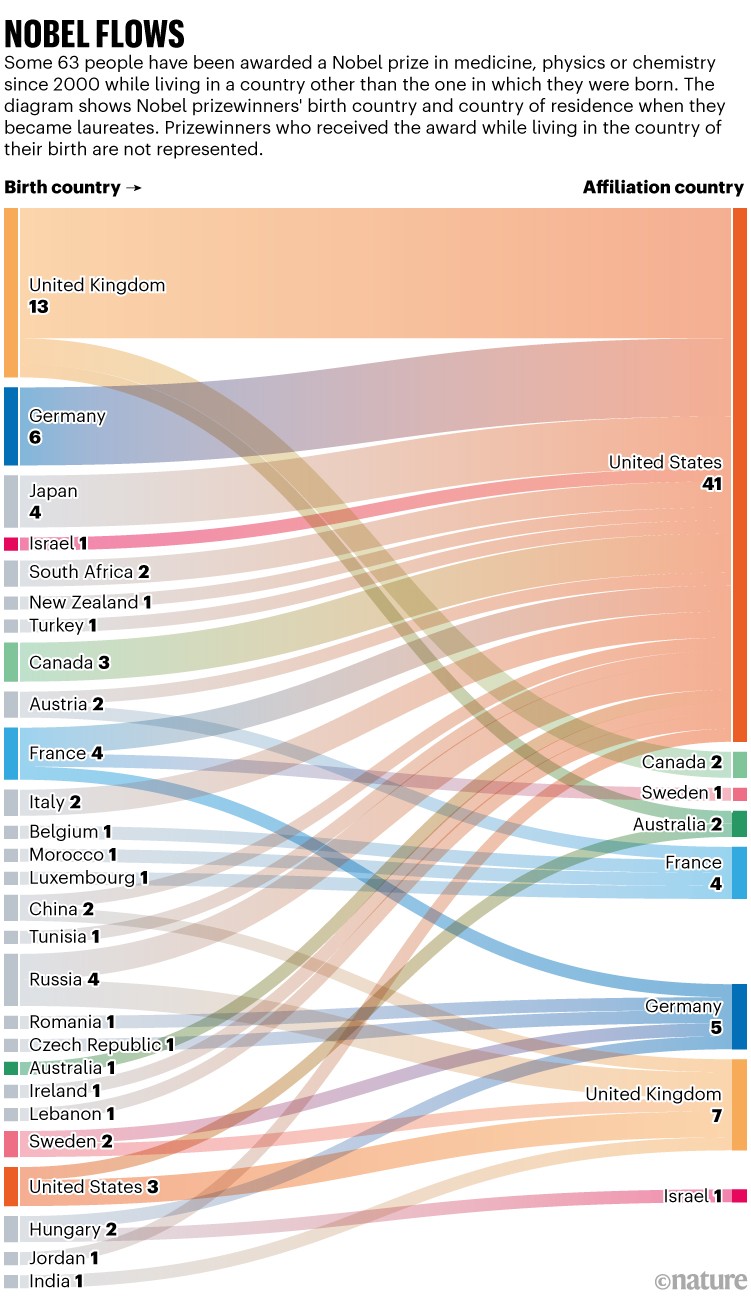
Stockholm,Sweden – A growing proportion of Nobel Prize laureates in the sciences have immigrated to the countries where they conducted their award-winning work,raising questions about the global landscape of scientific innovation and the impact of increasingly restrictive immigration policies. more then 30% of science Nobel laureates recognized this century were immigrants when they received the prize, according to data from nobelprize.org. This trend highlights the critical role international mobility plays in fostering groundbreaking research.
The data reveals significant differences across disciplines. Physics, requiring substantial investment in specialized equipment, demonstrates the highest percentage of laureates who emigrated – suggesting that access to advanced infrastructure is a key driver for researchers. This reliance on international movement challenges national efforts to cultivate scientific excellence in isolation and underscores the benefits of open collaboration and the free flow of talent.
Historically, the United States has been a magnet for scientific talent, attracting researchers from around the globe. However,recent policy shifts are beginning to disrupt this pattern. The Trump governance’s cuts to scientific research funding, amounting to billions of dollars this year, coupled with new visa fees – including a US$100,000 charge per application for the H-1B visa relied upon by many foreign-born researchers – are prompting international researchers to consider opportunities elsewhere.
Several nations are actively seeking to capitalize on this shift. France, South Korea, and Canada have launched programs offering awards and scholarships to attract US-based researchers. The European Research Council is offering grants of up to €2 million ($2.3 million) to scientists who relocate their laboratories to the EU,specifically targeting those considering leaving the United States.
These developments follow recent restrictions enacted by Australia, Canada, and the United Kingdom that have reduced the number of international students. The future interplay between immigration policies and the awarding of Nobel Prizes remains uncertain,but the current trend suggests that nations prioritizing open scientific exchange are likely to gain a competitive edge in the pursuit of groundbreaking discoveries.
