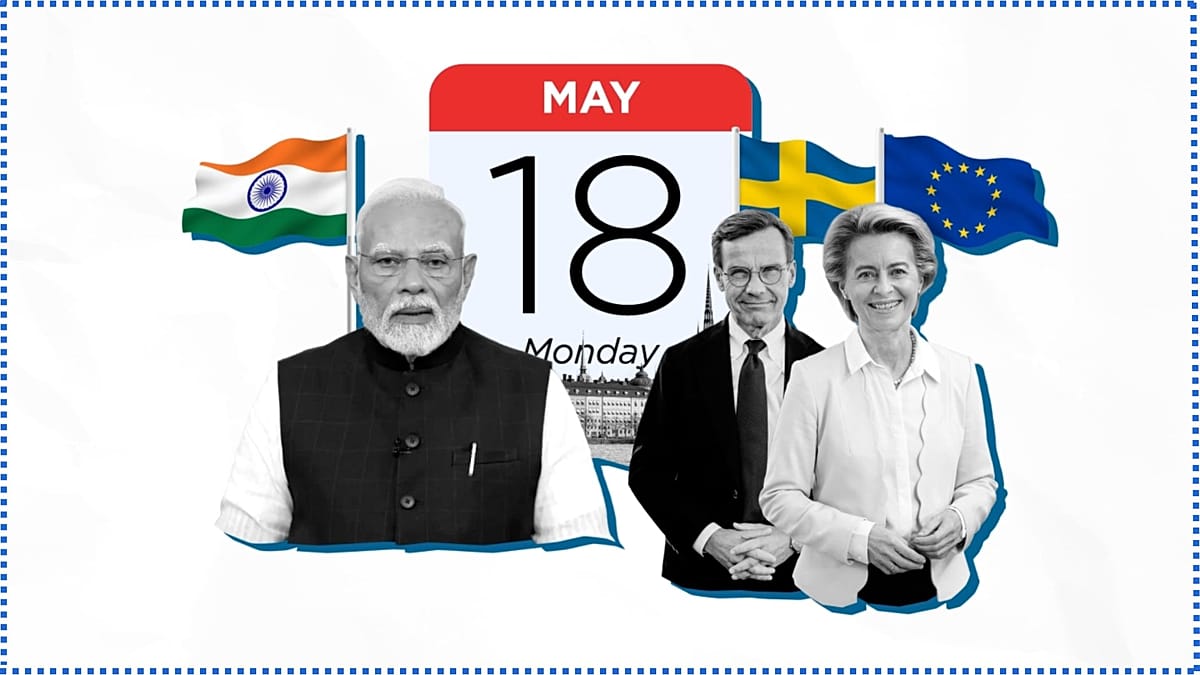
Modi’s Europe Blitz: A Day-by-Day Breakdown of India’s Diplomatic Offensive
As European capitals brace for a high-stakes diplomatic push, India’s Prime Minister Narendra Modi is executing a meticulously calibrated two-tier strategy across the continent—one that blends economic statecraft with cultural diplomacy. Between May 15–20, 2026, Modi’s itinerary through the UAE, Netherlands, Sweden, Norway, and Italy isn’t just a series of bilateral meetings. it’s a calculated move to deepen India’s geopolitical footprint while addressing Europe’s twin crises: energy security and semiconductor dependency. The stakes? A potential realignment of global supply chains that could reshape regional economies from Rotterdam’s ports to Gujarat’s industrial corridors.
The Two-Tier Strategy: Economic Leverage Meets Soft Power
Modi’s approach hinges on two pillars: hard infrastructure deals and cultural-educational ties. The first tier targets Europe’s critical vulnerabilities—semiconductor shortages and energy transitions—while the second tier reinforces India’s narrative as a stable, democratic partner in an era of rising authoritarianism. This dual strategy isn’t new, but its execution in 2026 is sharper, with Norway’s recent conferral of the Grand Cross of the Royal Norwegian Order of Merit signaling a new level of diplomatic reciprocity.
“India’s push into Europe isn’t just about trade—it’s about positioning New Delhi as the continent’s reliable partner in an unstable world. The semiconductor agreement with ASML-Tata Electronics isn’t just a business deal; it’s a statement that India can deliver where China’s supply chains have faltered.”
Why Europe’s Capitals Are Watching Closely
The European Union’s 2023 Chips Act has accelerated the continent’s scramble for semiconductor alternatives to Taiwan and South Korea. India’s push with ASML—Dutch semiconductor giant—and Tata Electronics isn’t just about manufacturing; it’s about diversifying risk. For cities like Eindhoven (home to ASML’s headquarters), In other words new investment but also potential labor market shifts as European firms relocate R&D to India.

Meanwhile, Norway’s energy transition presents a parallel opportunity. Modi’s meetings with Prime Minister Jonas Gahr Støre focus on green hydrogen partnerships, a sector where India’s Gujarat and Norway’s fjords could become unlikely collaborators. The 2025 Norway-India Green Hydrogen Task Force (announced last year) is now entering its implementation phase, with Gujarat’s Mundra Port poised to become a hub for hydrogen exports to Europe.
The Human Impact: Cities on the Frontlines
For Rotterdam, Modi’s visit signals a potential boom in port logistics as India’s trade with Europe surges. The city’s Maasvlakte 2 terminal, already a gateway for Asian cargo, may see increased container traffic from Gujarat’s Kandla and Mumbai ports. Local businesses are already preparing:
“We’ve seen a 30% rise in inquiries from Indian shipping firms since Modi’s announcement about the UAE-India trade corridor. The question isn’t if but how fast we can scale our cold-chain infrastructure to handle perishable exports like fruits and pharmaceuticals.”
In Vadodara, Gujarat, where Modi inaugurated the Sardardham Hostel, the economic ripple effects are equally tangible. The hostel’s focus on skilled workforce housing for European firms setting up shop aligns with Gujarat’s $15 billion semiconductor incentive package. Local real estate developers are already eyeing opportunities:
- Labor housing shortages may drive demand for modular housing contractors specializing in rapid-construction worker accommodations.
- Energy grid upgrades could spur contracts for renewable energy integrators to support semiconductor plants’ power needs.
- Legal hurdles around foreign direct investment may require cross-border M&A attorneys to navigate India’s FDI caps.
The Long Game: Geopolitical Chess Moves
Modi’s Europe tour isn’t just about immediate deals—it’s about counterbalancing China’s influence. With the U.S. Pivot to Indo-Pacific and Europe’s 2025 Strategic Partnership Agreement with India, New Delhi is positioning itself as the preferred democratic alternative to Beijing.
| Country | Key Focus Areas | Potential Local Impact |
|---|---|---|
| Netherlands | Semiconductor manufacturing, space tech | Eindhoven’s tech sector expansion; Amsterdam’s fintech-India collaborations |
| Sweden | Defense tech, green energy | Stockholm’s defense exports to India; Gothenburg’s renewable energy partnerships |
| Norway | Green hydrogen, Arctic shipping routes | Oslo’s maritime sector growth; Bergen’s hydrogen infrastructure projects |
| Italy | Manufacturing, cultural diplomacy | Milan’s fashion-tech collaborations; Venice’s tourism-India ties |
The Problem-Solution Divide: Where Europe Needs India—and Vice Versa
Europe’s challenges—energy security, tech sovereignty, and demographic decline—align perfectly with India’s strengths: a young workforce, strategic mineral reserves, and a rapidly expanding industrial base. But the path isn’t seamless. Three critical gaps remain:
- Infrastructure Bottlenecks: India’s ports and railways must handle surging European trade. Third-party logistics providers with expertise in India’s Customs Act are already in demand.
- Regulatory Alignment: Divergent data privacy laws (India’s Digital Personal Data Protection Act vs. GDPR) could stall joint ventures. International compliance law firms are advising firms to preemptively audit contracts.
- Workforce Skills Gap: European firms setting up in Gujarat face a shortage of semiconductor technicians. Vocational training institutes are partnering with corporate upskilling platforms to bridge the divide.
The Kicker: A Continent at the Crossroads
As Modi’s plane touches down in Rome, the question isn’t whether Europe will embrace India’s overtures—but how quickly. The semiconductor deal with ASML is a down payment on a larger bet: that India can become Europe’s third industrial powerhouse, alongside Germany and China. For businesses, the message is clear: Adapt now, or risk being left behind.
With supply chains in flux and geopolitical alliances shifting, the strategic advisors who can navigate this realignment will define the next decade of global trade. The clock is ticking—and Europe’s capitals are listening.