Microsoft Unveils Agentic AI Strategy and Copilot Super App at Build Conference
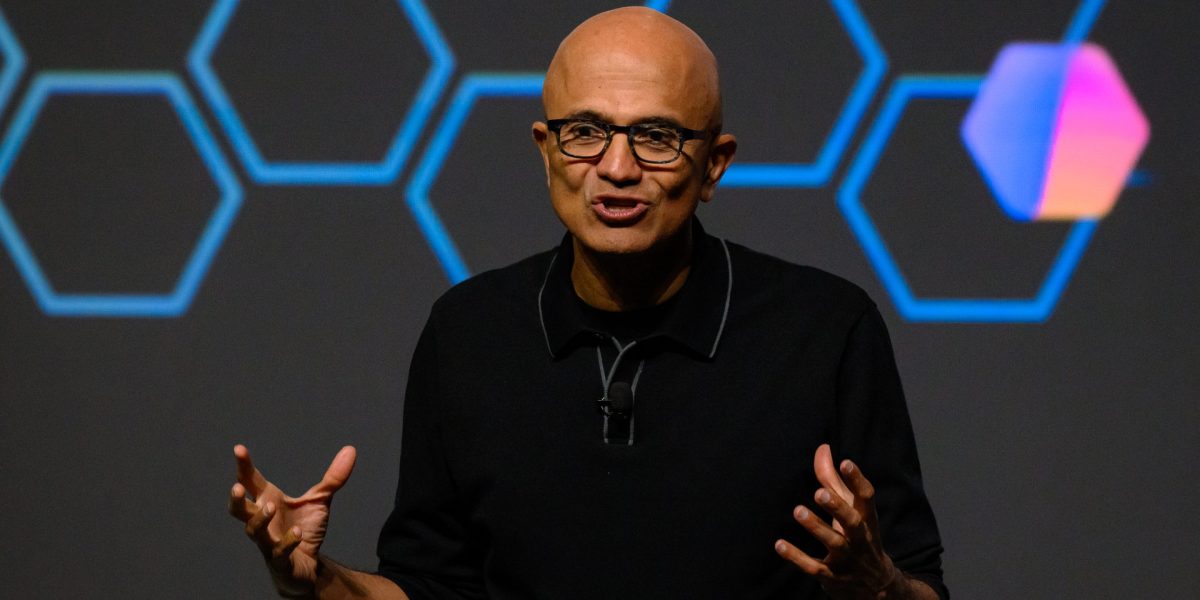
Microsoft CEO Satya Nadella unveiled a strategic pivot toward “agentic AI” at the Build conference in San Francisco on June 2, 2026. By introducing “Project Solara” and a suite of homegrown models, Microsoft aims to reassert its dominance in a saturated market, challenging rivals like Google and Meta for platform supremacy.
The pivot is not merely a technological iteration; It’s a defensive maneuver against the structural friction currently hindering the company’s enterprise trajectory. Microsoft’s reliance on third-party infrastructure and the performance variance of its existing Copilot assistant have created a palpable urgency in Redmond. Investors have noted that while the company holds a massive footprint in cloud services, the “agent-native stack” represents an attempt to capture higher-margin, long-term software revenue by embedding reasoning capabilities directly into the operating system and hardware peripherals.
The Pivot to Agentic Infrastructure
Nadella’s keynote emphasized a shift from cloud-native architectures to systems that execute tasks autonomously. This transition carries significant implications for capital expenditure and technical debt. As Microsoft increases its reliance on homegrown chips and internal model training, the firm is attempting to decouple its performance from the supply chain constraints that have plagued the industry throughout the last fiscal year.
The “Project Solara” initiative is a direct response to the need for localized, persistent intelligence—a hardware-software hybrid that could redefine how professional services firms manage data privacy. For organizations navigating these rapid shifts in infrastructure, the complexity of implementation often necessitates external guidance. When legacy systems meet the “agent-native” future, firms frequently turn to specialized IT infrastructure consultants to audit existing bottlenecks before scaling new AI deployments.
Market Dynamics and Competitive Positioning
The competitive landscape has shifted significantly since 2019. Microsoft’s early alliance with OpenAI, while foundational, now requires a more flexible approach to maintain market share against agile labs. The introduction of the “Copilot super app” and the “Scout” agent signals a move to consolidate fragmented workflows into a single, high-retention interface. This strategy is designed to drive enterprise stickiness, effectively locking in user data and increasing the switching costs for corporate clients.

However, the transition is not without risk. The integration of “reasoning models” and “superchips” increases the complexity of the enterprise stack. As Microsoft moves to optimize its infrastructure, the legal and compliance overhead grows in lockstep. Managing the IP risks of agentic outputs—where code generation happens dynamically—requires a robust legal framework.
The shift toward agentic AI is a fundamental change in the economics of software. It is no longer about human-computer interaction; it is about machine-machine collaboration. Companies that fail to update their internal governance to match this speed will find themselves at a significant competitive disadvantage.
This reality forces an immediate reassessment of corporate risk management. As companies adopt these autonomous agents, they must ensure their internal policies, data handling, and liability protections are airtight. For many, this necessitates engagement with top-tier corporate legal firms that specialize in the emerging intersection of AI liability and software licensing.
Financial Implications and Future Growth
Microsoft is positioning these advancements to bolster its margins in the coming fiscal quarters. By moving toward a more vertically integrated hardware-software ecosystem, the company seeks to mitigate the volatility inherent in reliance on third-party silicon providers. Current market analysis suggests that the ability to offer a “superchip” and “super app” combination provides a tangible hedge against the commoditization of large language models.

The move to host the Build conference in San Francisco—a symbolic return to the epicenter of the tech revolution—underscores the gravity of this pivot. The integration of personal AI assistants into Windows is designed to re-ignite the consumer and commercial buzz that defined the initial stage of the AI cycle. Yet, for institutional investors, the focus remains on execution: can Microsoft translate this “new paradigm” into sustained, high-margin revenue growth?
The answer rests on the adoption rate of “Autopilot” and the efficiency of the new “Copilot Cowork” tools. As businesses integrate these agents into Teams and Outlook, the demand for high-level digital transformation strategy will spike. Companies that are currently scaling their AI capabilities are increasingly relying on specialized digital transformation advisory firms to bridge the gap between innovation and operational ROI.
The market trajectory for the next eighteen months is clear: the era of speculative AI hype is giving way to a period of industrial-grade, agentic implementation. Microsoft’s bid to remain the center of gravity depends on its ability to prove that its tools are not just functional, but essential to the survival of the modern enterprise. As the dust settles on the Build conference, the focus now turns to the Q3 and Q4 execution reports, where the financial reality of this agent-native shift will be laid bare.
For firms looking to navigate this volatility, the key is to ensure that their underlying vendor agreements and infrastructure strategies are as dynamic as the software they are deploying. Whether you are scaling your own AI infrastructure or auditing the security of your existing software stack, the World Today News Directory provides access to the vetted, institutional-grade partners required to manage this transition with precision.