
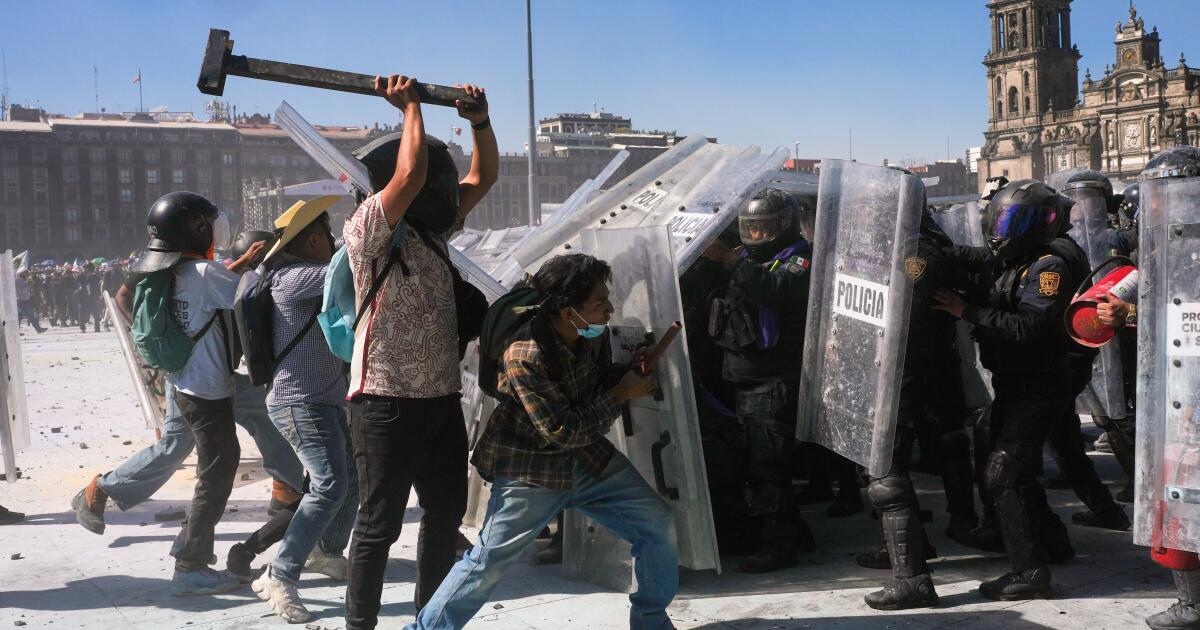
Following a Large Protest in Mexico City,Government and Opposition Clash Over Response and Allegations
A large demonstration took place in Mexico City on Saturday,drawing tens of thousands of participants,primarily from the Gen Z demographic. While initially framed within a global context of protests against corruption and inequality – movements also seen in countries like Nepal and Morocco – the Mexico City march quickly focused on criticism of the current government led by President Claudia Sheinbaum and her Morena party. Many protesters labeled the governance a “narco-government.”
A important element of the protest centered around the recent assassination of Carlos Manzo, the mayor of Uruapan, who had publicly accused Sheinbaum’s government of being lenient towards criminal organizations. Supporters of Manzo’s “White Hat” movement, named after his signature sombrero, were prominent participants, demanding a stronger crackdown on organized crime. the movement has seen large gatherings in Michoacán state following Manzo’s death.
Following the march, accusations of repression emerged, with opposition figures alleging brutality against protesters. Alejandro Moreno, president of the Institutional Revolutionary Party, claimed on X (formerly Twitter) that young people were “brutalized” for seeking a better Mexico and accused the government of being “scared” of organized public dissent.
Mexican authorities denied these allegations, stating that at least 60 police officers were injured during clashes. They reported that a minority of protesters, some wearing ski masks, engaged in violence, throwing stones, bottles, fireworks, and other objects at police. Police responded with physical force and tear gas. Both sides attribute blame for initiating the confrontations.
President Sheinbaum suggested the violence was deliberately instigated to create a narrative of “chaos in Mexico” and garner negative attention. She has called for an investigation into the violence, alleging it was funded by her political opponents, and pledged to investigate any instances of police brutality. She emphasized that the majority of protesters were nonviolent.
Disagreement exists over the size of the demonstration, with authorities estimating 17,000 participants while the opposition claims a much larger turnout.
Despite the protests and criticism, Sheinbaum maintains high approval ratings, with recent polls indicating support above 70%. Her Morena party continues to hold significant power, controlling congress, the courts, and most state governments, largely due to strong support from lower and working-class Mexicans who have benefited from increased minimum wages and social welfare programs.
Security remains a primary concern for many Mexicans,despite the president’s claims of decreasing violent crime rates. Sheinbaum has initiated a crackdown on organized crime, resulting in thousands of arrests, including the extradition of suspects to face prosecution in U.S. courts.
Opponents have vowed further protests, but analysts express doubt about the fractured opposition’s ability to significantly challenge Morena’s dominance, a situation reminiscent of the large demonstrations faced by Sheinbaum’s predecessor and mentor, ex-President Andrés Manuel López Obrador, which did not diminish his popularity.
