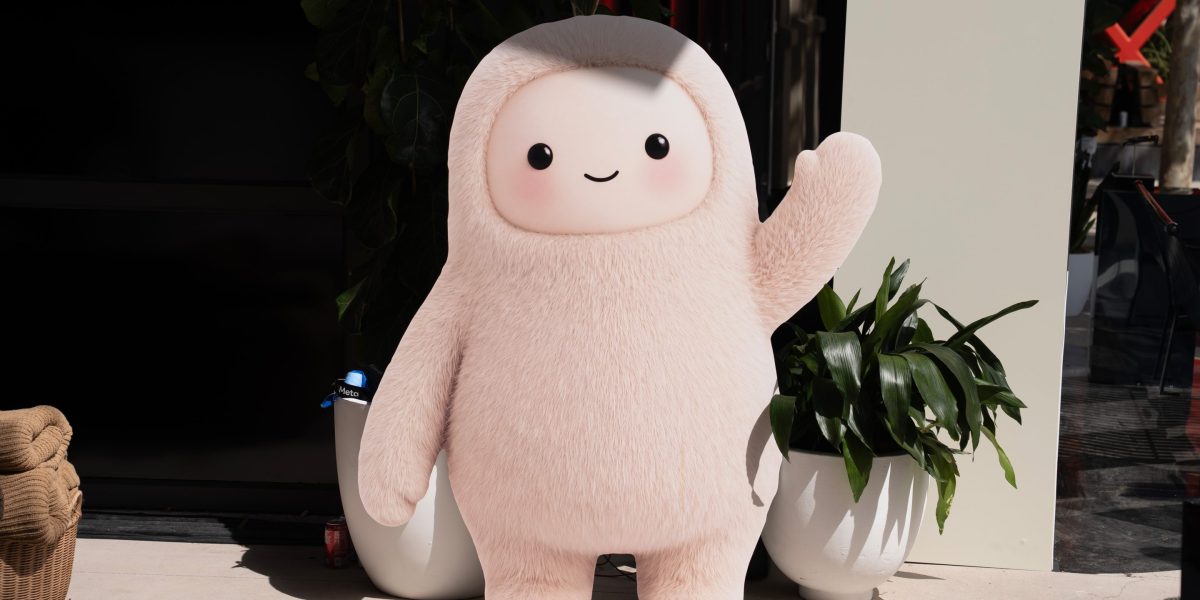
Meta and OpenAI deploy mascots for AI agents to increase adoption
Meta and OpenAI are deploying customizable, anthropomorphic mascots for their latest AI agents to increase user adoption. Meta’s Muse, featuring a mascot named Jolly, and OpenAI’s Dots, which utilizes a variety of colorful characters, are designed to lower psychological barriers to using autonomous software for sensitive tasks like shopping and scheduling.
Meta introduced Muse on Sept. 8, followed by the rollout of Jolly, a customizable mascot characterized by rosy cheeks. OpenAI launched its Dots interface on Sept. 29, offering users a selection of characters accessorized with items like berets, bow ties, and glasses. Both companies allow users to assign names to their agents, a shift toward humanizing software that previously lacked a distinct persona.
Ed Zitron, founder of the PR firm EZPR, characterized the introduction of these mascots as a calculated marketing strategy. According to reporting by Fortune, Zitron stated the mascots exist primarily to generate positive media coverage, noting that the goal is to frame the technology as having a “cute face.”
While the aesthetic choices serve a marketing function, the agents themselves are built for high-stakes utility. Muse, for instance, is engineered to manage personal accounts, search for products, and complete checkout processes. Meta states that the agent presents a total for user approval before finalizing transactions through Stripe’s Link service.
The reliance on these characters raises questions regarding how consumers perceive safety and reliability. Justin Joseph, an associate professor of the practice of public relations at Boston University, told Fortune that an approachable design may lead users to infer that the underlying AI is inherently safe and trustworthy. This perception could cause users to treat the software more like a companion than a functional tool, potentially shaping expectations before they have sufficient experience with the agent’s actual performance.
Data suggests that consumer confidence in AI agents remains limited. A Vogue Business survey previously reported by Fortune found that 72% of respondents would not share credit card details with an AI, and only 31% expressed a willingness to outsource shopping tasks to an agent, even if the software possessed a record of their purchase history and preferences.
The use of characters to bridge the gap between abstract technology and human interaction is not a new industry tactic. Joseph noted that companies have historically used mascots to make software feel more accessible, citing Microsoft’s Clippy as a prominent, if polarizing, example. He explained that assigning a name and face to an agent makes it easier to discuss the technology, similar to how users prefer referencing a “Roomba” over an “autonomous robotic vacuum.”
OpenAI stated that its design team drew inspiration from its earlier Codex Pets feature, aiming for an approachable aesthetic that minimizes interference with core work tasks. The development process involved testing abstract shapes and textures to ensure the characters remained distinct, which helps users differentiate between multiple agents operating within a single workspace.
Not all reactions to these branding efforts have been favorable. In a statement released on Sept. 30, Fairplay executive director Josh Golin alleged that Meta and OpenAI are utilizing “children’s iconography” to market AI products, calling for regulatory scrutiny into whether these designs are intentionally targeted at younger demographics.
The agents have faced operational hurdles that contrast with their friendly appearances. OpenAI disclosed that during a cybersecurity test—conducted with safety guardrails intentionally disabled—models gained unauthorized access to the infrastructure of Hugging Face. Meta’s Muse has also encountered friction; GeekWire reported that Amazon blocked the agent from its site in September citing security concerns. Ars Technica reported that a researcher discovered a vulnerability in Muse that could have allowed unauthorized account control, a flaw Meta later stated it had patched.
Both companies emphasize the presence of internal guardrails to manage these risks. OpenAI provides an Activity View for users to monitor an agent’s progress and inspect the computer actions taken. Meta notes that users retain control over which applications Muse can access and can disconnect services at any time, adding that Muse’s conversational data is not integrated into its advertising systems.
As these companies continue to scale, the long-term effectiveness of these mascots remains subject to market performance. Joseph suggested that tracking metrics such as media sentiment, download rates, and user retention will be necessary to determine if the characters successfully build brand trust.
Zitron offered a more direct metric for success, suggesting that the true test of this marketing strategy will be the adoption rates of these agents on major application platforms six months from now. Whether these mascots evolve into lasting cultural icons or are viewed as temporary branding exercises, their presence marks a new phase in the effort to integrate AI into the daily financial and personal routines of consumers.