
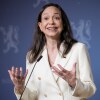
Trump Receives Nobel Peace Prize Medal from Venezuelan Opposition Leader María Corina machado Amid shifting U.S. policy
WASHINGTON — In a surprising turn of events, Venezuelan opposition leader María Corina Machado presented President Donald Trump with her Nobel Peace Prize medal at the White House on Thursday, even as questions linger regarding his governance’s commitment to a democratic transition in venezuela.The gesture occurred during a meeting where Machado sought to garner continued U.S. support for her efforts to oust the current interim government led by Delcy Rodríguez.
Machado’s visit to washington comes after a period of significant upheaval in Venezuela,including the recent capture of former President Nicolás Maduro adn his wife in Caracas on drug trafficking charges and their subsequent transport to New York for trial. The Trump administration has taken increasingly assertive action, including seizing sanctioned oil tankers in the Caribbean Sea, as part of a broader strategy to gain control of Venezuela’s oil resources.
“I presented the president of the United States the medal, the Nobel Peace Prize,” Machado told reporters following her meeting with Trump. She framed the presentation “as a recognition for his unique commitment with our freedom.”
Trump confirmed the exchange on social media, stating, “She is a wonderful woman who has been through so much. María presented me with her Nobel Peace Prize for the work I have done. Such a wonderful gesture of mutual respect. Thank you María!” he also posted a photo of himself with Machado in the Oval Office, displaying the medal framed with a message acknowledging his role in securing a “free venezuela.”
Though, the White House has offered a nuanced outlook on the meeting. Press Secretary Karoline Leavitt emphasized that Machado sought the meeting independently and described it as a chance for a “frank and positive discussion” about the situation in Venezuela. Leavitt also reiterated Trump’s previous statements questioning Machado’s ability to lead the country, stating it was a “realistic assessment.”
The Nobel Institute previously indicated that Machado could not formally present the prize to Trump, an honor he has publicly sought. Despite this, the symbolic gesture underscores the complex dynamics at play as the U.S. navigates its policy toward venezuela.
Machado’s meetings extended beyond the White House, including discussions with a bipartisan group of senators.Senator Chris Murphy (D-Conn.) reported that Machado expressed concern about the lack of progress toward a transition of power and warned of potential instability if elections are not held soon. “She reminded us that Delcy Rodríguez is, in many ways, worse than Maduro,” Murphy added.
Senator Bernie Moreno (R-ohio) expressed optimism following the meeting, stating Machado conveyed that Trump’s actions were “the most significant, significant event in Latin America” and that removing Maduro was “absolutely essential.”
the Trump administration’s approach to Venezuela has involved a combination of sanctions, diplomatic pressure, and direct intervention. The recent seizure of oil tankers and the capture of Maduro signal a willingness to escalate these measures. The interim authorities in Venezuela have reportedly been cooperating with the U.S., including releasing American prisoners.
Despite Machado’s efforts to secure a firm commitment to elections, the White House has not provided a specific timeline for a potential transition. Trump has engaged in direct conversations with Rodríguez, raising questions about the administration’s long-term strategy.
Machado’s journey to Washington followed months in hiding in venezuela after winning the 2024 election, which was rejected by Maduro’s government. She received the nobel peace Prize in December 2025, with her daughter accepting the award on her behalf in Norway.Her visit to the U.S. represents a critical moment in her ongoing fight for democracy in Venezuela, even as the path forward remains uncertain.
