
China’s Lunar Brick Machine Paves Way for Moon Bases
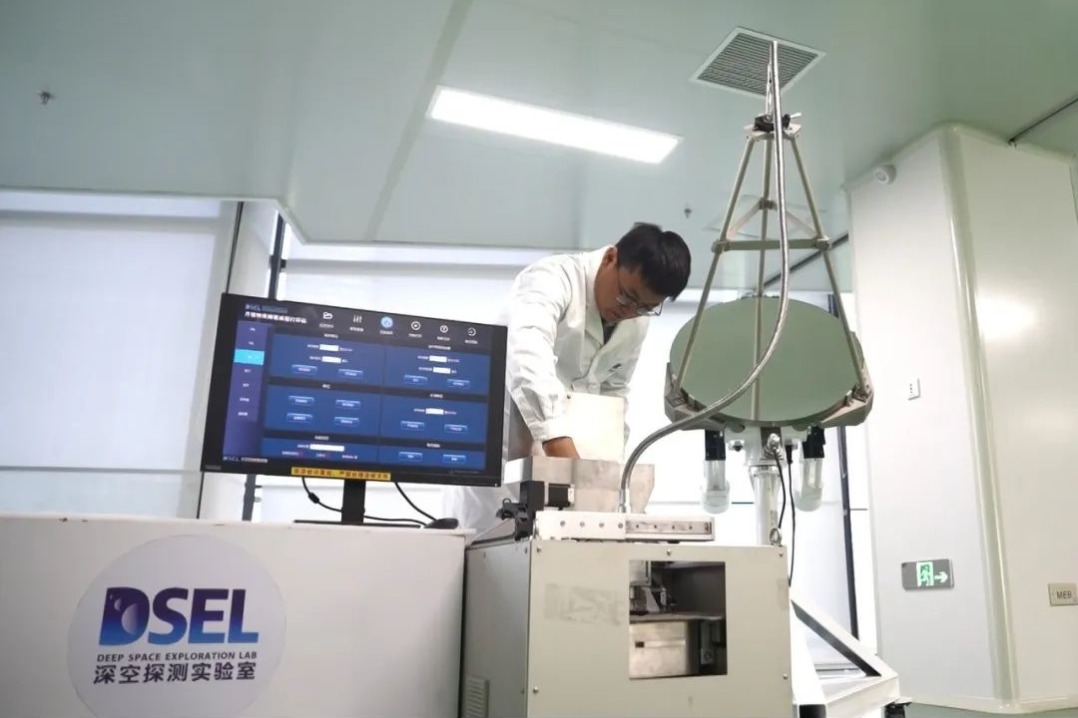
A groundbreaking “lunar brick-making machine” developed by a Chinese research team is bringing the long-held dream of building on the moon using local resources closer to reality. This innovative in-situ lunar soil 3D printing system, created by the Deep Space Exploration Laboratory (DSEL) in Hefei, Anhui province, utilizes concentrated solar energy to melt and mold lunar soil into usable bricks.
The machine employs a parabolic reflector to harness solar energy,which is then channeled through a fiber optic bundle. This process achieves a solar concentration ratio exceeding 3,000 times normal intensity. A complex optical system then focuses this intense sunlight onto a small area, reaching temperatures over 1,300°C to liquefy lunar regolith.
Remarkably, the bricks produced are composed entirely of in-situ lunar soil, requiring no additional binding agents. Thes bricks boast high strength and density, making them suitable not only for constructing habitats but also for essential infrastructure like equipment platforms and road surfaces.
The DSEL team dedicated approximately two years to overcome notable technical hurdles,from conceptualization to prototype development,focusing on challenges such as efficient energy transmission and lunar soil transportation. Recognizing the variability in lunar soil composition across different regions, researchers developed numerous simulated lunar soil samples to rigorously test and refine the machine’s design for adaptability.
While celebrating this breakthrough, senior engineer Yang Honglun of DSEL acknowledges that constructing habitable structures on the moon still presents further technological challenges. He explained that under the moon’s harsh conditions, including a high vacuum and low gravity, lunar soil bricks alone are insufficient for habitat construction.
“The bricks will primarily serve as protective surface layers for habitats,” Yang stated. “They must be integrated with rigid structural modules and inflatable soft-shell modules to complete the construction of a lunar base.”
The project encompasses a complete suite of technological advancements, including lunar brick manufacturing, architectural component assembly, structural evaluation, and operational validation of both the brick-making machine and construction processes under simulated lunar surface conditions.
the habitat modules are engineered to maintain the necessary air pressure for human occupancy and are designed for seamless integration with the lunar brick-making machine and surface construction robots, forming a complete building system.
This development aligns with China’s enterprising International Lunar Research Station (ILRS) initiative, a scientific experimental facility planned for both lunar surface and orbital components. The ILRS is slated for a phased construction, with a basic model targeted for completion by 2035 in the lunar south pole region, followed by an extended model in the 2040s. As of April this year, the ILRS has garnered support from 17 countries, international organizations, and over 50 research institutions worldwide.
