Latvian PM Urges EU Russian Grain Ban and More Aid for Ukraine
Latvian Prime Minister Urges EU-Wide Ban on Russian Grain Transit
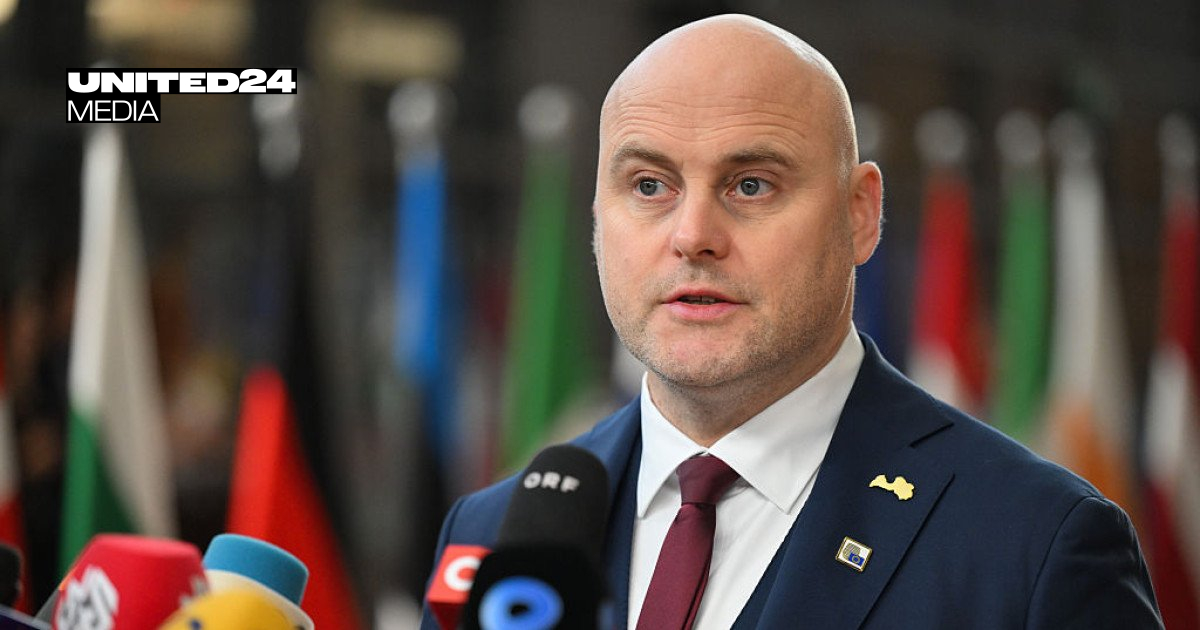
Latvian Prime Minister Andris Kulbergs called on the European Union to impose a joint ban on Russian grain transit through the Baltic states during an EU summit in Brussels on October 15. Kulbergs argued that Moscow continues earning export revenue through transit routes while Russian attacks restrict Ukraine’s agricultural trade.
The proposed restriction targets trade pathways that currently allow Russian agricultural producers to access European Union transit corridors. According to Suspilne reports cited by UNITED24 Media, Latvia and neighboring Baltic states want the issue resolved collectively at the European level rather than through separate national restrictions.
Kulbergs connected the proposed transit ban directly to the financial strain on Ukraine as the region approaches winter. Russian attacks on Ukrainian Black Sea ports and shipping infrastructure continue to limit Kyiv’s ability to generate revenue from agricultural exports.
Russia benefits from the transit of grain through the Baltic states. This creates enormous pressure, and it should not be this way,
Kulbergs told journalists in Brussels.

Financial Cost of Support and Public Burden for Europeans
Ahead of the summit, Kulbergs urged European governments to accept the financial cost of maintaining long-term support for Ukraine, arguing that the economic burden remains manageable for ordinary citizens across the bloc. Kulbergs calculated the necessary financial contribution by stating it amounts to the cost of a single glass of beer per European each year.
Supporting Ukraine is a matter of money.
It’s a glass of beer a year or even less.
For one European.
Further calculations and framing of the prime minister’s remarks drew varied responses from international observers. The Economist’s Brussels correspondent described the math as unusual, noting that if 450 million EU residents paid three euros for a beer, the total would be 1.35 billion euros—approximately 2 percent of the amount Ukraine needs.
Financial statistics show that the Ukrainian government approved its 2026 fiscal plan with a shortfall amounting to roughly 1.9 trillion UAH ($47.5 billion). Ministry of Finance records from late June indicate that total external financing needs for Ukraine between 2026 and 2029 will reach $145.9 billion.

Latvian Parliamentary Action on Border Inspections
Latvia has already moved independently to tighten regulatory scrutiny of grain shipments linked to Russia ahead of the broader EU policy push. In September 2026, the Latvian parliament introduced mandatory border checks on third-country grain cargoes.
These heightened inspections aim to identify agricultural products that may have been seized from occupied Ukrainian territories and subsequently moved across borders utilizing forged Russian documentation.
Kulbergs emphasized that regional resilience depends directly on sustained backing as the winter season approaches. According to Kulbergs, the upcoming months represent a critical period for Kyiv, adding that European stability relies directly on Ukrainian resilience. If it is not strong, we have a huge problem.