
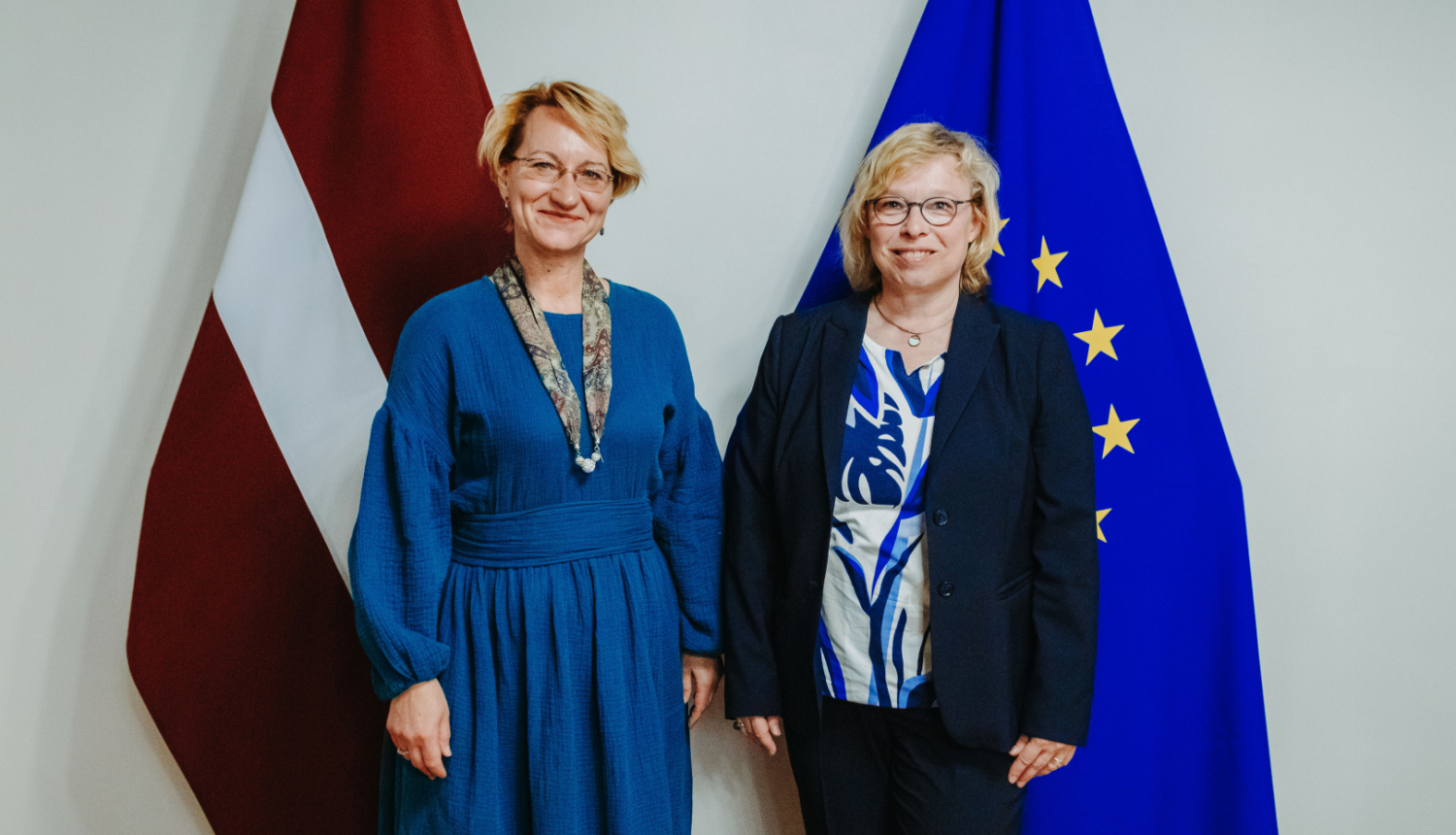
Latvia and Germany Bolster Cooperation in Education
Focus includes phasing out Russian language instruction, promoting AI.
Educational and scientific collaboration between Latvia and Germany is set to deepen. Discussions centered around strengthening ties in education, science, and research during a recent meeting between officials.
Key Partnership Areas
The Latvian Minister of Education and Science, Dace Melbārde, met with the German Ambassador to Latvia, Gudrun Masloch, on July 1st to discuss furthering cooperation. Melbārde emphasized Germany’s critical role in bolstering German language programs in Latvian schools and fostering university research collaboration.
Furthermore, Melbārde noted Germany’s contribution to Latvia’s education reform, which aims to phase out Russian as a second foreign language in favor of EU or EEA official languages by 2030. According to the European Commission, promoting multilingualism is a key policy, with all EU citizens encouraged to learn at least two languages in addition to their mother tongue (European Commission).
“We greatly appreciate the support of the German Embassy and the Goethe-Institut in providing teacher training and educational materials for German language instruction,”
said Melbārde.
Vocational Training and Language Studies
Latvia’s focus on aligning vocational curricula with labor market demands has identified Germany as a crucial partner for knowledge and skills transfer. The meeting also highlighted the value of cooperation in vocational education.
The Interdisciplinary Center for German Language Studies at the University of Latvia received special mention. It will function as an international hub in the Baltic region and the German-speaking world while supporting teacher training initiatives.
Strategic Goals and AI Development
Minister Melbārde reiterated Latvia’s strategic objective of joining CERN by 2027. She voiced strong interest in expanding cooperation with Germany in artificial intelligence. “AI development is essential both for the EU’s global competitiveness and for the growth of Latvia’s science and economy,”
she stated.
Higher Education and Future Collaboration
The increasing appeal of Latvian universities to German students was another topic of discussion. German nationals accounted for 6.5% of international students in Latvia in 2025, with Riga Stradiņš University being a particularly favored destination.
Minister Melbārde expressed gratitude for Germany’s ongoing support and optimism regarding future collaboration, concluding that “Our joint initiatives are a model of how education, science, and innovation can form the foundation of a more secure and united Europe.”
