
Kazakhstan will host the Regional Ecological Summit (RES) in April, aiming to forge collaborative solutions to environmental challenges facing Central Asia. The summit, initiated by President Kassym-Jomart Tokayev in September 2023 during the 78th session of the UN General Assembly, will address climate transition, adaptation, economic resilience, food security, water resource management, and air pollution.
The initiative gained momentum at the Astana International Forum in May 2025, where the summit’s scope expanded beyond climate change to encompass broader environmental concerns. The United Nations endorsed the summit through General Assembly Resolution 78/147, recognizing the environmental challenges facing Central Asia and the need for regional solidarity. Further support came from declarations adopted at summits of the Organization of Turkic States and consultative meetings of Central Asian heads of state throughout 2024.
Preparations for the summit included six regional consultation meetings beginning in March 2025. These meetings, held in Kazakhstan, Uzbekistan, Turkmenistan, Tajikistan, Germany, and again in Kazakhstan, focused on substantiating the summit’s concept, strengthening regional cooperation, identifying climate risks, integrating science into policy, and forming a regional project pool. A key outcome of the August 1, 2025 meeting in Aktau, Kazakhstan, was the adoption of an updated summit concept and a draft Joint Declaration of the Heads of State of Central Asia.
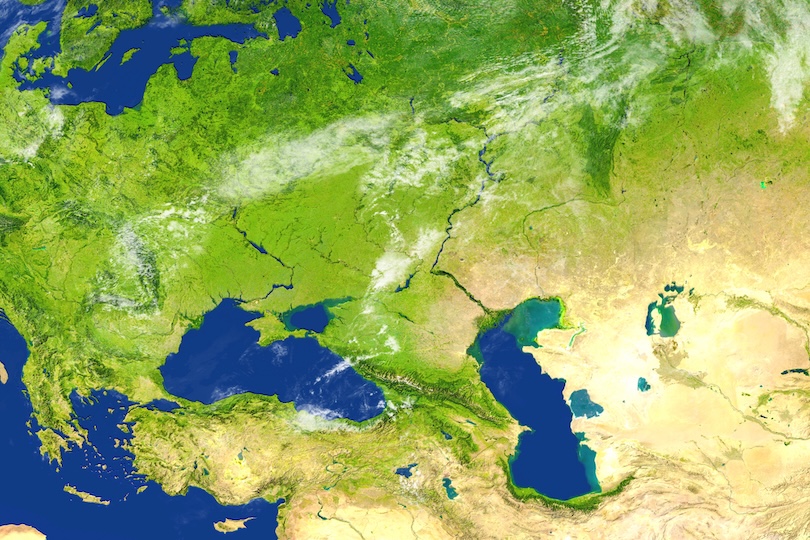
A central focus of the summit will be the deteriorating condition of the Caspian Sea, alongside the well-documented ecological disaster of the Aral Sea. The Caspian Sea, bordered by Azerbaijan, Iran, Kazakhstan, Russia, and Turkmenistan, is vital for the region’s ecosystem, biodiversity, and economy, serving as a crucial link in the Trans-Caspian International Transport Route, as well known as the Middle Corridor.
Legal frameworks for Caspian Sea protection already exist, including the 2003 Tehran Convention for the Protection of the Marine Environment of the Caspian Sea, which entered into force in 2006, and the 2018 Convention on the Legal Status of the Caspian Sea. A new protocol on Environmental Impact Assessment came into force in November 2025, mandating transboundary environmental standards for major infrastructure projects. Despite these agreements, satellite imagery reveals a concerning decline in the sea’s water levels, particularly along its northern shores in Kazakhstan and Russia.
Factors contributing to the Caspian Sea’s decline include water diversion, dam construction, evaporation, desalination, pollution from offshore oil projects, and greenhouse gas emissions. Research from the University of Leeds indicates that even limiting global temperature rise to 2 degrees Celsius could result in a water level drop of 4.8 to 9.75 meters, potentially releasing harmful dust containing industrial contaminants and salt, mirroring the Aral Sea crisis. This decline threatens the Caspian’s diverse wildlife, including sturgeon, seals, and migrating birds, and could disrupt regional climate patterns and trade routes.
Concerns exist regarding the commitment of all Caspian Sea states to addressing the issue. Iran’s historical prioritization of economic development over environmental protection, exemplified by the situation surrounding Lake Urmia, and Turkmenistan’s record of methane leaks and water management challenges, raise questions about regional cooperation. President Tokayev discussed the Caspian Sea issue with Russian President Vladimir Putin in November 2025, signaling Kazakhstan’s commitment to raising the issue internationally.
The Regional Ecological Summit will also feature the Central Asia Climate Change Conference (CACCC), organized by the Central Asia Regional Economic Cooperation (CAREC). The summit aims to produce joint climate action decisions, establish a regional finance mechanism, launch new transboundary projects, initiate a Regional Program for ecological research, strengthen interstate cooperation, and create a common framework for environmental solutions. The success of the summit will depend on securing concrete commitments and actions, rather than simply issuing another declaration.
