
Myanmar Earthquake: Junta Seeks Aid Amidst Distrust, Raising Concerns of Exploitation
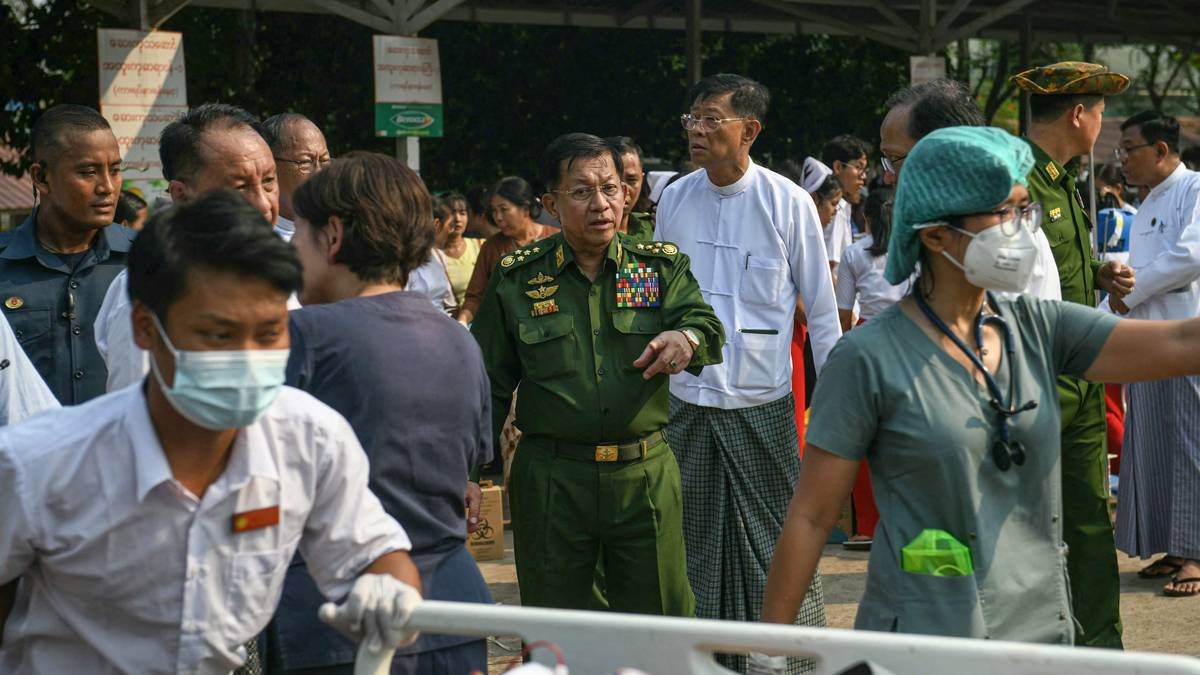
Naypyidaw, Myanmar – A series of powerful earthquakes struck Myanmar on March 28, 2025, prompting the ruling military junta to declare a state of emergency in six regions and appeal for international assistance. The quakes, centered in the northwest of the country, have caused widespread damage and casualties, particularly in areas under the junta’s control.Amidst the devastation, the junta’s leader, aung Hlaing, was seen visiting hospitals in the capital, Naypyidaw, a move interpreted by some as a public relations effort.
Junta’s plea for Aid Met wiht Skepticism
The junta’s call for blood donations and medical equipment has been met with skepticism from some observers, who fear the regime may exploit the disaster to consolidate power and gain legitimacy. Peter Sang, a political refugee from Myanmar, warns against trusting the junta’s intentions. “They don’t want help,” Sang states, ”They want to exploit the situation to their own advantage, to win legitimacy.”
This sentiment reflects a deep-seated distrust of the junta, which seized power in a 2021 coup and has since faced widespread resistance and international condemnation.
A History of Brutality and Isolation
The military regime, largely isolated on the global stage with the exception of support from countries like China and Russia, faces immense domestic opposition. Kristian Stokke,a professor at UiO who has researched Myanmar for years,describes the junta as “a very brutal military junta,” adding that it is ”quite indisputably the most oppressive regime we have seen in Myanmar.”
Since the coup, Myanmar has been embroiled in armed conflicts between the junta and various resistance groups, including ethnic minorities and democracy advocates. The junta’s control over territory has diminished in recent years, leading to plans for elections in December, viewed by many as an attempt to solidify their grip on power.
Echoes of Past Disasters: A Test of International Response
This recent earthquake evokes memories of past natural disasters in Myanmar, including a devastating flood just six months prior that claimed hundreds of lives. The international community’s response to this latest crisis will be closely watched, particularly given the junta’s track record and the ongoing political turmoil in the country.
Implications for U.S. Policy
The situation in Myanmar presents a complex challenge for U.S. foreign policy. The U.S.has historically been a strong advocate for democracy and human rights in Myanmar, imposing sanctions and providing support to pro-democracy movements. However, the need for humanitarian assistance in the wake of the earthquake raises questions about how to provide aid without legitimizing the junta.
One potential approach is to work through international organizations and non-governmental organizations (NGOs) to ensure that aid reaches those who need it most, bypassing the junta’s control. The U.S. could also leverage its influence with regional partners, such as ASEAN, to press for a more inclusive and democratic government in Myanmar.
Potential Scenarios and Future Outlook
The earthquake and the junta’s response could have several potential outcomes:
consolidation of Power: The junta could successfully use the disaster to rally support and strengthen its grip on power, particularly if it can effectively distribute aid and maintain order.
Increased Instability: If the junta is perceived as mishandling the crisis or exploiting it for political gain, it could further fuel resistance and instability, potentially leading to a collapse of the regime. International Pressure: The disaster could provide an chance for the international community to increase pressure on the junta to engage in dialog with opposition groups and move towards a more democratic transition.
The future of Myanmar remains uncertain, but the earthquake has added another layer of complexity to an already challenging situation.The international community, including the U.S., must carefully consider its response to ensure that humanitarian needs are met while upholding democratic values and promoting a peaceful resolution to the conflict.
Expert Analysis
“They want to use this to consolidate power and to legitimize the military junta,” Stokke explains. “But on the other hand, they can also be held accountable and not ready to deliver. Then this can cause the junta to collapse.”
Key Considerations for aid Distribution
Given the concerns about the junta’s intentions, it is indeed crucial that any aid provided to Myanmar is distributed in a transparent and accountable manner. This could involve:
working with trusted local organizations: Partnering with community-based organizations that have a proven track record of delivering aid effectively and impartially.
Monitoring aid distribution: Implementing mechanisms to track aid and ensure that it reaches those who need it most, without being diverted by the junta.
Supporting autonomous media: Providing support to independent media outlets to report on the situation and hold the junta accountable.
Conclusion
The earthquake in Myanmar presents a complex humanitarian and political challenge.While the need for aid is undeniable, it is essential to proceed with caution and ensure that assistance is provided in a way that benefits the people of Myanmar, rather than strengthening the junta’s grip on power. The U.S. and the international community must work together to promote a more democratic and peaceful future for Myanmar.
| Key Issue | Potential Impact | U.S. Response Options |
|---|---|---|
| Junta Exploitation of Aid | Undermines humanitarian efforts,strengthens regime | Channel aid through NGOs,impose stricter monitoring |
| Increased instability | Escalates conflict,worsens humanitarian crisis | Support peace talks,provide humanitarian assistance |
| International Pressure | Promotes democratic transition,holds junta accountable | Impose targeted sanctions,work with regional partners |
