
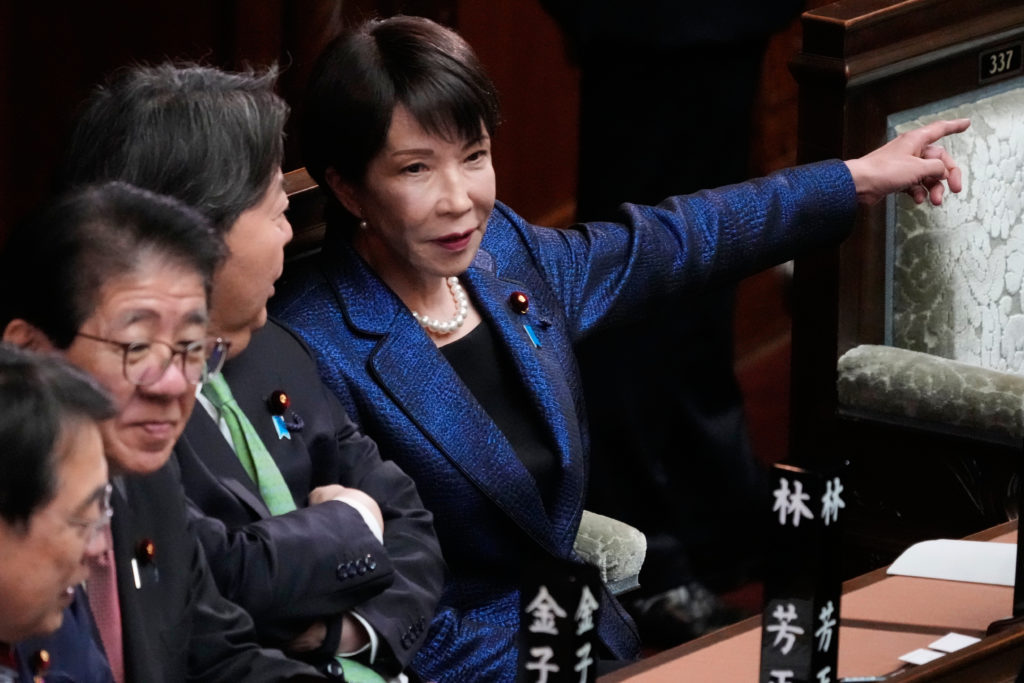
TOKYO — Japanese Prime Minister Sanae Takaichi, reappointed by Parliament on Wednesday following a landslide election win, signaled a deepening of ties with the United States and a focus on economic security, particularly in the realm of rare earths development. Takaichi expressed these intentions ahead of a planned visit to Washington next month, where she hopes to “closely cooperate” with U.S. President Donald Trump on initial investment initiatives, according to statements released by her office.
Takaichi’s reappointment comes after a campaign marked by promises of increased military spending, conservative social policies, and a more assertive stance on regional security. Her Liberal Democratic Party (LDP) secured a two-thirds supermajority in the lower house of Parliament, granting it significant power to push through legislation, even without the support of the upper house. This supermajority allows the LDP to dominate committee appointments and overcome potential roadblocks in the legislative process.
The prime minister’s agenda includes bolstering Japan’s military capabilities, revising security policies, and tightening immigration controls. She also intends to preserve traditional social structures, including male-only imperial succession and a practice that pressures women to relinquish their surnames upon marriage. While a revision of the U.S.-drafted postwar pacifist Constitution remains a long-term goal, Takaichi currently faces more immediate pressures to address rising prices, a declining population, and concerns over regional military security.
Central to Takaichi’s foreign policy is a strengthening of the U.S.-Japan alliance. This was underscored by President Trump’s endorsement of Takaichi prior to the election, a rare intervention by a sitting U.S. President in another country’s electoral politics, as reported by The Independent. Hours before Takaichi’s reappointment, U.S. Commerce Secretary Howard Lutnick announced Japan’s commitment to funding three projects as part of a $550 billion investment package pledged in October, including a natural gas plant in Ohio, a Gulf Coast crude oil export facility, and a synthetic diamond manufacturing site. Japan is initially committing $36 billion to these projects.
Takaichi’s focus on economic security is driven, in part, by rising tensions with China. In November, she suggested potential Japanese action if China were to create a military move against Taiwan, a position that drew diplomatic and economic retaliation from Beijing. Many Japanese citizens, increasingly concerned by China’s growing assertiveness, reportedly welcomed Takaichi’s firm stance, according to reports.
The prime minister also intends to pursue revisions to Japan’s defense policies by December, potentially lifting a ban on the export of lethal weapons and moving further away from its postwar pacifist principles. Consideration is being given to the development of a nuclear-powered submarine to enhance Japan’s offensive capabilities. She also supports a controversial anti-espionage law, largely targeting Chinese spies, though some experts have raised concerns that it could infringe upon civil rights.
Domestically, Takaichi’s government approved stricter rules on permanent residency and naturalization in January, aiming to prevent unpaid taxes and social insurance contributions. She also remains a staunch advocate for traditional family values, opposing same-sex marriage and resisting calls to revise civil law to allow married couples to retain separate surnames. Instead, she is proposing a law to allow greater use of maiden names as aliases, a move critics argue is designed to obstruct a broader system of dual surnames.
Masato Kamikubo, a professor of policy science at Ritsumeikan University, noted the delicate balance Takaichi faces: “Japan will keep spending more and more for the U.S. … The question is whether the public wants her to speak out against Trump or be obedient to ensure Japanese security.” The upcoming summit with Trump, scheduled for March 19, and his planned visit to Beijing in April, will likely test this dynamic.
Takaichi has also indicated her intention to seek support for a visit to Tokyo’s Yasukuni Shrine, a move that is likely to further strain relations with neighboring countries, who view visits to the shrine as a sign of Japan’s lack of remorse for its wartime past.
