Gaza Aid Trucks Cross Rafah Amid Israeli ‘Tactical Pause’
Humanitarian Convoys Enter as Hunger Crisis Deepens
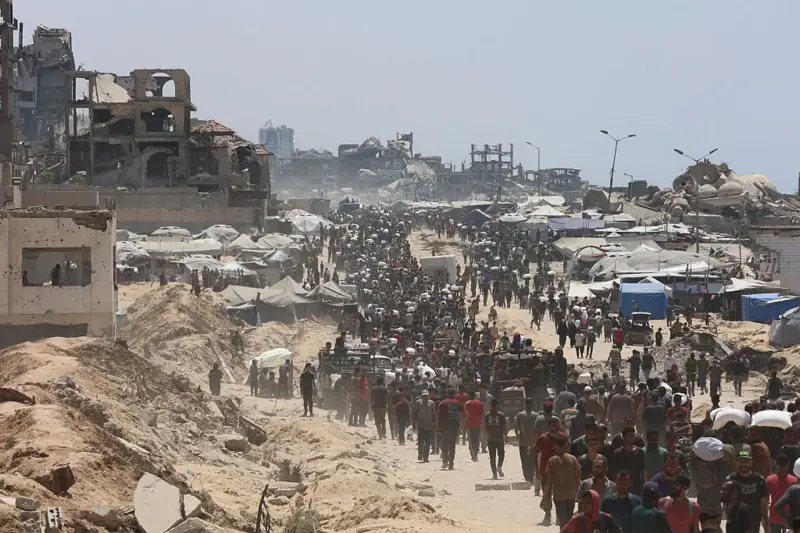
Humanitarian aid trucks began entering Gaza via the Rafah border crossing with Egypt on Sunday, following Israel’s announcement of a “tactical pause” in military activities in certain areas and the establishment of humanitarian corridors.
Israel Implements Daily Ceasefire for Aid
The Israeli Defense Forces (IDF) stated that the measure would be in effect daily from 10:00 AM to 8:00 PM local time (07:00-17:00 GMT), commencing immediately. This pause is intended to facilitate the entry of aid and cover areas where IDF operations are not actively taking place, specifically al-Mawasi, Deir al-Balah, and Gaza City.
These actions were reportedly coordinated with the United Nations and international organizations. Israel also indicated the establishment of permanently designated safe routes from 6:00 AM to 11:00 PM to ensure the secure passage of UN convoys and humanitarian groups.
Alarm Grows Over Widespread Famine
This development comes amid escalating concerns over the dire situation faced by Palestinians in Gaza. Last week, 100 humanitarian organizations issued a warning about spreading mass famine across the territory.
The Ministry of Health reported six new deaths in the past 24 hours attributed to malnutrition, bringing the total fatalities from starvation to 133. Health authorities stated that two-thirds of these victims are children. The head of the UN agency for Palestinian refugees (UNRWA), Philippe Lazzarini, characterized the hunger crisis as “man-made” and urged Israel to permit the entry of an estimated 6,000 trucks of aid currently waiting in Jordan and Egypt.

Western governments have also increased pressure on Israel, with the United Kingdom, France, and Germany calling for the immediate lifting of restrictions on aid flow.
Skepticism Amidst Aid Efforts
Israeli Prime Minister Benjamin Netanyahu commented on Sunday, stating, “There are safe routes and there always have been,” while also blaming Hamas and the UN for distribution delays. “There will be no more excuses,” he declared.
“We See No Specific Commitment”
However, BBC correspondent in Jerusalem, Emir Nader, noted that the “tactical pause” is concentrated in areas considered safer and previously designated for civilian evacuation. He expressed a lack of confidence in the announcement, stating, “The most important thing, in my opinion, is that we do not see in the ads any specific commitment by Israel to authorize a significantly greater amount of help for distribution by humanitarian agencies.”
Nader also raised concerns about the reliability of the promised “safe routes,” citing recent incidents where Palestinians seeking aid were reportedly killed. On Sunday alone, medical sources reported nine Palestinians died and 54 were injured when Israeli forces allegedly fired on civilians gathered near a humanitarian aid convoy route in central Gaza.
According to UN figures, approximately 1,000 individuals have perished since May in areas near aid distribution points, with backing from Israel and the United States. Reports also indicate an Israeli airstrike hit a residential building in western Gaza City on Sunday, despite the announced pause.

The UN World Food Programme (WFP) welcomed Israel’s decision, noting it has enough food to supply Gaza’s population for nearly three months. The organization hopes these measures will increase the urgently needed food aid. However, the WFP emphasized that “a high agreed fire is the only way for humanitarian aid to reach the entire civilian population of Gaza with essential food supplies in a coherent, predictable, orderly and safe way.”
“We Need a Sustainable Solution”
Residents of Gaza reacted with mixed emotions. “Of course I feel a bit of hope again, but I am also worried that hunger will continue once the pause is over,” said Rasha al-Sheikh Khalil, a 39-year-old mother of four from Gaza City. “We need a real solution, the end of this nightmare, the end of the war,” she added.
Neveen Saleh, a mother of six, highlighted the qualitative issue of food, stating, “We have not eaten a single fresh fruit or vegetables in four months. There is no chicken, no meat, no eggs. All we have are canned foods, many defeated, and flour.” Many Gazans expressed concern that international attention might wane after symbolic aid deliveries, with one merchant from Northern Gaza, Ahmad Taha, likening it to “giving analgesics to a patient with unscathed cancer.”
The Gaza Ministry of Health called for “urgent measures to save lives,” including the entry of supplies and the evacuation of the injured. Munir al-Barsh, director general of distribution, requested emergency medical evacuations for severe injuries and the import of medical and nutritional supplies, including therapeutic milk and proteins. “Each delay is measured at a new funeral,” he stated.
Aerial Drops Criticized
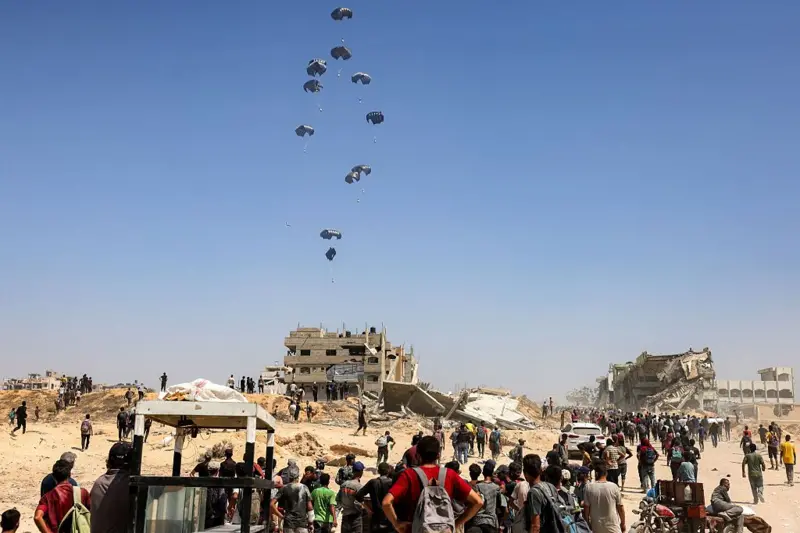
On Saturday, Israel reported conducting airlifts of food and essential equipment, which international organizations dismissed as a “grotesque distraction.” The IDF claimed these efforts aimed to “improve the humanitarian response” and refute claims of intentional famine.
However, the UN and other aid groups have criticized aerial deliveries as “inefficient” and “expensive.” As Philippe Lazzarini of UNRWA wrote, “Bringing help by land is much easier, more effective, faster, cheaper and safer. It is more worthy for the people of Gaza.”
Aerial drops have also led to chaotic scenes, with desperate people scrambling for food. Reports from Istanbul described a “very chaotic situation” during airdrops in northwest Gaza. The United Arab Emirates and Jordan conducted aerial releases recently, and UK Prime Minister Keir Starmer indicated his government is committed to airlifting aid to Gaza.