
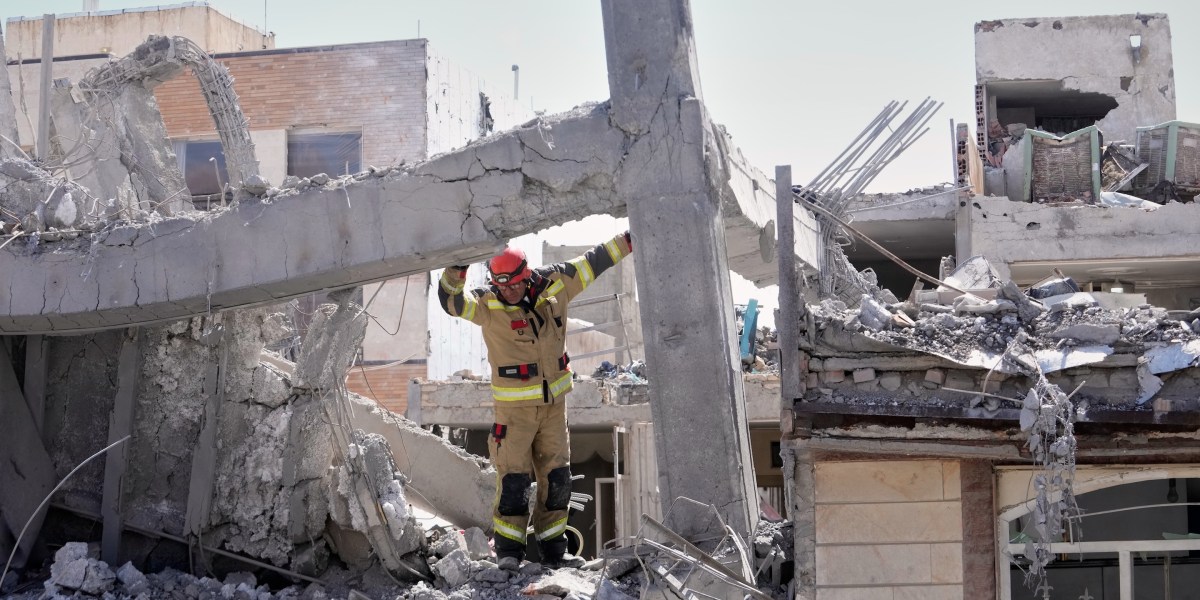
Israel Strikes Iran Nuclear Facilities as Tehran Vows Retaliation Amid US Diplomacy
Israel struck Iran’s Shahid Khondab Heavy Water Complex and Ardakan yellowcake plant on March 27, 2026, triggering immediate market volatility as Brent crude surged 2.9% to $104.81. Tehran has vowed asymmetric retaliation beyond “an eye for an eye,” threatening the Strait of Hormuz and forcing institutional investors to reassess Q2 energy exposure and supply chain continuity.
Wall Street hates ambiguity, but it loathes physical disruption even more. The Israeli Defense Forces didn’t just hit a target; they shattered the fragile diplomatic veneer President Trump attempted to construct over the last month. With the Strait of Hormuz—the artery for one-fifth of global oil supply—effectively held hostage by Iranian tolls and missile threats, we are no longer trading on sentiment. We are trading on kinetic risk.
The S&P 500 is currently enduring its longest losing streak in nearly four years. This isn’t a correction; it’s a repricing of geopolitical risk premiums that had been complacently ignored since the conflict began in late February. For corporate treasurers and CFOs, the immediate fiscal problem is clear: how to hedge against a supply shock that could push WTI crude past the psychological $100 barrier permanently.
Mid-cap industrials with heavy energy exposure are already scrambling. They aren’t waiting for the Pentagon’s next briefing; they are engaging enterprise risk management firms to stress-test their balance sheets against a prolonged closure of the Gulf. The cost of capital is rising in real-time, and liquidity is tightening as banks pull back on letters of credit for Middle East shipments.
The Macro Shockwave: Three Vectors of Financial Contagion
The market reaction to the Arak and Yazd strikes is not monolithic. This proves fracturing across three distinct sectors, each requiring a different defensive posture for the upcoming fiscal quarter.
- Energy Volatility and Hedging: With Brent crude jumping to $104.81 and U.S. Benchmark crude rising 4.4% to $98.61, the spread is widening. President Trump’s April 6 ultimatum to destroy Iran’s energy plants if the strait remains closed introduces a binary outcome: total war or a negotiated de-escalation. There is no middle ground for Q2 earnings forecasts. Institutional players are moving capital into defensive utilities and upstream exploration, abandoning mid-stream refiners who face margin compression from volatile input costs.
- Logistics and Insurance Premiums: The damage to Kuwait’s Mubarak Al Kabeer Port, a key node in China’s “Belt and Road” initiative, signals that no infrastructure is immune. War risk insurance premiums for vessels transiting the Persian Gulf have effectively doubled overnight. Supply chain directors are now forced to reroute around the Cape of Good Hope, adding 14 days to transit times and crushing just-in-time inventory models. Companies are urgently consulting maritime logistics consultants to restructure their freight contracts and mitigate force majeure clauses.
- Defense Sector Reallocation: The deployment of the 82nd Airborne and the 162nd Division into southern Lebanon confirms a ground-war escalation. Although this boosts top-line revenue for major defense contractors, it strains government budgets, potentially delaying infrastructure spending in other sectors. The fiscal drag of a prolonged conflict could dampen domestic consumption, forcing retail and consumer goods sectors to revise guidance downward.
The human cost is staggering—over 1,900 dead in Iran and 1,100 in Lebanon—but the corporate ledger reflects this tragedy through the lens of operational continuity. When 82,000 civilian buildings are damaged, regional consumption collapses. When ports sustain material damage, global trade friction increases.
“The market is pricing in a 30% probability of a total Strait of Hormuz closure by Q3. If that happens, we aren’t looking at a recession; we are looking at stagflation reminiscent of the 1970s oil shocks. Corporations need to lock in long-term hedges now, not wait for the next headline.”
— Marcus Thorne, Chief Investment Officer, Aegis Global Macro Fund
Thorne’s assessment aligns with the latest data from the U.S. Energy Information Administration, which shows strategic petroleum reserves are being tapped at an accelerated rate to stabilize domestic prices. However, reserves are finite. The structural damage to Iran’s nuclear infrastructure suggests a long-term degradation of regional stability, regardless of the immediate ceasefire talks.
The Legal and Compliance Quagmire
As the conflict widens, the compliance landscape is becoming a minefield. The IRGC’s warning for U.S.-tied companies to abandon their workplaces creates immediate liability issues for multinational corporations with assets in the region. Are these assets expropriated? Are they destroyed? The insurance policies covering these scenarios are often riddled with exclusions for “acts of war” that are currently being litigated in real-time.
General Counsels are facing a nightmare scenario. They must navigate sanctions regimes that shift daily, potential asset seizures, and the ethical imperative to protect employees. This complexity is driving a surge in demand for international corporate law firms specializing in conflict zones and sovereign immunity. The cost of legal counsel is becoming a line item as critical as raw materials.
the rejection of the U.S. 15-point “action list” and Iran’s counter-proposal for reparations indicates that diplomatic off-ramps are narrowing. The G7 declaration calling for a halt to attacks is noble, but it lacks enforcement teeth. Without a binding treaty, the risk premium remains embedded in every futures contract and equity valuation coming out of the EMEA region.
Strategic Positioning for Q2 and Beyond
Investors and executives must stop viewing this as a transient news cycle. The strikes on the heavy water complex and yellowcake plant are strategic degradations that will take years to repair. This represents a structural shift in the Middle East’s security architecture.
For the remainder of 2026, capital allocation strategies must prioritize resilience over growth. Companies with diversified supply chains and robust hedging instruments will outperform those reliant on single-source procurement from the Gulf. The volatility in the energy sector is not a bug; it is the recent feature of the market.
As we approach the April 6 deadline set by the White House, expect another leg of volatility. Whether it results in the destruction of Iranian energy plants or a last-minute diplomatic breakthrough, the uncertainty itself is the tax on growth. Smart money is already moving to the sidelines, waiting for the dust to settle, while opportunistic capital is scanning the directory for specialized partners who can navigate the fallout.
The window for passive management has closed. In this environment, active risk mitigation isn’t just a strategy; it’s a survival mechanism. For those looking to fortify their operations against these geopolitical headwinds, identifying the right strategic consulting partners is the first step toward insulating your P&L from the next missile strike.