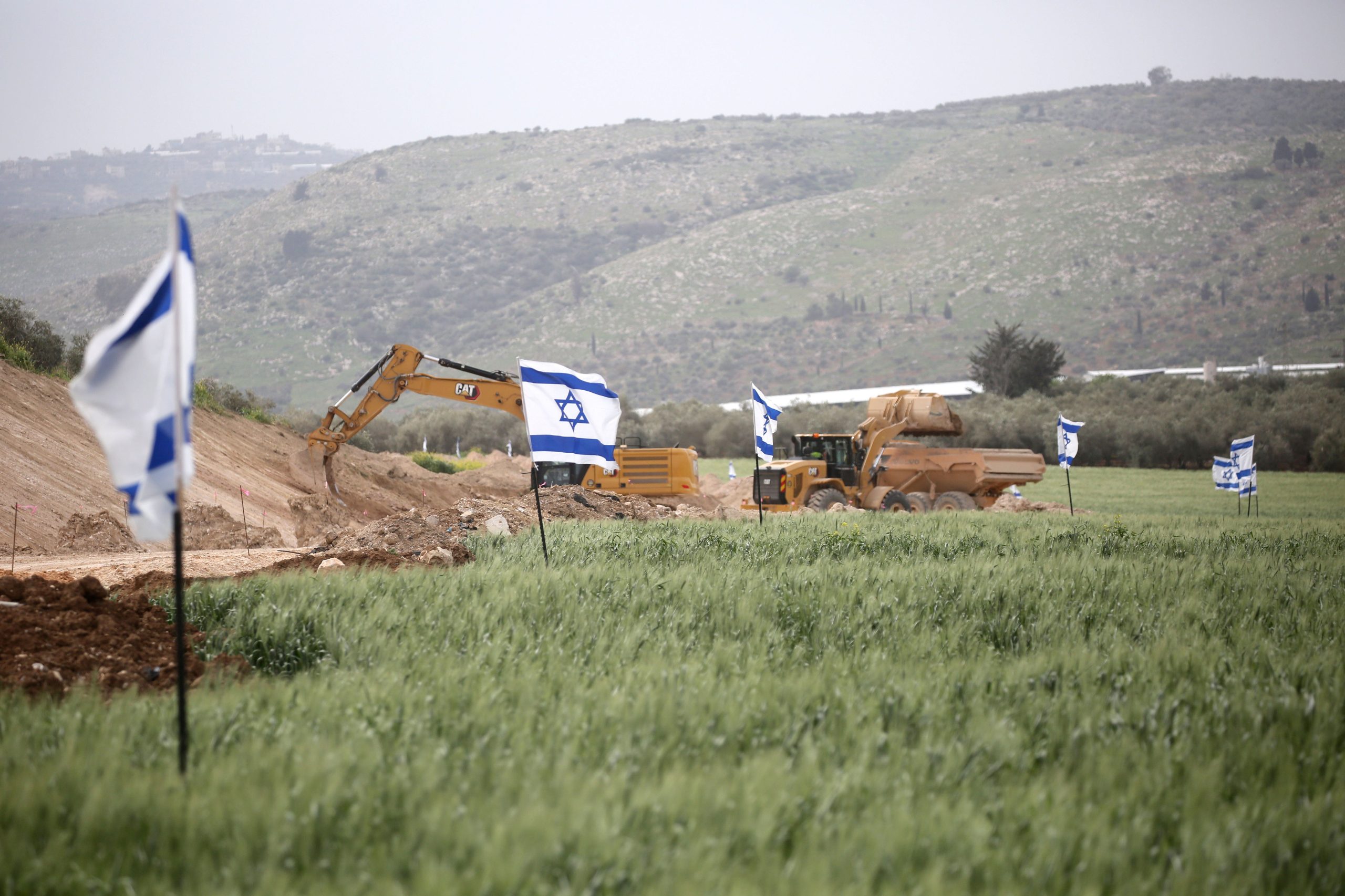
Israel Races to Expand West Bank Settlements Before Political Shifts
In April 2026, Israel’s cabinet approved 34 new West Bank settlements, accelerating a de facto annexation strategy amid shifting regional power dynamics and perceived U.S. Policy constraints under a potential post-Trump administration.
The scale of this approval—103 settlements authorized under the current Netanyahu-led coalition—marks the most aggressive expansion since the Oslo Accords, with eight of the newest projects slated for Area B, where Palestinian civil authority theoretically persists alongside Israeli security control. This move directly erodes the already fragmented governance of the Palestinian Authority, particularly in mixed-administration zones like Jenin, Nablus, and Hebron, where infrastructure projects, utility access, and municipal planning are increasingly disrupted by settlement-linked roadblocks, bypass highways, and military zones.
Historically, settlement growth has followed predictable cycles tied to Israeli electoral calendars and U.S. Presidential terms. But the 2026 acceleration reflects a deeper strategic calculation: Israeli officials anticipate a narrowing window to cement irreversible geographic control before a potential Democratic resurgence in U.S. Politics renews pressure for a two-state solution. As Palestinian communities face heightened movement restrictions and economic isolation, the need for legal, humanitarian, and municipal accountability mechanisms has never been more urgent.
The Legal Quagmire of Area B Encroachment
Under the 1995 Oslo II Accord, Area B comprises approximately 22% of the West Bank, where the Palestinian Authority manages civil affairs while Israel retains overriding security authority. The recent approval of settlements in this zone—including projects near Tubas, Jericho, and Ramallah—creates a legal contradiction: Israeli civilian infrastructure is being built in areas where Palestinian municipalities are supposed to govern zoning, land leverage, and utility services.
This encroachment triggers cascading failures in local governance. Water lines, sewage systems, and electrical grids planned by Palestinian municipal engineers are routinely disrupted or seized for settlement expansion. In Tubas, for example, the Palestinian Water Authority reported in March 2026 that three planned wastewater treatment nodes were delayed indefinitely after Israeli civil administration issued stop-work orders citing “security zone adjustments”—a designation rarely applied with such precision outside settlement-adjacent zones.
“We’re not just losing land—we’re losing the ability to plan for our future,” said
Dr. Layla Karim, urban planner with the Palestinian Engineers Association in Ramallah.
“When settlements go up in Area B, they don’t just accept space—they take control of elevation gradients, aquifer access, and transportation corridors. It’s sabotage by zoning.”
These dynamics are mirrored in the southern West Bank, where settlers have expanded near Hebron’s Old City, prompting repeated closures of Palestinian commercial zones under the guise of security. The Al-Shuhada Street closure, in effect since 2000, has crippled what was once the city’s main commercial artery, reducing Palestinian vendor income by an estimated 80% according to a 2025 World Bank assessment.
Economic Displacement and the Collapse of Rural Livelihoods
Beyond legal ambiguity, the settlement drive is accelerating economic fragmentation. Agricultural communities in the Jordan Valley and South Hebron Hills face increasing pressure from settler incursions, land declarations, and water diversion. The United Nations Office for the Coordination of Humanitarian Affairs (OCHA) documented a 40% increase in settler-related incidents affecting Palestinian farming and herding communities between January and March 2026 alone.
In the village of Jinba, south of Hebron, residents report that Israeli authorities have declared over 1,200 dunams of traditional grazing land as “state land” since 2023—designations that precede settlement outposts. With access to seasonal pastures blocked, many families have been forced to sell livestock at distress prices or abandon herding altogether.
“We used to move with the seasons—now we’re fenced in like animals,” said
Mohammad Abu Sakran, a third-generation herder from Jinba.
“They call it ‘land management.’ We call it eradication.”
The ripple effects extend to municipal budgets. As Palestinian villages lose agricultural tax base and face demolition orders for unlicensed structures (often built due to exclusion from Area C planning), local councils struggle to maintain basic services. In Beit Umar, north of Hebron, the municipal council reported a 30% drop in revenue collection in 2025, forcing cuts to street maintenance and waste management—services now increasingly filled by informal networks or international NGOs.
The Accountability Vacuum and Paths to Redress
Palestinian residents seeking redress face a labyrinthine system. Israeli civil administration courts in the West Bank handle demolition orders and land disputes, but Palestinians rarely prevail without international intervention. Meanwhile, the Palestinian Authority’s capacity to enforce civil rulings in Area B is undermined by Israeli security overrides, leaving communities in legal limbo.
This gap has elevated the role of specialized legal advocates and humanitarian monitors. Organizations filing petitions with Israel’s High Court of Justice—such as those challenging retroactive validation of outposts or demanding access to frozen tax revenues—rely on attorneys versed in both Israeli administrative law and international humanitarian law. Similarly, fact-finding missions by UN bodies and groups like B’Tselem depend on field investigators trained in conflict-sensitive documentation.
For communities facing displacement or infrastructure sabotage, the need extends beyond litigation. Emergency water trucking, mobile health clinics, and legal aid hotlines grow lifelines during escalations. In areas where settler violence coincides with military incursions, psychosocial support teams and safe shelter networks are critical—especially for women, children, and elder populations disproportionately affected by trauma and isolation.
Where Solutions Meet the Crisis
As the West Bank’s institutional fabric frays under the weight of accelerated settlement growth, the demand for competent, impartial, and locally grounded support systems intensifies. Municipal engineers working to restore water access in Area B communities often partner with water restoration contractors familiar with conflict-affected infrastructure repair. Legal advocates challenging land seizures or demolition orders frequently consult land use and human rights attorneys who specialize in occupational law and territorial disputes.
Meanwhile, grassroots organizers documenting rights violations or coordinating civilian protection efforts rely on human rights monitoring organizations that provide training, secure communication tools, and international liaison services—especially vital in zones where press access is restricted and digital surveillance is pervasive.
These are not abstract services. They are the operational backbone of resilience in a territory where every hilltop, water spring, and access road is now contested terrain.
The true measure of this moment lies not in the number of foundations poured, but in the number of lives uprooted, the depth of the silence enforced, and the endurance of those who refuse to vanish from the map. When the world’s attention inevitably returns—as it must—to the unresolved question of Palestine, it will find not just a landscape transformed by concrete and barbed wire, but a people still demanding to be counted. For those seeking to understand, support, or act, the path forward begins with verified information and trusted networks—resources the World Today News Directory is committed to making accessible, one verified link at a time.
Keep reading