
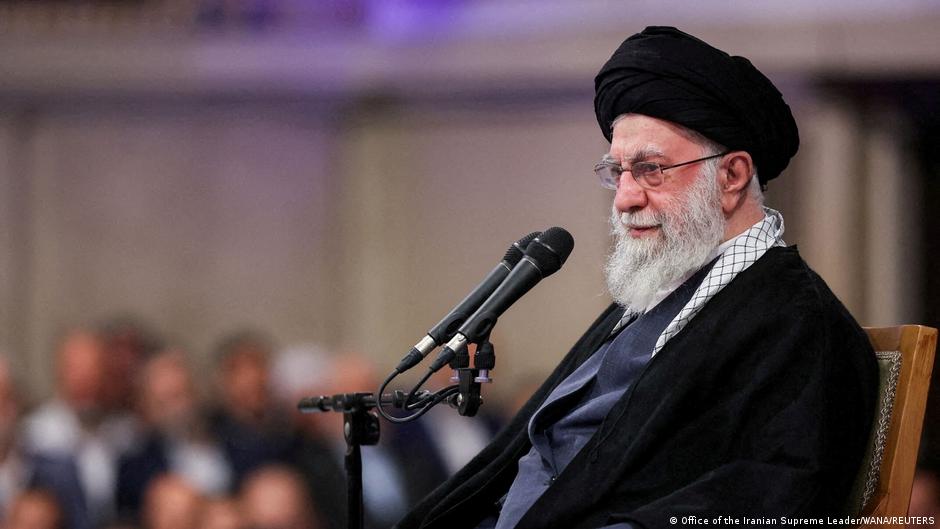
Ayatollah Ali Khamenei, Iran’s supreme leader for over three decades, died Saturday following a joint U.S.-Israeli military operation, President Trump announced. The news was confirmed by multiple Israeli official sources and a senior U.S. Intelligence official.
Born in 1939 in the holy city of Mashhad, Khamenei ascended to the position of supreme leader in 1989 after the death of Ayatollah Ruhollah Khomeini, becoming the head of state for life. He held final say in all state affairs, rarely giving interviews and punishing dissent, as exemplified by the two-year prison sentence handed down to a student in 2018 for questioning whether the supreme leader could be questioned.
In recent years, Khamenei increasingly framed his pronouncements as divine guidance. As late as 2023, he recalled telling Revolutionary Guard officers that “The almighty God has spoken! It was, in fact, my tongue, but the words were God’s,” suggesting a belief he was a “representative of God on Earth.”
Prior to becoming supreme leader, Khamenei’s path to power began with opposition to the Shah. He was imprisoned multiple times for his activism before the 1979 Islamic Revolution, initially presenting as a relatively unassuming literary figure. Following the revolution, he quickly rose through the ranks of the new theocracy, becoming a Friday preacher in Tehran and surviving an assassination attempt in 1981 that left his right hand paralyzed. He subsequently learned to write with his left hand.
Khamenei served as president from 1981 to 1989, a period encompassing the devastating eight-year Iran-Iraq War. As supreme leader, his power was significantly bolstered by the Islamic Revolutionary Guard Corps (IRGC), established in 1979 to safeguard the revolution. Under his leadership, the IRGC expanded into a powerful, self-sufficient force with its own military branches, intelligence wing, and economic holdings, effectively operating as a “state within a state,” according to intelligence assessments.
Khamenei consistently identified the United States as Iran’s primary adversary, famously declaring, “America is the number one enemy of our nation.” His tenure saw the development of Iran’s controversial nuclear and missile programs, despite international pressure. Although he issued a fatwa prohibiting the production and use of nuclear weapons, it failed to assuage international concerns.
The CIA assessed that even if Khamenei were killed, he would likely be replaced by hardline figures from the IRGC, according to sources briefed on the intelligence. This assessment suggests a continuation of the uncompromising stance that characterized his leadership, a stance that led to international isolation and economic sanctions for Iran.
During the COVID-19 pandemic, Khamenei’s government faced criticism for its handling of the crisis, including a ban on importing vaccines developed in the U.S. And Britain, and a failed $1 billion attempt to develop a domestic vaccine. His rule as well saw the brutal suppression of protests demanding greater political and social freedoms, and a surge in emigration among Iran’s educated population.
As he aged, Khamenei reportedly became more isolated and resentful, with a shrinking circle of trusted advisors. The extent to which he understood the growing discontent within Iranian society remains unclear. The immediate aftermath of his death leaves a power vacuum in Iran, with no clear successor identified.
