
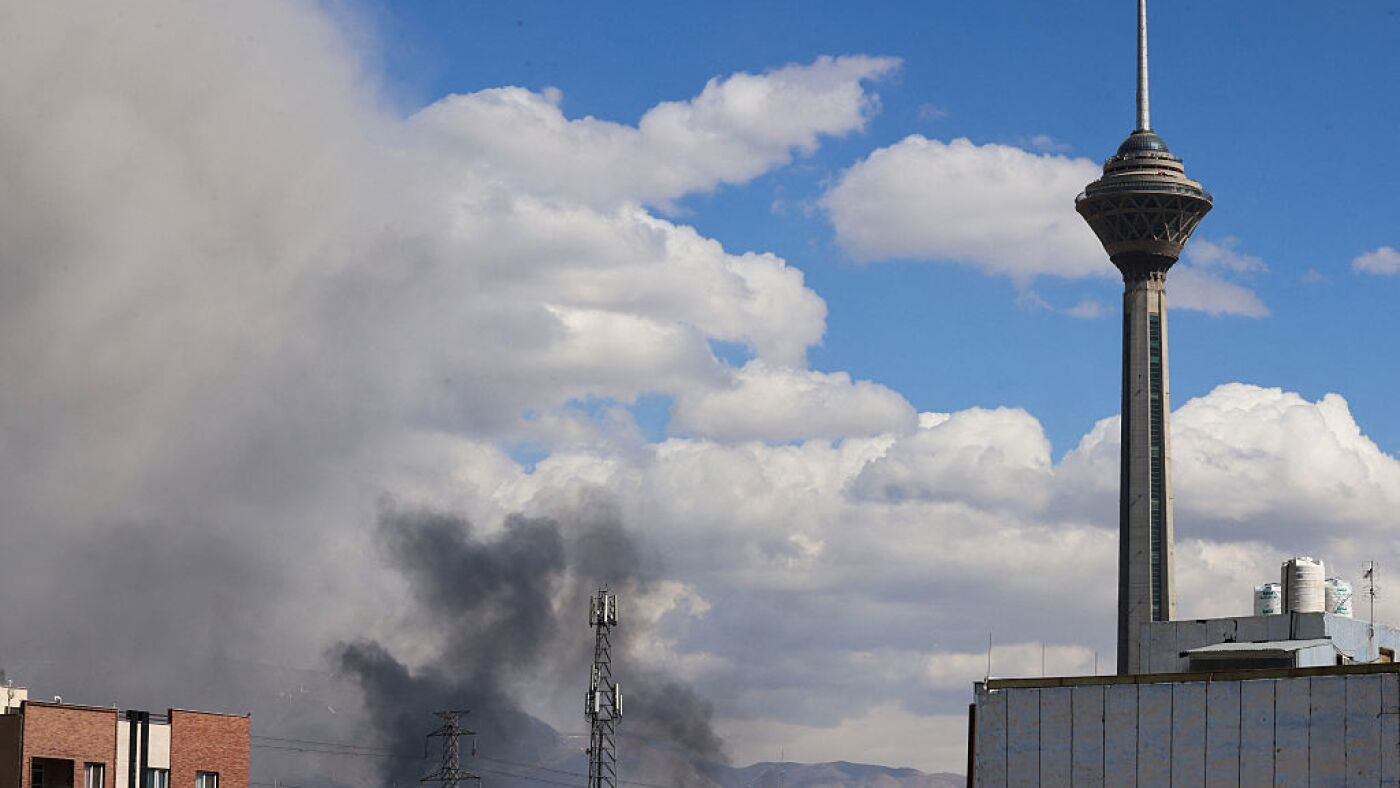
AMMAN, Jordan – The Middle East descended into heightened turmoil Sunday as Iran launched retaliatory strikes against Israel and U.S. Targets following the death of its Supreme Leader, Ayatollah Ali Khamenei, in a U.S.-Israeli operation. Explosions were reported in Tehran Sunday morning, with the Israeli military stating it was targeting “the Iranian terror regime” in the capital, having previously conducted strikes to “pave the path to Tehran.”
Iranian state media confirmed Khamenei’s death Saturday, marking the end of his decades-long leadership and throwing the future of the Islamic Republic into uncertainty. The 86-year-old Khamenei had held the position since 1989, succeeding Ayatollah Ruhollah Khomeini. Iran has established a three-person temporary leadership council to govern under Islamic law until a permanent successor is chosen by a panel of Shia clerics.
Mourners gathered in Tehran’s Enghelab Square and other cities Sunday, marking what they consider Khamenei’s martyrdom. In Yasuj, southwestern Iran, videos circulating on social media – though unverified by NPR – showed crowds chanting “the lion of God has been killed.” The attack reportedly killed Khamenei’s daughter, grandchild, daughter-in-law, and son-in-law, as well as Armed Forces Chief of Staff Abdolrahim Mousavi and Major General Shahid Rezaian, a senior intelligence chief.
Despite the upheaval, there was no immediate sign of widespread protests similar to those that rocked Iran starting in December. Those earlier demonstrations, sparked by economic grievances, were met with a violent crackdown by Iranian security forces, reportedly resulting in thousands of deaths. U.S. Treasury Secretary Scott Bessent has stated the United States engineered that financial crisis.
One Tehran resident, identifying herself only as Roxana, described a moment of jubilation among friends when news of Khamenei’s death broke. However, she recounted how a friend in Karaj, near Tehran, was shot by “basiji” – paramilitary internal security forces – while celebrating in the streets. “He was shot in his back and his leg,” Roxana said, adding that her friend feared seeking hospital treatment due to the risk of arrest.
The conflict extended beyond Iran’s borders. In Lebanon, Hezbollah, the Iran-backed militant group, announced a commemoration in Beirut’s southern suburbs, warning that Khamenei’s death would not go unpunished, though it has so far remained on the sidelines. In Iraq, the government blocked access to Baghdad’s Green Zone, home to U.S. And other embassies, deploying riot police to prevent Iran-backed paramilitaries from breaching the barricades.
Jordan, which hosts major U.S. Military bases, experienced air raid sirens and intercepted missiles. The Gulf states, heavily reliant on expatriate labor and serving as a regional economic hub, faced significant disruption. Iran targeted luxury hotels and high-rise apartments in Dubai and other emirates believed to house U.S. Personnel. Videos of drone strikes on buildings and smoke filling the concourse of Dubai International Airport circulated widely on social media. Airports in Abu Dhabi and Kuwait were as well hit.
The attacks led to the closure of major airport hubs, including Dubai International Airport, one of the world’s busiest, and damage to the Burj Al Arab hotel. Iran threatened further attacks on Israel and U.S. Military bases, claiming its projectiles had struck 27 U.S. Bases, an Israeli base, and the Israeli army’s general command headquarters – claims that have not been independently confirmed. “There will be no mercy or forgiveness in taking revenge for the leader,” the Iranian ministry of defense stated. Iran also announced its intention to close the Strait of Hormuz, a vital waterway for Gulf oil exports.
OPEC is scheduled to meet Sunday to discuss increasing oil production in an attempt to mitigate potential price spikes resulting from disruptions to Gulf supplies.
President Trump, in announcing the attacks Saturday, urged Iranians to “accept back their government.” He later posted on “Truth Social” warning Iran against further retaliation, stating, “THEY BETTER NOT DO THAT, HOWEVER, As IF THEY DO, WE WILL HIT THEM WITH A FORCE THAT HAS NEVER BEEN SEEN BEFORE!” In a brief interview with Axios, Trump suggested he could “go long and take over the whole thing” or end the conflict quickly, warning Iran against rebuilding its nuclear and missile programs. Axios
The escalation has seemingly sidelined the issue of Iran’s nuclear facilities, which had been the U.S. Administration’s original stated justification for potential military action.
