Iran’s New Power Brokers: The Rise of the IRGC Amid Leadership Vacuum
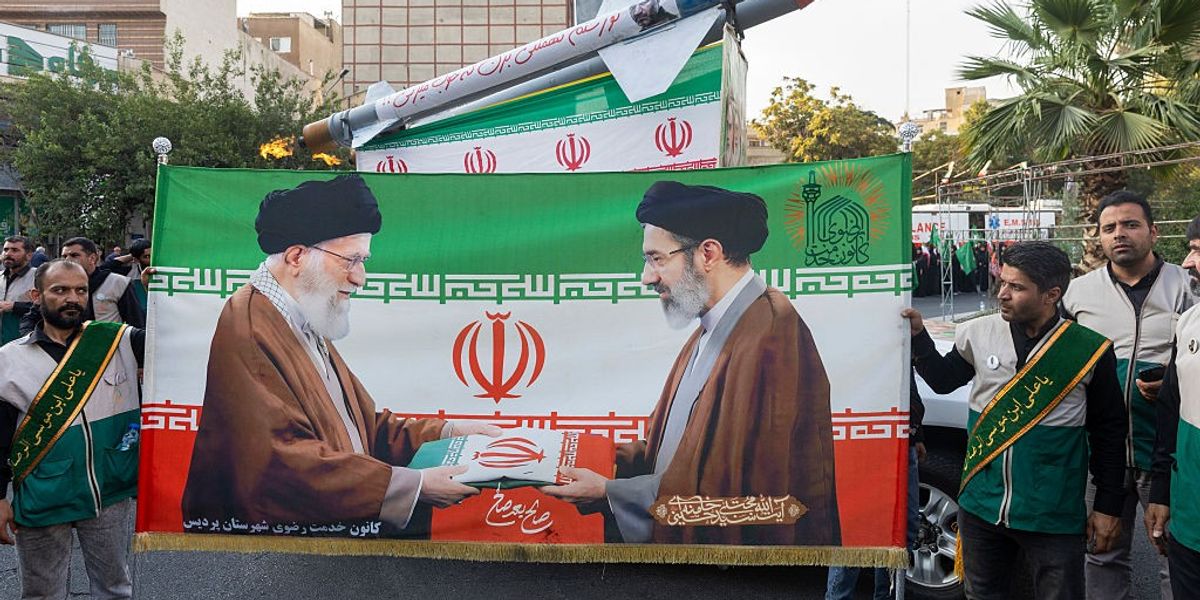
Following a wave of targeted wartime assassinations that restructured Iran’s governing apparatus, 56-year-old Supreme Leader Mojtaba Khamenei remains entirely unseen in public since taking power in March, leaving a fragmented security establishment and a ascendant military command to call the shots in Tehran.
The Islamic Republic is currently navigating an unprecedented structural transition following the February 28 U.S.-Israeli strikes that killed long-standing leader Ali Khamenei and top Islamic Revolutionary Guard Corps (IRGC) commanders. With the country’s clerical hierarchy pushed into the background, real governance has shifted decisively toward a wartime triad: an unverified Supreme Leader, a heavily militarized IRGC command structure, and parliament speaker Mohammad Bagher Ghalibaf operating as a shadow foreign ministry.
A Leadership Rebuilt Through Targeted Strikes
The structural transformation of Tehran’s power center began with the cascade of killings on February 28. Alongside Ali Khamenei, the joint military campaign eliminated Mohammad Pakpour, the IRGC’s commander-in-chief, and several other senior military leaders. An interim council briefly held the state together before the Assembly of Experts named Mojtaba Khamenei as Iran’s third Supreme Leader on March 8.
This succession broke historical precedent for a regime founded on the overthrow of hereditary monarchy. Mojtaba Khamenei, widely regarded as a mid-ranking hojatoleslam rather than an ayatollah, lacked the traditional religious credentials. Yet, he spent two decades as his father’s gatekeeper, forging deep operational loyalty inside the IRGC. President Trump remarked to Fox News that the succession was not one his own father had wanted, noting that Iran’s leadership tiers had been severely depleted by wartime losses.
Despite holding life-tenure authority over the armed forces, judiciary, and clerical establishment, the new Supreme Leader has not spoken publicly, delivered a sermon, or appeared unedited on camera since March. State-controlled outlets like Mehr News released an undated video titled “First Images of the Leader,” showing him addressing students. However, this followed reports from Israeli outlets placing him in extremely critical condition. President Masoud Pezeshkian acknowledged that reaching the Supreme Leader has proven very difficult, while officials close to the administration note that no cabinet minister has met with him since the February strikes.
The Military Consolidates Control Around the Vacuum
With the upper echelons of civilian oversight compromised by war and the Supreme Leader’s physical absence, the IRGC moved rapidly to fill top vacancies through official decrees. Ahmad Vahidi, a Quds Force founder and former interior minister, was installed as commander-in-chief on March 1. Following these appointments, the Supreme Leader’s headquarters designated Mostafa Izadi as the deputy IRGC commander, placed Ali Azmaei in charge of the IRGC Navy, and assigned Hossein Taeb to head the Basij paramilitary force.
Rose Kelanic, director of the Middle East Program at Defense Priorities, argues that Mojtaba Khamenei functions primarily as a figurehead and potential scapegoat. According to Kelanic, real power rests with Ghalibaf, Vahidi, and Rezaee—all career IRGC officers. This shift moves Iranian state authority firmly away from civilian control and into military hands.
For organizations, foreign enterprises, and multinational entities attempting to parse regional risk, decoding this opaque power structure is paramount. Navigating shifting economic sanctions and assessing security exposures requires specialized insight.
Norman Roule, a former CIA officer who spent 34 years managing Middle East programs, frames the Guard’s rise in institutional rather than personal terms. Roule points out that the IRGC touches between a fifth and a third of Iran’s economy when factoring in holding companies, pension funds, and sanctions-evasion networks. The organization functions as a central actor within a state-security-economic network rather than a conventional military wing.
Ghalibaf and the Transformation of Legislative Power
Parliament speaker Mohammad Bagher Ghalibaf has leveraged the executive vacuum to turn a legislative post into a diplomatic command center. Out of 271 total ballots cast in late May, parliament chose Ghalibaf for his seventh consecutive term as speaker with 235 votes. Judiciary chief Gholamhossein Mohseni-Ejei praised him as a tireless jihadist leader operating simultaneously in the field and in diplomacy.
Ghalibaf has acted as Tehran’s principal interlocutor in indirect talks with Washington and serves as special envoy to China. This positioning bridges the political administration of President Pezeshkian—a physician with no security background—and the hardline military apparatus. Roule cautions that Ghalibaf’s prominence represents issue-specific power produced by wartime delegation and longstanding IRGC relationships rather than constitutional supremacy over the presidency.
As domestic unrest compounds the strains of external conflict, the regime has intensified internal crackdowns. Austin Sarat, a professor of jurisprudence and political science, notes that January protests and the ongoing war have acted as mutual accelerants. The leadership has leaned on familiar survival tactics, utilizing heightened nationalist fervor to suppress dissent and preserve the regime’s core character.
As foreign policy analysts and international legal bodies monitor these developments, legal frameworks governing regional accountability remain under scrutiny. Navigating complex cross-border jurisdictions and human rights litigation often demands specialized counsel.
Whether Mojtaba Khamenei remains a viable executive or the wartime trio cements permanent military rule, expert consensus points toward strategic continuity rather than internal reversal. The institutional weight of the IRGC ensures that future negotiations with Western powers will encounter a hardened, fragmented leadership structure that views compromise through the lens of wartime survival.