Iran Supreme Leader Appoints New Military Commanders Amid Wartime Reshuffle
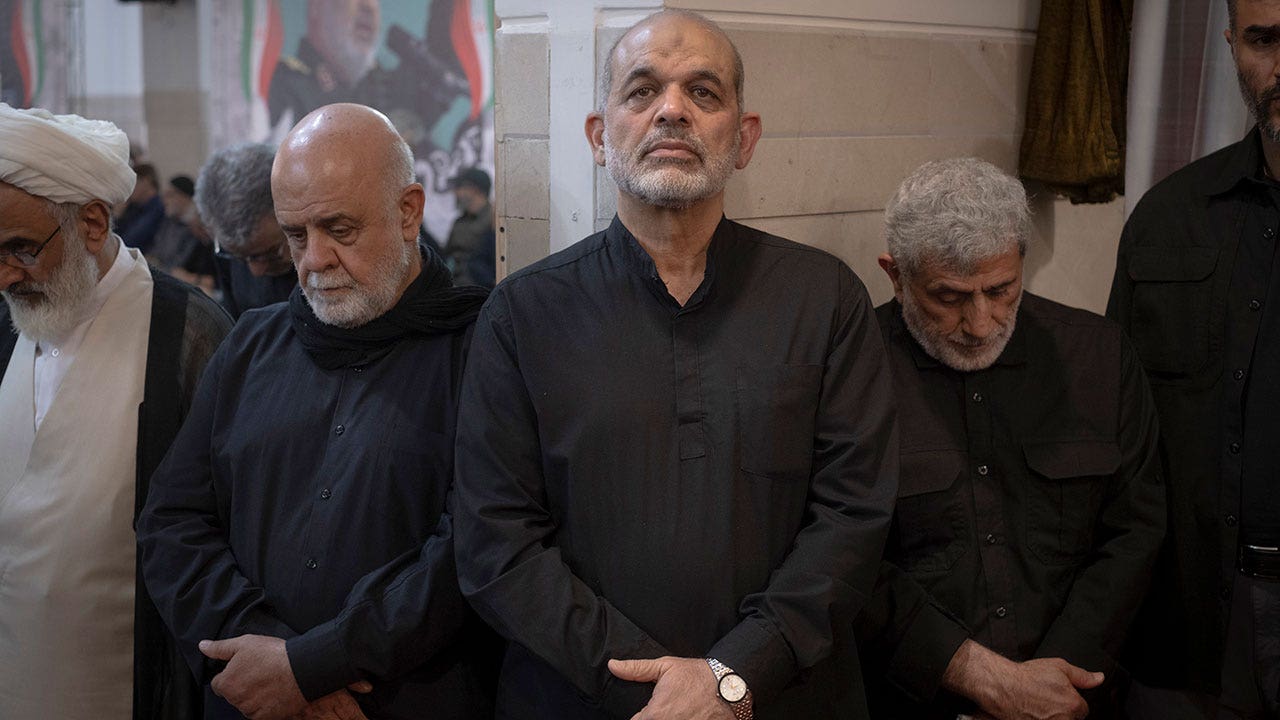
Iranian Supreme Leader Mojtaba Khamenei formally appointed six senior military commanders on Monday, cementing a wartime reshuffle to rebuild a command structure impacted by months of United States and Israeli strikes. According to official announcements published by Khamenei’s office and shared on social media, the appointments span Iran’s armed forces, the Islamic Revolutionary Guard Corps (IRGC), and the Basij paramilitary force. A counterterrorism expert warns the timing and language of these decrees signal that Tehran is preparing for a prolonged confrontation rather than a settlement with Washington.
Strategic Sequencing and the Hormuz Shipping Route
The announcements were issued in English on X while Iranian and Omani negotiators finalized coordinates for a proposed shipping route through the Strait of Hormuz, according to Dr. Omar Mohammed, director of the Antisemitism Research Initiative at George Washington University’s Program on Extremism, in an interview with Fox News Digital. Tehran is establishing its command structure as a fact on the ground before signing any formal agreements.
Dr. Mohammed highlighted specific language in the appointment documents that explicitly blamed the deaths of predecessors on what Tehran termed the “Zionist-American enemy.” By including that phrase in formal state documents, the regime codifies the United States as a co-belligerent in the ongoing hostilities.
“States exiting a conflict dismantle their wartime command arrangements, but Iran is now institutionalizing its own,” Dr. Mohammed said, noting that the decrees describe leadership planning for a sustained struggle.
Key Military and Paramilitary Appointments
The reshuffle fills several vital national security posts across Iran’s military hierarchy:
- Ali Abdollahi: Appointed chief of staff of the armed forces and tasked with completing the integration of the General Staff into the Khatam al-Anbiya wartime joint command.
- Kioumars Heydari: Appointed deputy chief of staff of the armed forces.
- Ahmad Vahidi: Promoted to the rank of major general and named commander-in-chief of the Islamic Revolutionary Guard Corps, with explicit instructions from the Supreme Leader to maintain readiness for powerful offensive operations against the enemy.
- Mostafa Izadi: Named deputy IRGC commander.
- Ali Azmaei: Appointed commander of the IRGC Navy.
- Hossein Taeb: Named commander of the Basij paramilitary force.
Several newly appointed commanders face long-standing international sanctions and allegations tied to terrorism and domestic crackdowns.
Ahmad Vahidi is the subject of an Interpol Red Notice requested by Argentina over his alleged involvement in the 1994 bombing of the AMIA Jewish community center in Buenos Aires, an attack that killed 85 people.
Kioumars Heydari was sanctioned by the United States in 2022 after the Treasury Department stated he publicly acknowledged his forces’ involvement in the violent response to Iran’s November 2019 protests, which resulted in the deaths of hundreds of demonstrators. The European Union has also placed sanctions on Heydari.
Leadership Vacuum in Intelligence Apparatus
The military rebuild has not yet extended fully into Iran’s sensitive intelligence apparatus. Dr. Mohammed pointed out that the IRGC Intelligence Organization and its counterintelligence arm have no announced chiefs, and Iran currently lacks permanent defense or intelligence ministers.
“The appointments require assigning responsibility for the counterintelligence failures that enabled the February decapitation,” Dr. Mohammed said, adding that whichever faction wins the internal debate within the regime holds actual control.
The reshuffle follows a series of high-profile deaths resulting from U.S. and Israeli strikes earlier in the year. Former Supreme Leader Ayatollah Ali Khamenei was killed in a February 28 strike at the start of the war, leading to Mojtaba Khamenei’s selection as his successor in March. Additional leadership losses on March 17 included Ali Larijani, then secretary of Iran’s Supreme National Security Council, and Gholamreza Soleimani, commander of the Basij.
While President Masoud Pezeshkian reported holding a nearly seven-hour meeting with Mojtaba Khamenei to discuss economic conditions, sanctions, and domestic unity, the new supreme leader has not appeared publicly since March and is widely believed to have been wounded in the February 28 strike that killed his father.
As Tehran solidifies its wartime command structure while negotiating vital maritime corridors, regional stability remains precarious.