
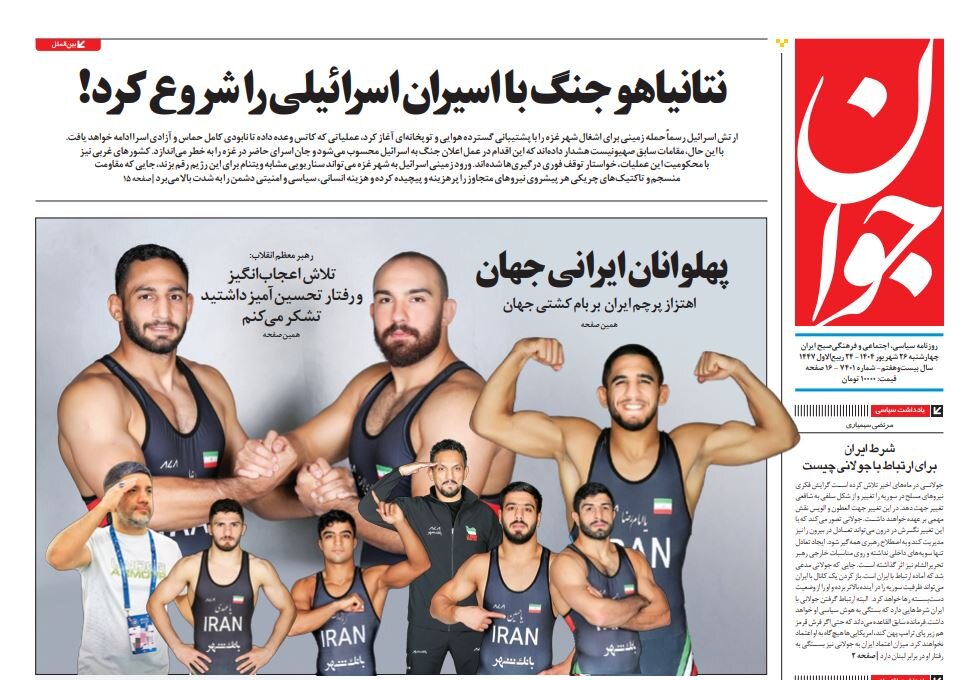
Analysis of Iranian Newspaper Perspectives on Regional Politics (September 2023)
Here’s a breakdown of the perspectives offered by the four Iranian newspapers – Kayhan, Sobh-e-No, Vatan-e-Emrooz, and Donya-Eqtesad – on regional political developments in September 2023, focusing on key themes and nuances:
1. Iran-Saudi Arabia Rapprochement & regional Strategy:
* Kayhan: Views Larijani‘s visit to Saudi Arabia as a significant step beyond mere diplomacy, suggesting a move towards genuine regional interaction and strategic cooperation, notably economically. This indicates a desire for a more proactive role for Iran in the region.
* Donya-Eqtesad: Highlights the positive trend of high-level meetings between Iranian and Saudi officials. It emphasizes the need for trust-building measures before ample economic cooperation can occur. Crucially, it advocates for Iran to leverage Israeli tensions to further align views with Saudi Arabia and adopt a “extensive regional approach.” This suggests a desire for a more nuanced and collaborative regional policy.
Overall: Both papers see the Iran-Saudi thaw as a crucial growth, but Donya-Eqtesad is more cautious and emphasizes the prerequisites for solidifying the relationship.Both see Israel as a catalyst for further cooperation.
2. Response to israeli Actions & Arab-Islamic Unity:
* Sobh-e-No: Frames the Doha meeting of Islamic leaders as a direct response to the Israeli airstrike in Qatar, characterizing it as an “aggression against diplomacy.” The paper emphasizes Iran’s attempt to push the agenda beyond symbolic statements towards “real decision-making,” particularly regarding condemning Israel’s actions and recognizing its expansionist policies. It acknowledges the success of the summit hinges on the willingness of Arab states to take decisive action.
* Vatan-e-Emrooz: Also views the Israeli attack on Qatar as a pivotal moment, potentially forcing Arab nations to reassess their reliance on the West and seek new security partners, potentially drawing them closer to the East (China, Russia, Iran).
Overall: Both papers see the Israeli attack as a significant event that could galvanize Arab-Islamic unity against Israel. Sobh-e-No focuses on Iran’s role in pushing for stronger condemnation and action, while Vatan-e-Emrooz focuses on the potential shift in Arab security alignments.
3. Emerging Eurasian Alignment & Anti-Western Sentiment:
* Vatan-e-Emrooz: Identifies a growing convergence between China, Russia, North Korea, and Iran, driven by a desire to reduce dependence on the West and weaken US influence. however, it acknowledges internal competition within this bloc (Russia/China in Central Asia, Iran/Russia in energy markets), characterizing it as “tactical cooperation” rather than a long-term strategic alliance.The Israeli attack is seen as reinforcing the need for Arab states to consider alternative security partners within this Eastern alignment.
Overall: This paper highlights a broader geopolitical trend of anti-Western alignment, with Iran positioned as a key player. The acknowledgement of internal tensions within the bloc adds a layer of realism to the analysis.
Key Takeaways & Common Threads:
* anti-Israel sentiment: All four papers demonstrate strong criticism of Israel and its actions,viewing them as destabilizing and aggressive.
* Opportunity for Regional cooperation: The papers generally see the current regional climate – particularly the Iran-Saudi thaw and the Israeli actions – as presenting an opportunity for increased cooperation among regional powers.
* Shifting Alliances: There’s a clear indication of a potential shift in regional alliances, with Arab states potentially looking towards the East (China, Russia, Iran) for security and economic partnerships.
* Cautious Optimism: While optimistic about the potential for change, the papers also acknowledge the challenges and complexities involved, particularly the need for trust-building, overcoming internal competition, and securing genuine commitment from all parties.
This analysis provides a snapshot of the Iranian perspective on regional politics as reflected in these four newspapers in September 2023. Its vital to remember that these are just four sources, and there is likely a diversity of opinion within Iran itself.
